
PHOTO
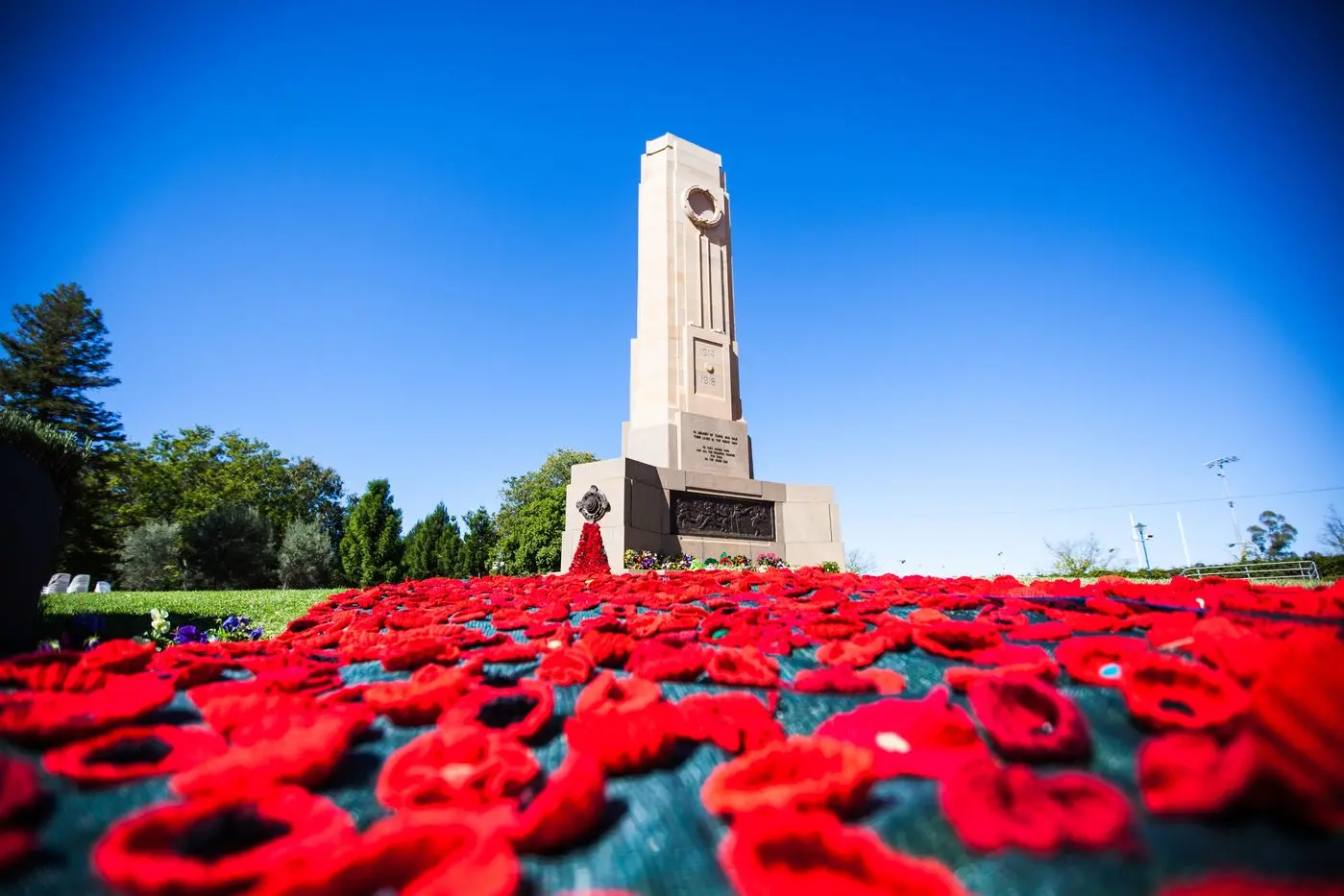
Observed on April 25 each year, ANZAC Day was originally devised to honour the members of the Australian and New Zealand Army Corps (ANZAC) who served in the Gallipoli campaign, their first engagement in World War I (1914-1918).
The Gallipoli campaign was in 1915, when Australian and New Zealand soldiers were part of an Allied expedition that set out to capture the Gallipoli Peninsula in the Ottoman Empire to open the way to the Black Sea.
The objective, to capture Constantinople, the capital of the Ottoman Empire.
So the story is told, the ANZAC force landed at Gallipoli on April 25, 1915, and met fierce resistance from the Ottoman Army commanded by Mustafa Kemal (later known Ataturk).
Planned as a bold strike to knock the Ottomans out of the war quickly did not turn out that way. When the sun had set that day, more than 600 Australian had lost their lives.
Fighting lasted eight months and at the end of 1915 the Allied forces were evacuated after both sides had suffered heavy casualties, with Allied deaths totalling more than 56,000, including 8709 from Australia and 2779 from New Zealand, according to the Australian War Memorial and the New Zealand Ministry for Culture and Heritage, Manatū Taonga.
The date April 25 was officially named ANZAC Day in 1916. Small ceremonies were held to commemorate the ANZAC’s entrance into the war, and to remember the lives of their fallen comrades.
Dr Martin Crotty, an historian at the University of Queensland, told Australian Geographic ANZAC Day has “always been political” and the first few events were “very much around trying to get more people to sign up to the war in 1916-1918”.
Dawn services began in the 1920s. By 1927, all Australian states and territories had legislated for ANZAC Day to become a public holiday.
One seismic shift to the day was adding sport to the afternoon calendar. For the first 44 years all sports games were prohibited by the government after the first ANZAC Day.
Sports matches were first held on ANZAC Day in 1960, on the proviso they were held in the afternoon to not clash with public ceremonies, but became powerful traditions much later.
In the AFL (Australian rules), the big game has become Essendon playing Collingwood on ANZAC Day at the Melbourne Cricket Ground.
That match has been played since 1995 and regularly attracts crowds of more than 80,000 people to the 100,000-seat capacity venue.
The first ANZAC Day match between the Bombers and Magpies in 1995 attracted a crowd of 94,825, the second biggest home-and-away crowd in the history of the competition at the time.
It was a 111-all draw, Collingwood kicking 17.9 to Essendon’s 16.15.
Ironically, the last ANZAC Day match in 2024 was also a draw as both teams scored 12.13 (85) and attracted 93,644 fans.
The 1995 second best home-and-away crowd mark was only beaten on ANZAC Day 2023 when Collingwood defeated Essendon 13.12 (90) to 11.11 (77) in front of 95,179 spectators.
Former Essendon coach Kevin Sheedy once said: “We can never match the courage of people who went to war, but we can actually thank them with the way we play this game, with its spirit.”
For the NRL (rugby league), the biggest match is between the StGeorge-Illawarra Dragons and Sydney Roosters at Allianz Stadium. This more recent tradition began in 2002.
It regularly attracts large crowds to the much smaller 42,500 seat venue.
In the first decade crowds generally hovered between 20,000 and 35,000 but since 2014 the smallest ANZAC Day crowd has been 35,100 and the last two matches at the new Allianz have attracted 40,000-plus attendances.
Sydney sports fans as a general rule are less passionate than Melburnians in terms of attending matches, and often by-pass regular-season contests, but still love attending marquee events like ANZAC Day games, State of Origin fixtures and the NRL Grand Final.
In recent times the Melbourne Storm have also hosted home NRL matches on ANZAC Day, as have the New Zealand Warriors to truly reflect the nature of the day as a two-nation commemoration.
Dr Carolyn Holbrook, an historian at the Deakin University in Victoria, told Australian Geographic that looking back at the ways Australians have marked ANZAC Day in years gone by offers a frank reflection of changing Australian society and cultural identity across the past century.
“These kinds of myths and legends, they’re a mirror,” she says.
“If you want to get a picture of Australian society, you can look at things like this, because they reflect contemporary values.
"ANZAC Day was about commemoration and remembering the dead and fallen mates, combined with a sense of pride for being soldiers and proving themselves.
“[The day] was very much tethered to the idea of the British Empire.”
And she has no doubt people find correlations between sport and war.
“There is an analogy between war and sport, people try and resist it, but there is,” Carolyn said. “There’s something about that intense bonding that happens in sports teams, and I’m sure it relates to mateship that happens in wartime where people bond very deeply.”
Bonding also occurs at gunfire breakfasts and two-up.
The Returned Servicemen’s League (RSL) of NSW describes a gunfire breakfast as typically involving “rum-laced coffee or tea, hot food... and is a chance for veterans – and often other community members – to enjoy shared camaraderie”.
The RSL of NSW states the custom stems from ‘gunfire’ – a mix of rum and black tea dating back to at least the 1890s. ‘Gunfire’ was made by British Army Soldiers – likely as a warming dash of morale or liquid coverage ahead of the day’s battle – and later adopted by Australian and New Zealand forces.
And the ANZAC Day tradition of two-up is where a kip is used to toss two coins – with the outcomes being two heads, two tails or odds (one head and one tail).
People can generally only bet on heads or tails, and spinning continues until a result is reached. Coins used are generally pennies from before 1939 and the cry heard during play is “come in spinner”.
So whether you attend a local service at dawn or mid-morning to hear The Ode of Remembrance read and The Last Post played, watch the Sydney and other state capital city services on television, or spend the day waiting for the football to come on, Lest We Forget.