
PHOTO
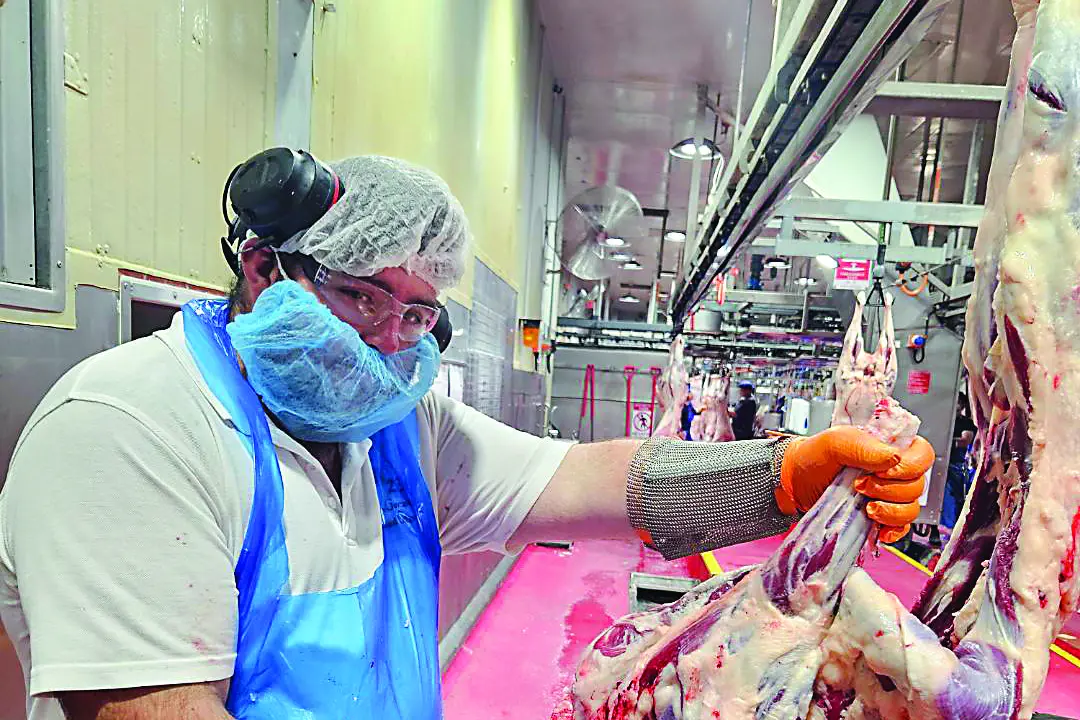
Former Mudgee High student, Brad Cockerell, 23, is now a meat inspector contracted to Fletcher International Exports, working with a team of about 14 others to ensure meat prepared for export is disease free and of the highest quality.
Raised near Hill End, Brad started his abattoir career after seeing an advertisement on Facebook in 2020 and started working for Fletchers in the boning room before being asked if he’d like to try for the role of meat inspector.
Those early years were a proving ground to understanding the business and the expectations of international customers and their country’s standards.
Offered the new role last year, Brad jumped at the chance and Fletchers have supported him through the steps toward achieving his meat inspector qualification.
“There’s two parts to the training, and we did the first part through TAFE Queensland. The instructor came down to Dubbo for two or three weeks, and we sat in the training room here to complete that element and do the test.
“Then, we had to pass the vet course, where the vet inspects you, to ensure you know what you’re doing, then you can work in your ‘whites’ and then you’ve got 12 months to pass the second part of your TAFE, which are a bunch of assignments.”
The health of the meat being processed through Fletchers is of critical importance and meat inspectors like Brad are tasked with reviewing product to confirm each carcass is disease free and fit for human consumption.
“We have to look for any pathology, anything wrong with the sheep, then make our deposition and remove the sheep from the process if there’s signs of cancer for example, because of course it can’t be used.”
Given thousands of sheep can pass through the meat processing plant on any given day, it’s no small task to be monitoring the quality of the product.
“We must inspect everything, even the offal. There’s seven of us now on night shift and another seven on day shift.
“We’ve got two people who inspect the carcass, one person on inspecting green offal and one inspecting red offal. Green offal is the stomach and red offal is the blood and organs, and we’re looking for conditions like ecchymosis, jaundice, or emaciation where the sheep hasn’t been eating or drinking properly and gets skinny, for example.
“Depending on where the meat is going in the world, like the USA or Europe, we have to inspect that meat according to the client country’s standards.”
Since those early days working in the boning room, Brad has met ‘the boss’ many times and recalls the day when he showed up to the boning floor late for work.
“My supervisor asked me why I was late, and I said I was downstairs in the boot washing room and Roger started talking to me, and every time I tried to walk off, he’d grab me to ask me what I thought about something else he wanted to talk to, it’s pretty good he treats everyone with respect.”
One of the biggest surprises he found working at Fletchers is the number of people from around the world.
“I never thought I’d meet people from so many places in the world. In my first year here, I was invited to a Chinese New Year celebration and the way they mixed Aussie culture with their culture was really good, and I realised the food you get in our Chinese restaurants isn’t like the food we were ate. It was really interesting,” Brad said.
Looking back to the time he left school in Year 11, Brad says he recommends giving Fletchers a go because there’s plenty of opportunities and many pathways to progress if you want to.