
PHOTO
Getting to work with animals and people every day is an incredible job, says Dubbo zookeeper Amy Sturrock.
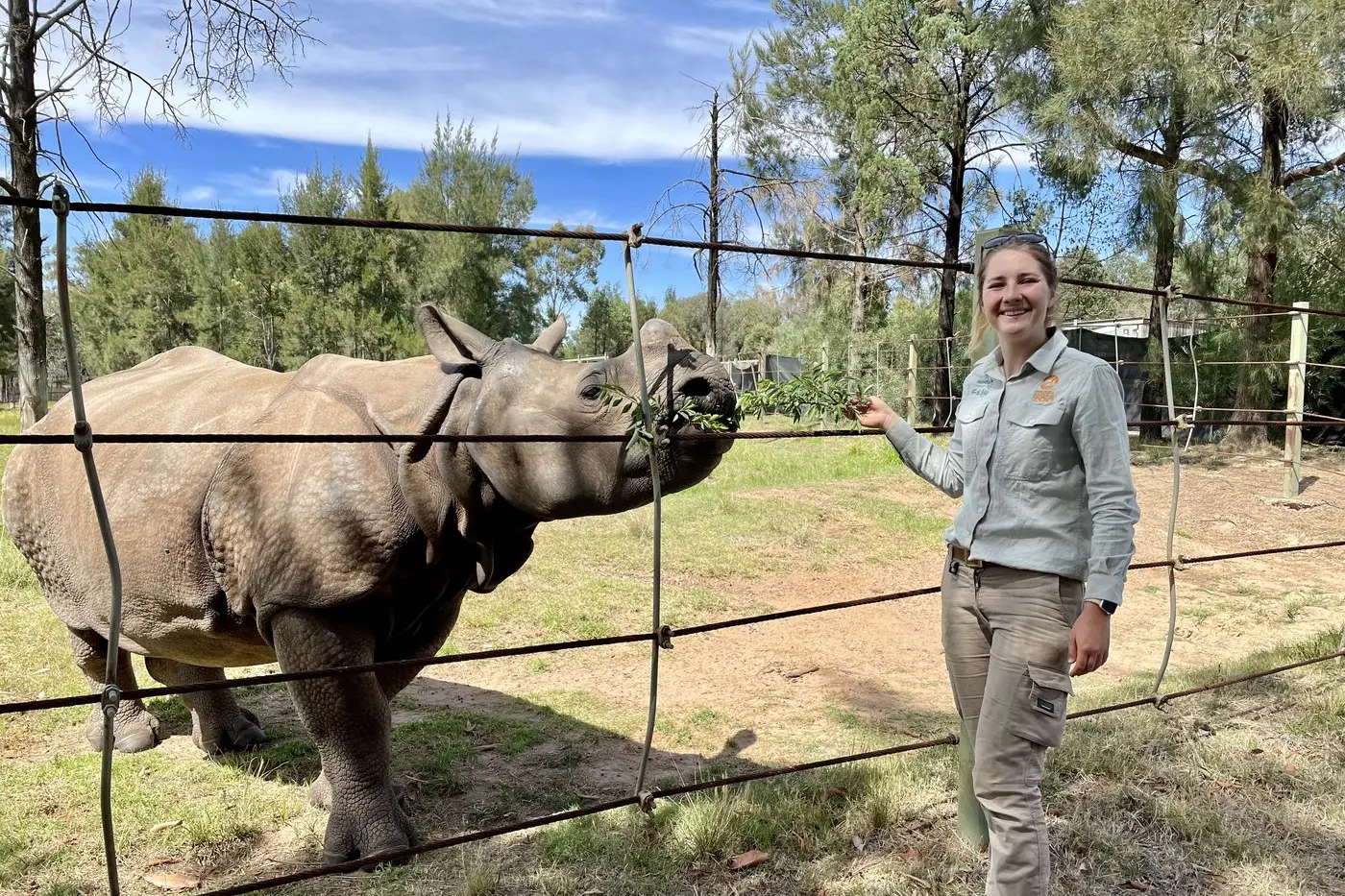
Ms Sturrock, 24, works with Asian wetland animals including Asian small clawed otters and the greater one-horned rhino at the Taronga Western Plains Zoo.
“I love the zoo animals, which are always so personable, cheeky and unpredictable,” she said.
“I also really like the guest side of things, being able to share the conservation message, talk to guests and share the stories about the animals and generate interest from the public in these species.”
If you haven’t thought about rhino being a wetland species, Ms Sturrock says the greater one-horned rhino do actually like the water.
“We have three species of rhino here at the zoo. Two of them are African species and they are more mud-loving, but the Indian or greater one-horned rhino do love the water,” she said.
Another surprising fact is that otters are found in many parts of the world. The ones Ms Sturrock works with are found across south-east Asia, including Singapore and Vietnam.
“There are 13 different species of otter and they are found on every continent except for Australia and Antarctica. There are North American river otters that look just like ours but are a little bit bigger. Asian small clawed otters are the smaller species,” she said.
Ms Sturrock found her way into her dream role through the Taronga Western Plains Zoo’s innovative Youth At The Zoo (YATZ) volunteering program. YATZ enables teens aged between 13 and 18 years to learn how the zoo operates, develop skills for the future, and celebrate animals and conservation.
After volunteering with YATZ, Ms Sturrock completed a Certificate III in Captive Animals through internal training pathways at the zoo. Being able to study right here in Dubbo meant that Ms Sturrock didn’t have to leave home to gain her qualification.
She then moved in a casual role before transitioning to full time zookeeping about three years ago.
A typical day for Zookeeper Amy involves cleaning, feeding and animal training.
“A big part of my day is all the cleaning and feeding of the animals, making sure they’re well fed and [cleaning] the exhibits and paddocks each day,” she said.
Training is also very important, Ms Sturrock said.
“With a 2000-kilo rhino, we can’t exactly hold them down [to administer] medication, so we do training with them. If they need something or any extra healthcare, we can do it safely through a fence.”
Ms Sturrock encourages anyone considering a career in zookeeping to “100 per cent go for it.
“It’s such a rewarding career, definitely one I’ve enjoyed pursuing.”