
PHOTO
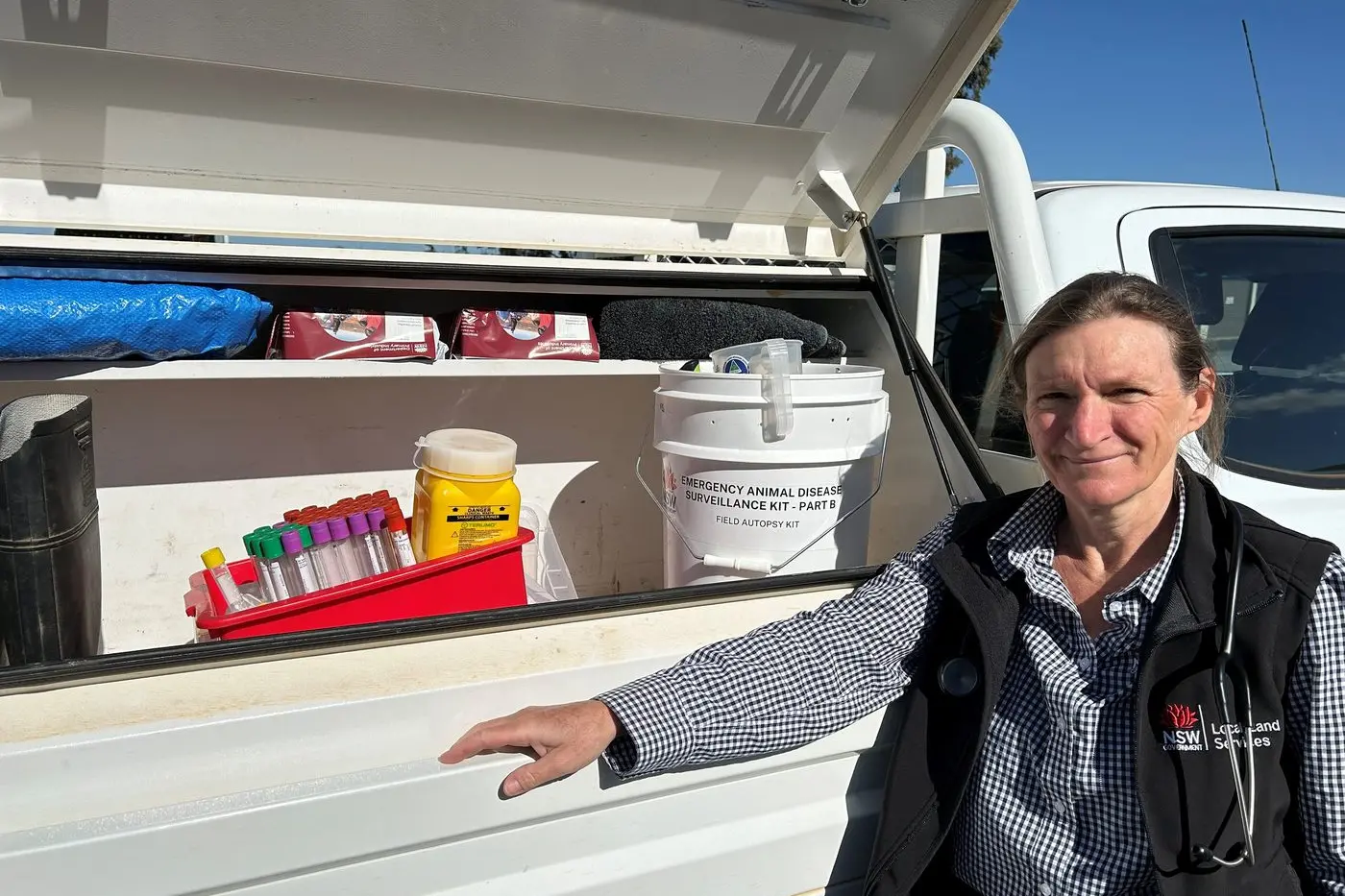
Career veterinarian Dr Jayne Dwyer has swapped the sub-tropical Northern Rivers/Lismore region and decades of private practice for life in the central west and a new role as a government vet.
Now based in Dubbo, Dr Dwyer has recently joined the team of District Vets working with the Central West Local Land Services (LLS).
It’s the first government role for Dr Dwyer, who has spent 30 years in mixed-animal private practice in three states.
“I was in the Northern Rivers for a bit over 20 years and before that I worked in private practice in Queensland and Victoria as well,” said Dr Dwyer, who is enjoying her new role.
“The District Vet is part of the animal health team at LLS and we’re here to work with landholders, managers and the community to improve primary production and support agricultural businesses in regional areas,” she said.
“We help with the health of the livestock industry and more generally to make regional communities and their agricultural businesses profitable and sustainable into the future.”
This work includes assisting primary producers with any particular problems they may be having with their livestock, she said.
There are six District Vets in the Central West LLS team, spread across a vast geographical region including the local government areas of Bogan (lower), Coonamble, Dubbo Regional, Forbes, Gilgandra, Lachlan, Narromine, Parkes, Warren, Warrumbungle, and Weddin. Dr Dwyer is one of two District Vets based in Dubbo and travels all over the region as needed.
The team is busy, having carried out more than 5,000 on-farm disease investigations last year with biosecurity officers, Dr Dwyer said.
“The producers I’ve met with have been extremely appreciative of the help that they’ve received [from LLS], and really appreciate the information and service we give.
“I’ve gone on-farm, diagnosed a disease, helped them manage it, treat it, and then I can also put them in touch with nutritionists that work for LLS [for further support].
“I’m really appreciative of the opportunity to work with them on their farms, too,” Dr Dwyer said.
A typical week for a District Vet could include a combination of on-farm visits carrying out disease investigations, looking at flock and herd health issues, as well as community engagement through field days and information days for producers.
District Vets also visit saleyards and carry out inspections as part of their disease surveillance work, Dr Dwyer said. They also consult other teams within LLS such as natural resource management, which deals closely with invasive species.
Dr Dwyer has loved her move inland to the central west with its very different climate and landscape.
“I really love it. It’s so different. We were in a summer rainfall area [in the Northern Rivers], and we don’t have anywhere near as much cropping up there.
“I find this region quite beautiful with more open plains and undulating [landscape]. The crops are just beautiful.”
Welcome to the central west, Dr Jayne Dwyer.