
PHOTO
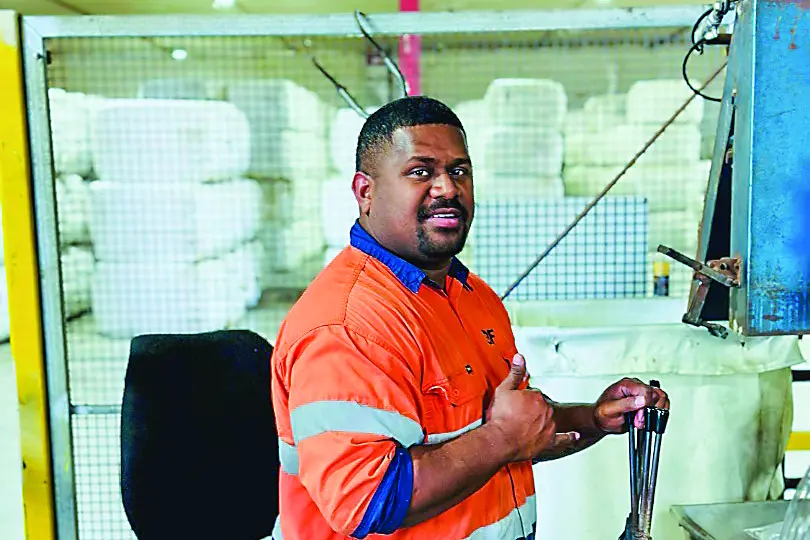
Aminisitai Wauca works for one of Australia’s largest, family-owned agribusinesses, renowned for its integrated processing and export of lamb and sheep meat products, based right here in Dubbo.
It’s the first time the 27-year-old has worked outside his home country, Fiji, and so far, he’s spent three productive years at the plant, telling Dubbo Photo News, he “absolutely loves it”.
“I always wanted to come overseas and it’s very different here, not like Fiji, but I love this place,” he explained.
A resident of the Pacific Island nation’s capital, Suva, Aminisitai used to work as a security guard assigned to various locations including hospitals and banks, while also studying to prepare for work in the logging industry, but the day he got his certificate he was offered a position at Fletchers.
“I thought, oh, I really want to go overseas, and though I found the first few weeks were a bit difficult because it wasn’t what I’d been studying and I’d never used machines like these before, plus I had to leave behind my grandmother, because she brought me up, but I did training and worked hard and now I don’t want to go back!” he said.
“Fletchers has been a great company to work for, and for me personally, I’ve found them very good at looking after their people, their rules are good and very strict on safety and there is a culture that everyone should respect each other, they treat us all the same.
“Roger is a good man, and he talks to me every morning, when he visits every department. He comes to ask everyone if you like working here, making sure the supervisor is being nice to you and that workers are being good to you and if you have any problems, just tell him, he can fix it.
“He’s done that every single day for the three years I’ve worked here, he’s a good person, and his daughter Melissa, and the supervisors, they’re all so friendly and kind,” Aminisitai said.
That’s a good thing too, as Aminisitai’s wife also works at Fletchers in the administration of the company which he says technically makes her his boss!
“That’s not really good,” he joked.
Assigned to the fellmongery, or skins section at Fletchers International Exports, Aminisitai fills a variety of roles within the department, and on the day of our interview was working in the wool testing area, where one step of an extensive process to clean and prepare skins for national distribution or global export takes place.
“From the slaughter floor, the skins then come down to the fellmongery and we paint the skins in acid, and we have seven rooms where the skins are cooked for 24 hours and then a machine separates the skins from the wool before samples of the skin are sent for testing.
“We also have a dryer which dries the wool, and a presser which bales the wool, and each Wednesday the bales are tested again before it can be cleared for export where it’s used to make products like paint rollers, clothes, that sort of thing,” Aminisitai said.