
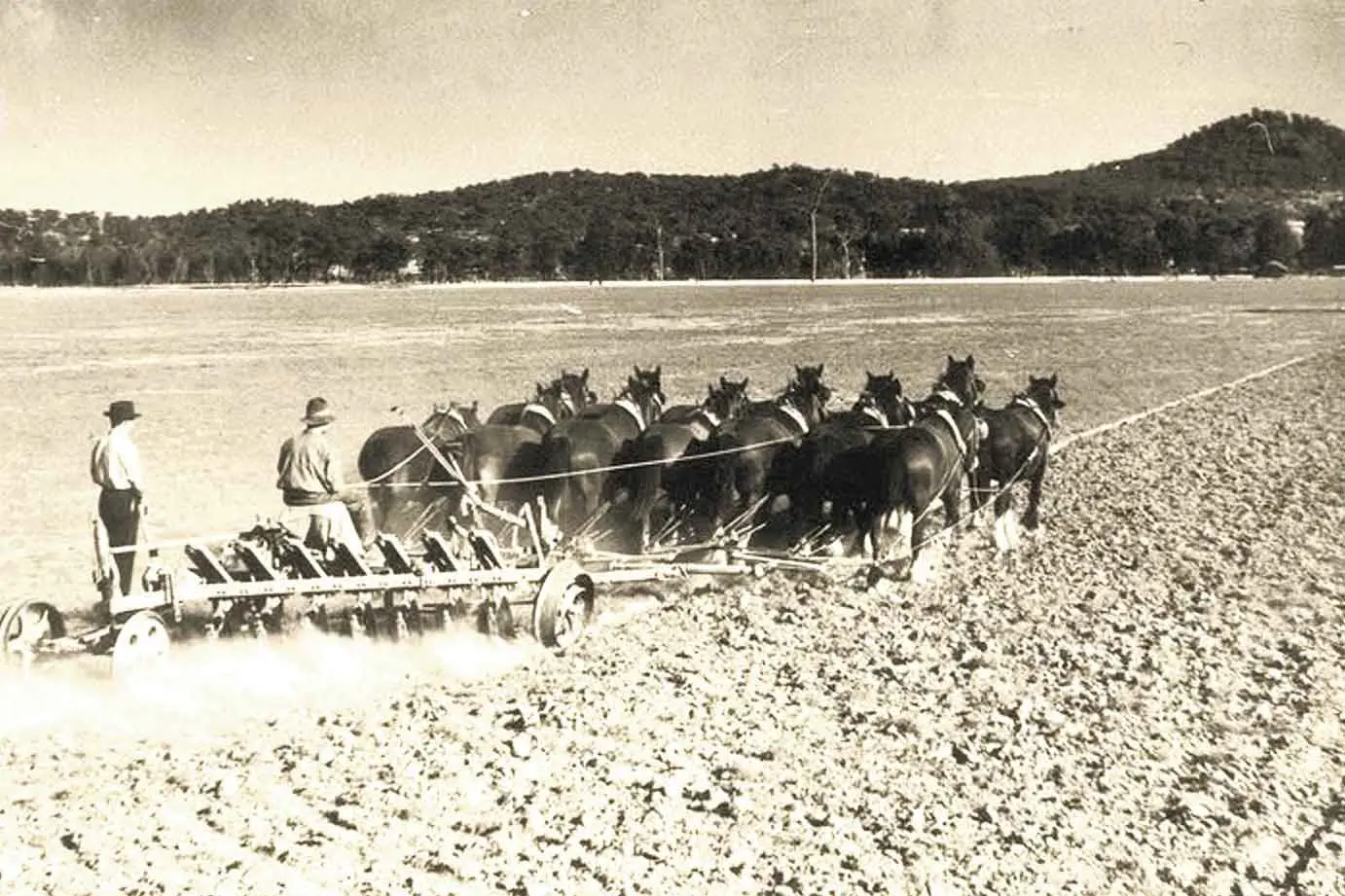
PHOTO
While most rural Australians would be familiar with traditional country contests ranging from horse-ploughing, sheep shearing, crop-and-yield, cooking and craft tournaments; they may not have ever heard of a fallow competition.
Local historian, Patrick Bourke, however, has again come to the rescue, with a nearly century-old news item mentioning a family member, on that very topic.
"Interesting article on fallow competitions; they were certainly very popular in the past," Patrick told this masthead.
"My grandfather, Jim Bourke of Hopetoun, Wongarbon, came second in the Dubbo Fallow Competition in 1930; see the article in the 'Sydney Morning Herald', dated April 9, 1930," he added.
Fallow competitions were agricultural contests common in the 19th and early 20th centuries, particularly in Australia and Britain, in which local farming societies rewarded growers for having the best-ploughed, most weed-free, and moisture-rich "fallow fields" – land left unplanted for a season or more to restore soil fertility, retain moisture, and to break pest cycles.
These historical contests were vital in an era of expanding agriculture, as they encouraged best practices in dryland farming and played a central role in Australia's development as one of the world's great agricultural producers.
Judges would inspect competing paddocks and score them on several specific criteria including:
• Weed control, with points awarded for how cleanly the plot was managed to prevent unwanted growth.
• Cultivation and mulching, with the quality of the ploughing judged to ensuring a proper "mulch" was present to prevent water evaporation.
• Moisture conservation with the soil often tested to see how well the cultivation methods had retained water.
• Seed bed preparation, looking at the evenness and physical state of the soil bed for future planting.
The SMH article – with the headline, "FALLOW COMPETITIONS. Widespread Interest" – lists the results from a number of events around the state, including the one involving Patrick's grandfather.
"Several plots entered in the fallow competitions in various parts of the State have recently been judged, usually by the district agricultural instructor.
Indicating the widespread popularity of the contests, the article lists Wee Waa with six entrants, 13 at Narromine, a record 24 at Dubbo, 13 at Corowa and 23 at Oakland.
Of the Dubbo contest, the article stated that: "The fallows were considered by Mr Arthur (the judge) to be of generally good standard, and the majority well-charged with moisture. Some had too-deep a mulch and insufficient consolidation."
At Wee Waa, the judge (Mr J.A. O'Reilly) said that: "considering the nature of the rainfall since December, the first three fallows were in good order, and were evidence of the advantages of ploughing land as early as possible after harvest."
While probably of only passing interest to most modern readers, competitions like these that were run by local farming societies and supported by Department of Agriculture staff – such as at the Temora event judged by T.P. Taylor from the local experimental farm – played a key role in the development of Australian agriculture.
Emphasising good crop rotation, weed management, high soil moisture, and the importance of ploughing-down fallow crops, they helped in developing the solid farming practices for which Australia is now renowned.
Eschewing the quick-fix of chemical over-use that became prevalent in so many other western farming cultures over the 20th century, events like this helped create Australia's world-standard reputation for clean, green and high-quality food and fibre.