
PHOTO
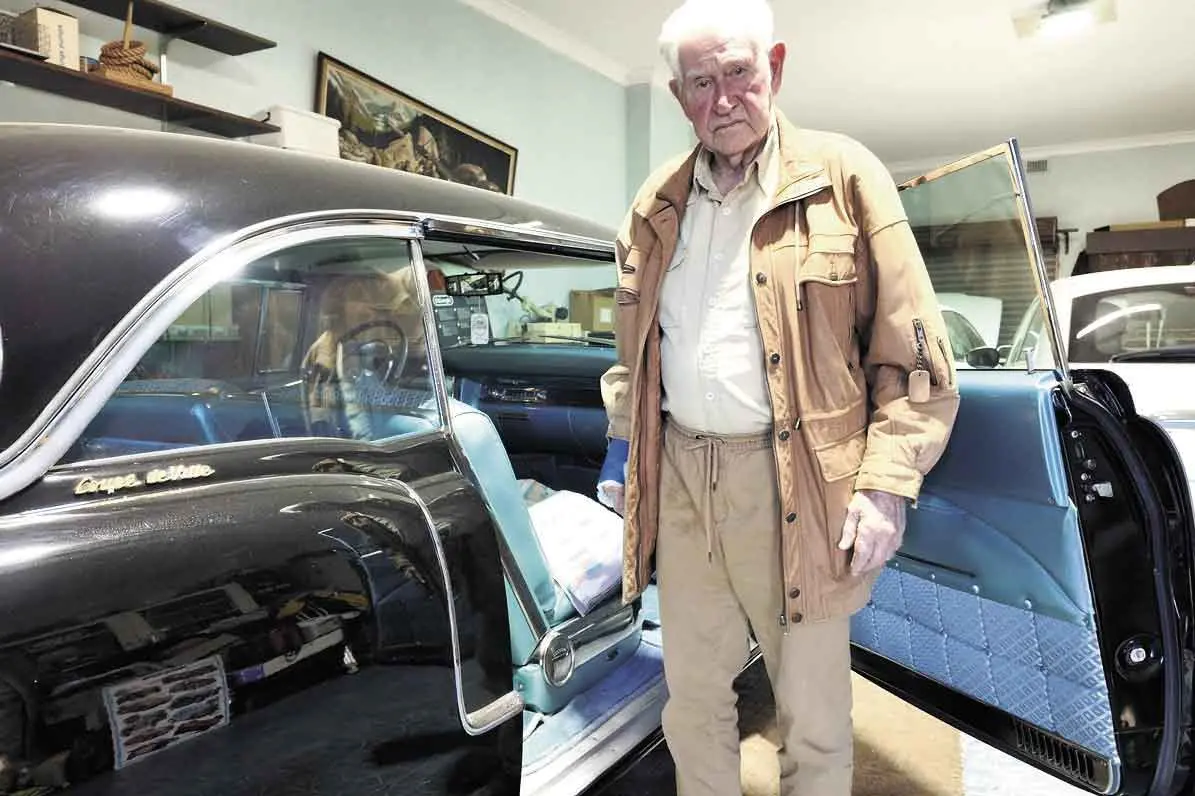
Bruce Dickinson may have arrived in Dubbo from Sydney in 1941 in a horse-drawn sulky with his parents William and Marie, and aged just two at the time, but the quietly spoken now-retired businessman is very modest when looking back at the modern transport dynasty he went on to found.
“When we got here [during the Second World War], my father started at the RAAF, and he was able to get an army tent on time payment and paid for it out of his wages,” Bruce explained.
“We lived in it in an orchard on Boundary Road, with a timber floor and lanterns and no water, no electricity.”
The Dickinsons called the tent home for around a year before moving to a property in Palmer St where they stayed for a decade and raised nine children.
Now 87, Bruce reflects on watching Dubbo grow from a country town into the thriving city we know today.
“When I was growing up, well, the town wasn't as busy, and we knew every street in Dubbo. I was able to have a lot of friends from school over,” he said.
Bruce attended De La Salle Boys College (now St Johns), leaving at 17 to work with Dunlop and Lees, servicing and washing cars. He left there when he obtained a truck licence and worked with Mawhinney Transport, carting sheep and cattle, before joining Ray Holland’s stock transport.
The desire to obtain and own his own home was Bruce’s great motivation to move into self-employment and private enterprise. After leaving Holland’s in the 1960s, and still quite a young man, Bruce obtained his own truck and began making stock crates in a rented shed, eventually making enough money to buy a small premises in Hawthorn Street, Dubbo, in 1965.
It was the start of the Dickinson empire – although Bruce refuses to call it that.
“I don't think it's an empire,” he said.
“I think I've just made a business that would support my wife and family, and be able to build and own a house. And something to pass on to our children.”
Wife Helen, originally from Narromine, came into Bruce’s life at just 16. He met her at the Castlereagh Hotel.
“I was in there having a squash. She opened the door and said, ‘Have you seen Kenny Dwyer?’ I said, ‘No, I haven't. But if you can't find him, you better come back and find me’,” Bruce added.
“She's been with me ever since.”
The couple married in 1961, welcoming children Wayne, Graham, Mark (deceased), Craig and Jason, and Helen has been an integral part of the family business over the years.
One of Bruce’s great achievements was to develop the double-decker livestock trailer which helped revolutionise livestock transport. His trucks were also known across NSW for transporting livestock long distances.
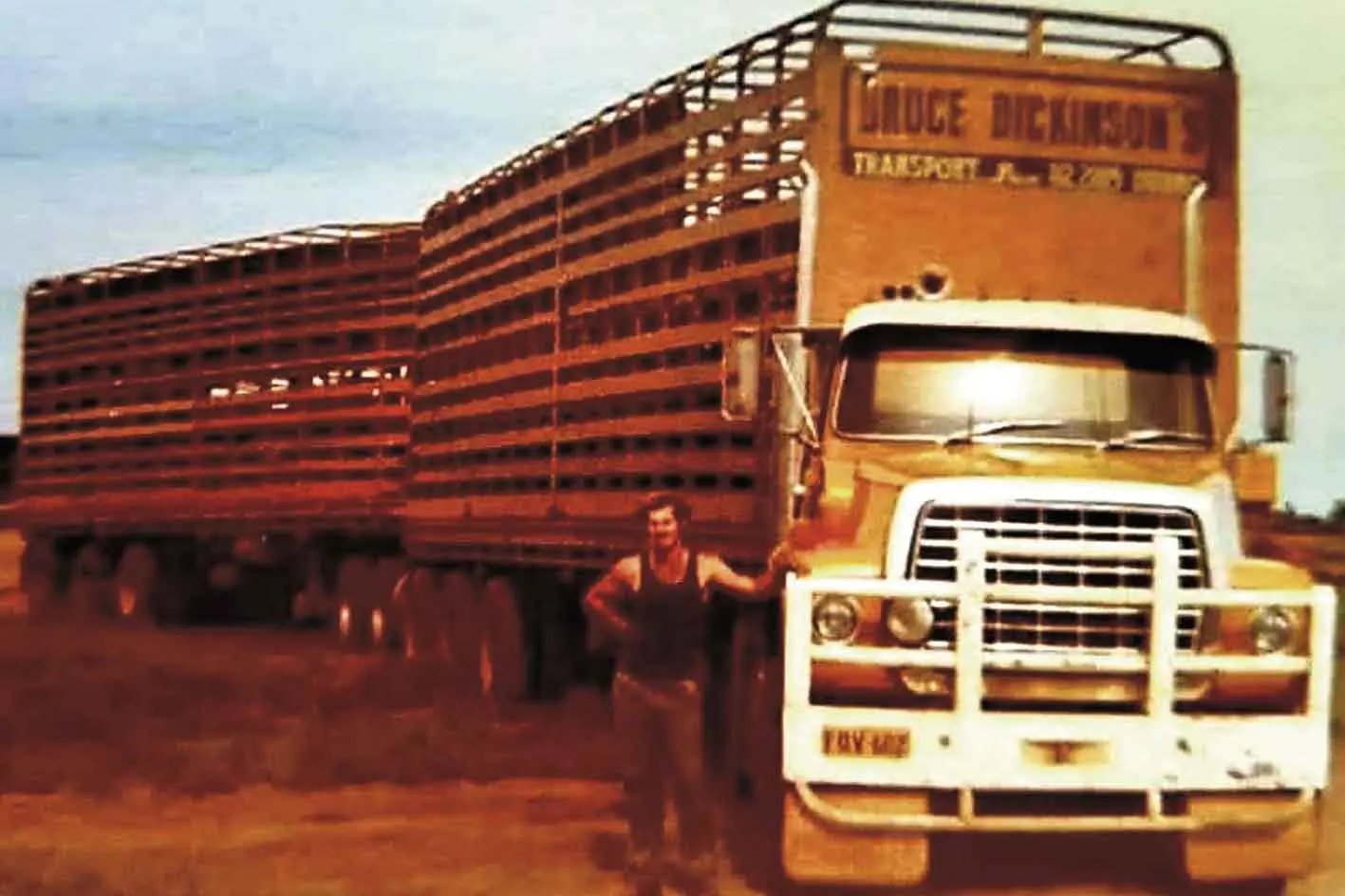
Bruce’s transport and related manufacturing business built up over time and as his children grew up they also joined the family business. Sons Wayne, Craig and Graham eventually took over the business now located in the industrial estate at Yarrandale Rd. It continues to grow and thrive under their stewardship.
Inducted with his brother Kevin to the National Road Transport Museum’s Shell Rimula Wall of Fame in 2005, which champions the achievements of the road transport community in Australia, Bruce said he never thought his business would get as big as it has.
“I didn't want to be the biggest carrier in Dubbo,” Bruce explained.
“I just wanted to have four or five trucks and keep them going all the time, enough work for them with the buyers that we had. I had quite a few subbies that used to work for me and pick up any surplus work.”
And what about that house Bruce dreamed about all those years ago, the aspirations for which led him into self-employment and follow his business dream? Well, it got built on the outskirts of town, and Bruce and Helen still live there today, the octagenarians now enjoying a comfortable retirement.
Bruce cares for Helen, who has some health challenges, but they are together and still very happy after 65 years of marriage.
Undoubtedly, Bruce Dickinson is one of Dubbo’s original business success stories. Without any higher education, he taught himself what he needed to know and put it into practice.
Bruce attributes this success to being on time; operating good trucks; maintaining good customer relationships based on trust and loyalty; a bit of “good luck”; market prediction ability; paying his bills on time and getting paid on time.
Considered to be an excellent judge of character, Bruce believes his best achievement was to pass his business onto his sons and grandson.
“I never wanted to be the biggest and smartest fellow in the world. I just wanted to be successful at what I was doing,” Bruce concluded.