
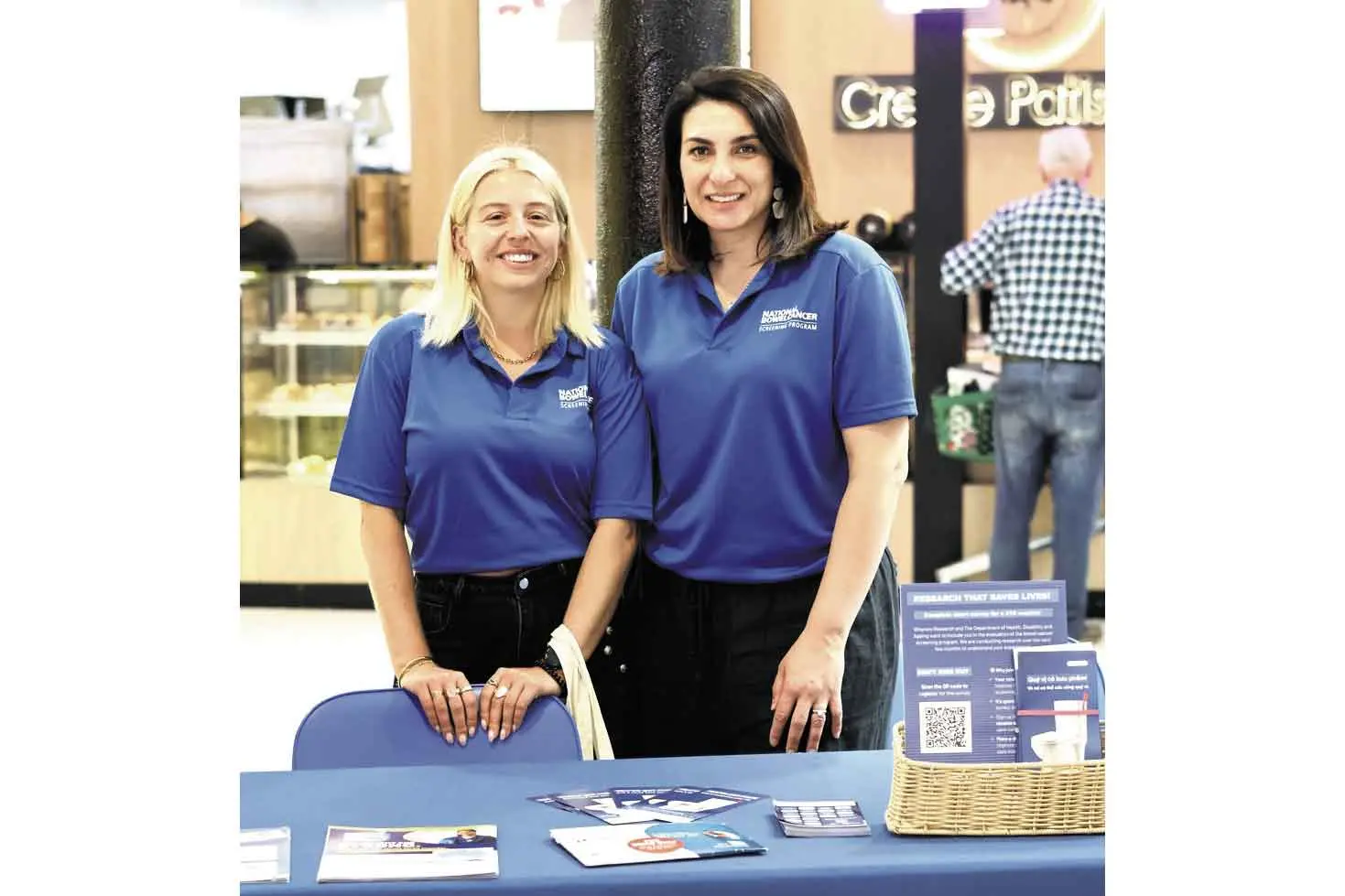
PHOTO
Dubbo locals were encouraged to grab a coffee and learn how a simple at-home test could save their lives when Creme Patissiere at Orana Mall hosted a Catch It Early Café on Thursday, October 22.
The event raised awareness of the Australian Government’s free National Bowel Cancer Screening Program, encouraging people to overcome embarrassment, start conversations and take action to detect bowel cancer early, and why completing and returning a free screening kit was so important.
Australia’s second-deadliest cancer, bowel cancer claims more than 5000 lives each year. While more than 90 per cent of cases can be successfully treated when detected early, national participation in the free screening program remains below 50 per cent. Almost two million kits mailed to Australians each year are never completed or returned.
A simple at-home test potentially saved the life of Tom Dyson, who hoped sharing his story would encourage more Australians to take bowel cancer screening seriously.
Tom was just 45 when he completed the Australian Government’s free screening test, despite having no symptoms and feeling well. The result led to a colonoscopy, biopsy and CT scan, and the discovery of Stage 2A bowel cancer which led to surgery to remove about three-quarters of his colon. Chemotherapy was not needed, and now Tom has regular follow-up checks.
Tom’s experience highlighted the importance of early detection and reinforced the message behind the Catch It Early Café, which encouraged locals to learn more about screening, start difficult conversations around gut health, and completing the free test.
Tom didn’t suspect anything was wrong before taking the screening test, although his father’s bowel cancer diagnosis in his early 60s was in the back of his mind.
“I didn’t spend much time thinking about it, and I’m very glad I acted,” he said.
While recovery from the major operation was challenging, Tom said he was grateful the cancer had been found before symptoms developed.
“I could have carried on feeling fine while something serious was developing,” he said.
Tom encouraged others to take advantage of the free screening program rather than put it off because of embarrassment or uncertainty.
“I know the idea of collecting a poo sample feels a bit strange, but it’s quick and straightforward. Do the test, put it in an envelope, post it away. Done.”
He also hoped his experience would challenge the misconception that bowel cancer only affected older people or those who felt unwell.
Australians aged 50 to 74 automatically receive a free bowel cancer screening kit in the mail every two years, while those aged 45 to 49 can request their first kit. Tom said access to free screening was something Australians should pursue.
“I wouldn’t wish bowel cancer surgery on anyone. It was a big operation and the recovery wasn’t easy. But I’m delighted I did the test, that the cancer was found, and that I’ve had the operation,” he said.
“My outlook is positive. I’m not out of the woods yet, but I’m very glad I took that opportunity.”