
PHOTO
Something happened earlier this year that was only recently brought to the attention of Dubbo Photo News, and we’d like to share it with you because it’s a great story that deserves telling.
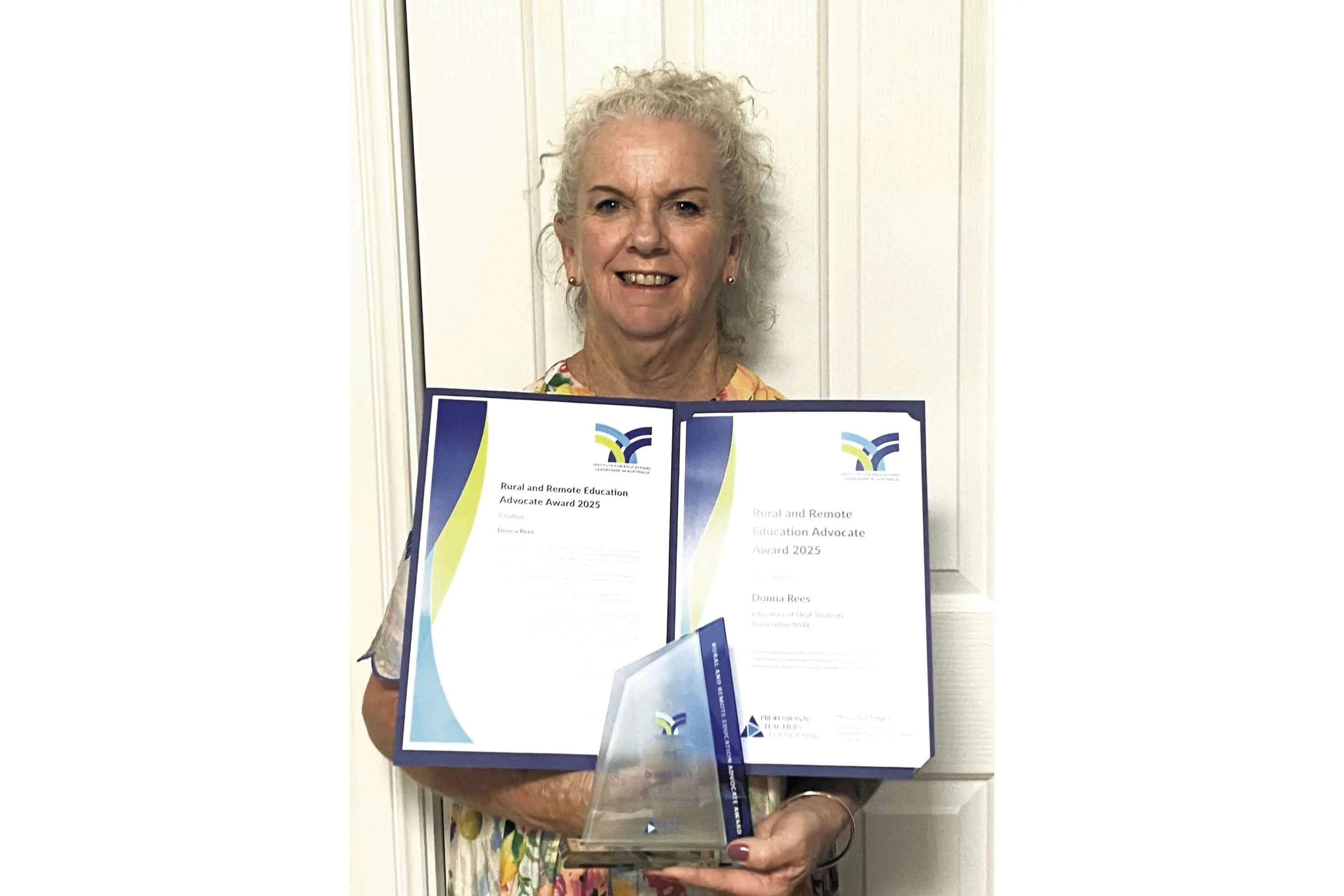
In late February 2026, Dubbo educator of Deaf and Hard of Hearing (DHH) students, Donna Rees, received the inaugural Rural and Remote Education Advocate Award from the Professional Teachers’ Council NSW (PTC NSW) and Institute for Educational Leadership In Australia (IELA).
An Assistant Principal: DHH at Dubbo Public School, Donna was one of six educators recognised with this award from the PTC NSW/IELA, the peak umbrella body that provides support across all levels of education in the public and private education sector, promotes professional development of teachers and the quality of education in this state.
As noted in her citation for the award, Donna has dedicated her career to supporting DHH students, their families and the wider community, a journey that began as a parent supporting her own daughter with hearing loss which led her to becoming a teacher of the Deaf.
“Donna’s vision, commitment and tireless leadership have built lasting community programs that address both the educational and health needs of children. Her work has created vital pathways of support, making a profound difference for [DHH] students in regional NSW,” her citation concluded.
Independently of her work as an educator, innovative projects Donna has driven over the years include the Dubbo & District Parent Support Group for the Deaf and Hearing Impaired Inc (also known as the Dubbo District Deaf Club), and the more widely known Hear Our Heart Ear Bus Project, of which she is a volunteer director.
Dubbo Photo News spoke with Donna earlier this month, and while it has been a few months since she received the award, she is still a bit excited about receiving it.
“The awards have been running a long time and it’s great that they’re acknowledging regional,” she said.
The importance of educators like Donna being able to work with and provide support to DHH students in rural and remote areas is crucial to their ongoing development.
“Some have high needs, and the fact we can get out to them is great. We go into their local schools rather than having to uproot them and bring them here, which is what historically happened years ago,” Donna said.
The growth in the students themselves is what gives Donna the greatest joy about her work.
“They've all got a different level of potential, and we're helping them to reach that potential.”