
PHOTO
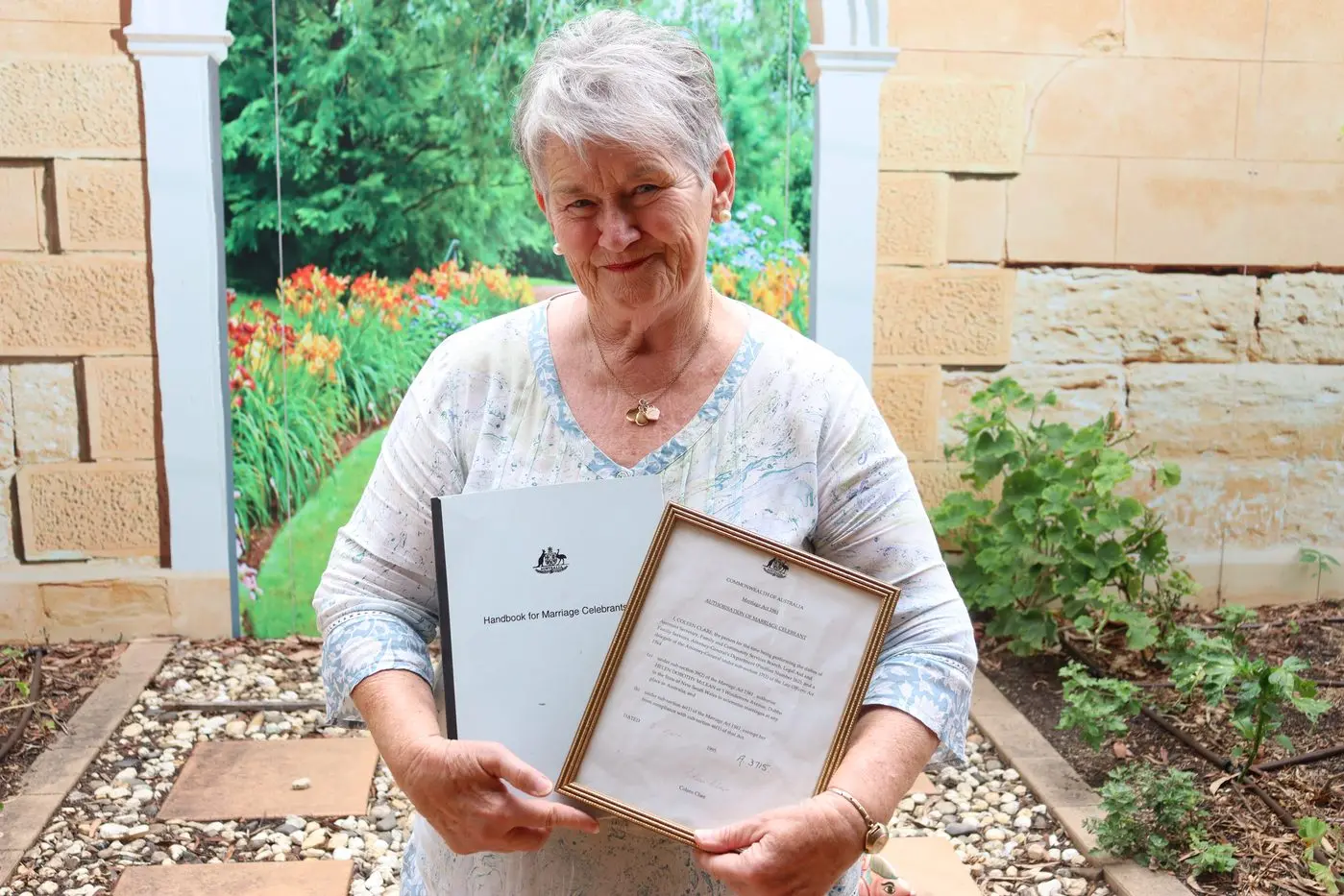
Dubbo civil celebrant Helen McLean has quietly clocked up 30 years as an authorised marriage celebrant. While the active septuagenarian admits to slowing down, she has no plans to stop helping couples tie the knot just yet.
The vibrant Dubbo identity, who is forever smiling, has been marrying people since she was first authorised by the Federal Government on March 3, 1995.
Back then, the “closed shop” celebrant system meant an existing authorised celebrant literally had to die or leave the district to create a vacancy for someone new to be authorised as a celebrant.
The wife and mum of two waited for five years after putting her name down with the Federal Attorney-General’s Department, which has managed the Marriage Celebrant Program since its inception in 1973. She was finally appointed with another lady when two vacancies arose in Dubbo.
No training: no worries!
Unlike the celebrant system currently in place today, there was no training provided to Helen when she was first appointed. Issued with a manual, which she still possesses today, Helen was sent out into the community to marry people.
“I was handed a manual and that was it. Flying by the seat of my pants!” she recalled.
Luckily, a local magistrate helped her navigate her way.
“I used to ring a magistrate that I knew here in Dubbo. He was wonderful if I ever had problems and couldn’t find the answers in the manual,” she said.
With the internet not available to everyone at that time, Helen resorted to advertising in newspapers to let people know she could marry them. In those early days she focused on weddings, namegivings (non-religious christenings), and vow renewals.
Wedding reflections
Helen’s first wedding was conducted at her home, and she recalls roping her obliging neighbours into acting as the official witnesses for her clients, Joanne and Mark. Not long after, she participated in a popular wedding promotion by Orana Mall which attracted thousands of people.
Managing a dress shop locally for nearly thirty years, Helen’s side-hustle celebrancy service grew from second-time-around couples and those excluded from church weddings to include younger people who weren’t particularly interested in “regimented” weddings.
“When I first started I would do around 75 weddings a year,” she said. She is unsure exactly how many weddings she has performed over the decades, as she hasn’t kept count. But it’s a lot, over 900 she guesstimates.
The most weddings Helen has ever performed in a single day was five – twice! Both occasions were on long weekends in the Dubbo region, and those particular days were very tiring.
Authorised marriage celebrants can marry couples anywhere within Australia and its territories. Helen put this to the test, marrying a couple aboard a packed airliner bound for Antarctica, saying the legally-required words thousands of metres above the Tasmanian town of Penguin while still in Australian airspace.
While Helen has reduced the number of weddings she performs now, she is not giving it away just yet. Her family simply won’t let her!
“My grandchildren said: ‘You’re not giving up!'” she laughed.
She is also a highly-valued mentor to those new to the celebrancy industry.
Pivot to funerals
Helen has, however, pivoted into conducting funerals and is now one of Dubbo’s most sought-after funeral celebrants.
Her first funeral three years ago was for a respected elderly dressmaker in Dubbo Paul Stephens who had made her wedding and debutante dresses.
“I thought his funeral would be massive, but it was just coming into the end of COVID, and there was only 50 people there. It was so sad, you know, but it was a beautiful funeral for him,” Helen said.
It was the start of something new for Helen which has since brought her great satisfaction.
“I've really gravitated to funerals and know that's the lane in which I want to travel,” she said.
She is keen to stress that people wanting to pursue funeral work needed to be genuine, caring, and supportive of those grieving.
“Being a funeral celebrant does take a certain type of person, one with a passion to be there to help others when they need help to tell their loved one’s life journey,” she explained.
“You've got to listen, but you’ve also got to understand and remain open-hearted, to be able to see life through other people's experiences,” she concluded.