
PHOTO
Last year just over 89,000 couples married in Australia, well below the pre-pandemic levels for the second year running, according to the Australian Bureau of Statistics (ABS). Of those, 80 per cent, or 71,331 marriages, were officiated by civil celebrants.
The growing trend towards civil weddings was a point of discussion at events held around Australia on November 20 celebrating National Celebrants Day.
Members from 19 different civil celebrant organisations across Australia gathered to celebrate the day that recognises the contributions and service by Australia’s celebrants.
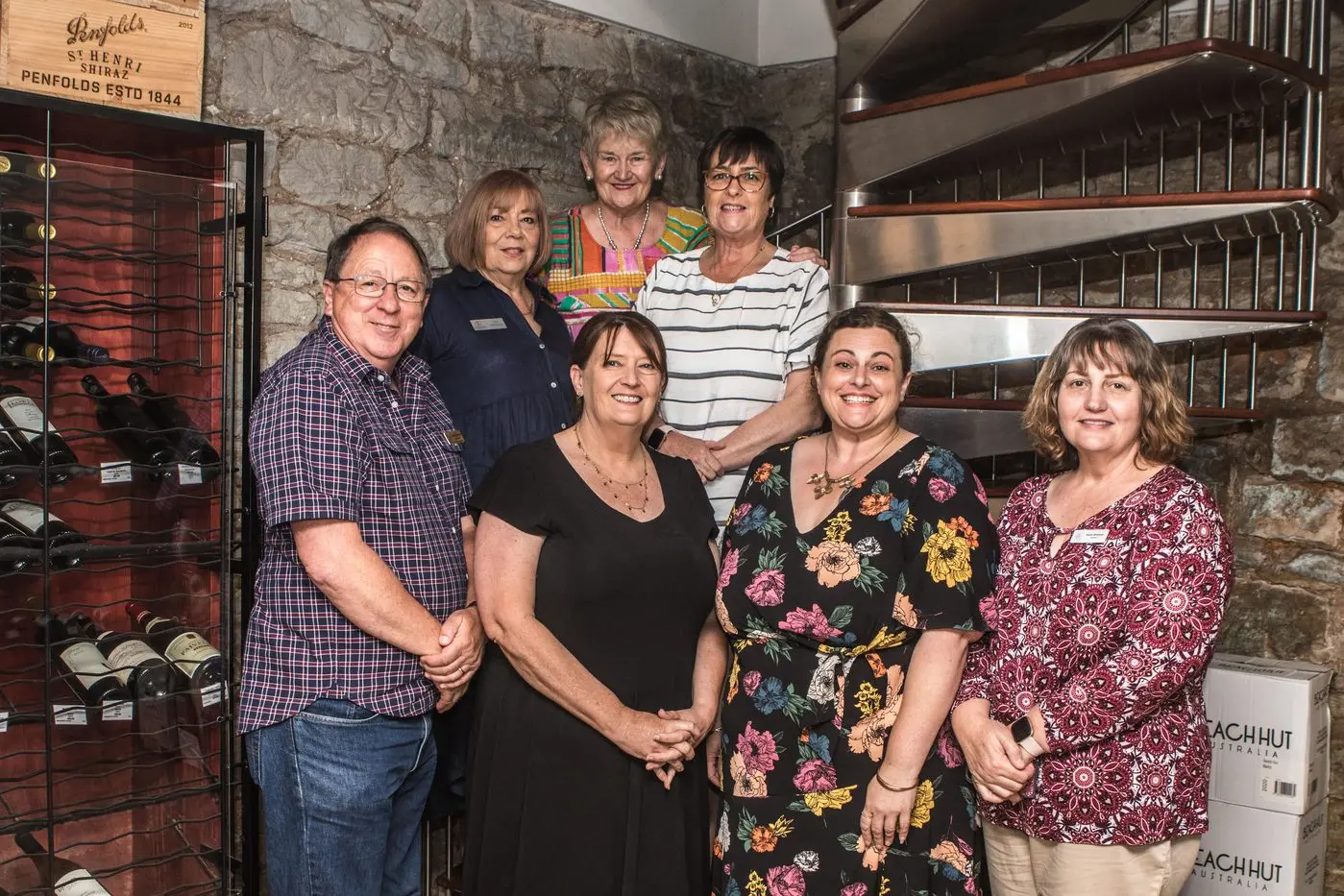
A small group of central west civil celebrants gathered in Dubbo for a celebratory lunch and to reminisce about their experiences.
Collectively, the group has officiated at weddings and other ceremonies across the greater Dubbo area and many central west communities including but not limited to Tottenham, Warren and Coonamble, Gilgandra, Wellington, Geurie, and more. Several of the group also conduct funerals. They have filled in for each other when needed and provide support and encouragement to each other and to other colleagues unable to attend the lunch.
Helen McLean of Dubbo has been authorised for 28 years and recalled a memorable wedding experience marrying a couple on a flight to Antarctica several years ago. The legals were completed as the jet flew over Tasmania, and a celebration ceremony was held with the passengers as the aircraft flew over Antarctica.
“I remember we were right over [the Tasmanian town of] Penguin when I married them. I had to do it while we were still in Australian airspace,” Helen said. The onboard party over the Antarctic was a joyous occasion, she said.
Although the pandemic is over, the recent bad weather has affected many local weddings in the central west this year, with outdoor weddings particularly impacted. Rising floodwater has impacted some riverside events and at times torrential rain forcing couples to opt for their plan B or C.
Peter Woodward recalled a recent wedding he officiated at where those involved had to be flown out by helicopter from a flooded property so the couple could marry as planned.
Flooding over low-lying parts of the Mitchell Highway between Dubbo and Narromine and routes inland to Warren and Collie from particularly heavy rainfall also caused issues for travellers seeking to get between towns for weddings during September and October. Widespread flooding continues to impact different parts of the central west.
The stats on Australia’s authorised officiants may surprise you. There are 10,000 civil marriage celebrants nationwide, as well as tens of thousands of religious or faith-affiliated celebrants. Rounding out the figures are the more than 200 officials who are authorised to conduct civil marriages on behalf of the states and territories in registry offices and courthouses.
With the exception of remote communities, rural and urban communities generally have ample choice when it comes to choosing how they will marry. The willingness and ability of civil celebrants to travel, as well as increasing numbers of celebrants in smaller communities, also increases the ability of couples to marry in rural communities.
Dubbo has 13 authorised civil celebrants, one authorised religious celebrant, and 28 authorised ministers of religion according to information available from the Commonwealth Attorney-General’s website which lists celebrants alphabetically by location and affiliation. The registrar of the Dubbo courthouse is also authorised to officiate at marriage ceremonies on behalf of the NSW Government.
Outside Dubbo, authorised civil celebrants are also found in Narromine (3), Trangie (one), Nyngan (1), Cobar (1), Gilgandra (1), Parkes (6), Forbes (2), Mudgee (8), Cumnock (2), Molong (1) and Orange (20).
While many religious congregations in communities across the central west are without a permanent ordained presence, civil celebrants can work with lay congregations in those communities to provide the legal elements to religious marriage ceremonies conducted by lay officiants. This is often called “co-piloting” or “working in tandem”.
With the pandemic now behind us, it is envisaged that weddings will gradually return to pre-pandemic levels, which saw almost 114,000 weddings registered in 2019.
James Eynstone-Hinkins, ABS Director of Health and Vital Statistics, said after the record low 78,989 weddings in 2020, marriage numbers recovered in early 2021 before the Delta wave of the COVID-19 pandemic once again interrupted wedding plans.
“Marriage numbers in Victoria and New South Wales were particularly affected from June and July 2021 onwards as public health restrictions were stepped up. As a result, marriage registrations in 2021 were down 34.6 per cent in Victoria and 31.0 per cent in New South Wales when compared with 2019.
“Marriages in other states and territories were less impacted, with numbers in Queensland, South Australia, Tasmania and Northern Territory almost returning to pre-pandemic levels,” he said.