
PHOTO
Councillors chat with Bush Summit big-wigs
Despite doubts by some cynics who viewed the recent Bush Summit as another “We Support the Country” talkfest, before everyone heads back to the Big Smoke, the event offered a range of local benefits, our local government leader argued.
Central among these was the access it offered to the "shell-like" ears of some of our major political and business leaders, Mayor Josh Black believes.
“It was a really great opportunity to speak to a range of politicians including the prime minister, premier, as well as leaders of the Shooter’s Party, One Nation, Nationals, Liberals, and QANTAS regional reps, it was huge!” Cr Black enthused.
“All of the councillors and I had a half-hour meeting with the PM, we were bloody lucky… how many people across the country want a half-hour meet with the prime minister?”
The meetings, he emphasised, were not about small talk to do with the weather and the honour of hosting major players in the Orana region once a year.
“It was the opportunity to highlight to the prime minister and premier what this region needs in the way of support from government,” he told Dubbo Photo News.
“It was good for Dubbo as we raised a whole lot of important issues such as, enabling infrastructure for more housing, an urgent care clinic at the hospital, our regional airport, and the CSU campus,” he concluded.
•••
Fluoride back-on, after near-decade breakdown saga
Fluoride in our drinking water was one of those health scares from the 1980s that critics claimed was slowly poisoning our urban populations.
Well, that’s one “poison” that locals haven’t had to worry about for seven years, after a dosing breakdown saga going all the way back last decade.
That was when the applicator plant at the region’s water works finally gave up the ghost due to the corrosive effects of the dissolved chemical ion on the infrastructure at the plant.
Somewhere along the line though, no one told the powers-that-be at council of this small technical hiccup!
Cr Mathew Dickerson recently told Dubbo Photo News he had only discovered this problem purely by chance some years later, and after he had returned to the mayorship following a stint out of council…
“It stopped being in our water in 2019, I only found out about it when my wife was having a coffee with a friend and she told her there was no fluoride in the water, I said ‘don’t be silly’, and I asked the general manager at the time who said to me, don’t be silly,” Cr Dickerson recalled.
“He then went down the line and got back to me and said ‘it’s true,’ there’d been a failure in the dosing equipment and, as I understand it, someone had been told to stay quiet about it,” he told Dubbo Photo News.
He said that, possibly due to the less-than-ideal working relationship in the Chamber during the 2017–2021 term of council, the information had not been relayed to the right people.
“I only found out about it in 2022, this was a terrible example of the former council not doing something about it,” Cr Dickerson believes.
“But you have to recall, that there was so much chaos at council at the time, so who knows?” he observed.
He also pointed-out that, under the state’s “Fluoridation of Water Supplies Act 1957”, any water utility that has been “directed” to add fluoride to the water, must continue to do so as to not be in breach of the Act.
A health advocate with strong environmental credentials, he said that the campaign to remove fluoride – which helps strengthen and maintain teeth in both adults and children – from drinking water, was based on only partial understanding of its science.
“The target level in drinking water is about one part per million, something like one milligram per litre, with a range of between .9 to 1.5 parts allowed under the regulations.
“There’s certainly detrimental effects if you overdose but, to get that effect, requires about eight times that amount… then you can suffer conditions like skeletal fluorosis, which causes weaking of the bone density.”
In good news – or bad news, depending on your point of view of fluoride in water – the rebuilding of the fluoride dosing system, is almost complete.
“A tender was awarded a couple of years’ ago and the work, I understand, is finished,” Cr Dickerson said.
“I asked a question to staff, and was told through an email in June, that it would be up-and-running sometime between August 17 and September 4,” he concluded.
Mayor Black, however, thinks that this deadline may have been a touch optimistic and isn’t himself sure that the new fluoridation system is as yet up and running.
“I think it’s 99 per cent done – we had to do the whole lot, the whole system – but that work does have to be signed-off by authorities like NSW Water and NSW Health, we can’t just do it ourselves,” he told Dubbo Photo News.
“I think part of the problem with the old system was, that, at some point we went from liquid application to powder, and that corroded the pipes that ultimately failed,” he opined.
He also offered the view that the failure of the previous council to act on the issue, may have been more to do with cock-up than conspiracy.
“All of this happened to a council under strain, I think someone told someone and, for some reason, it hadn’t been passed up the line,” Cr Black believes.
“I think it was just an oversight, one of those things that happened at the time,” he concluded.
To the issue at hand, a council rep who had initially told Dubbo Photo News that the new fluoridation system would be up-and-running by the end of the year, was in the process of finding an actual start date, at the time of publication.
•••
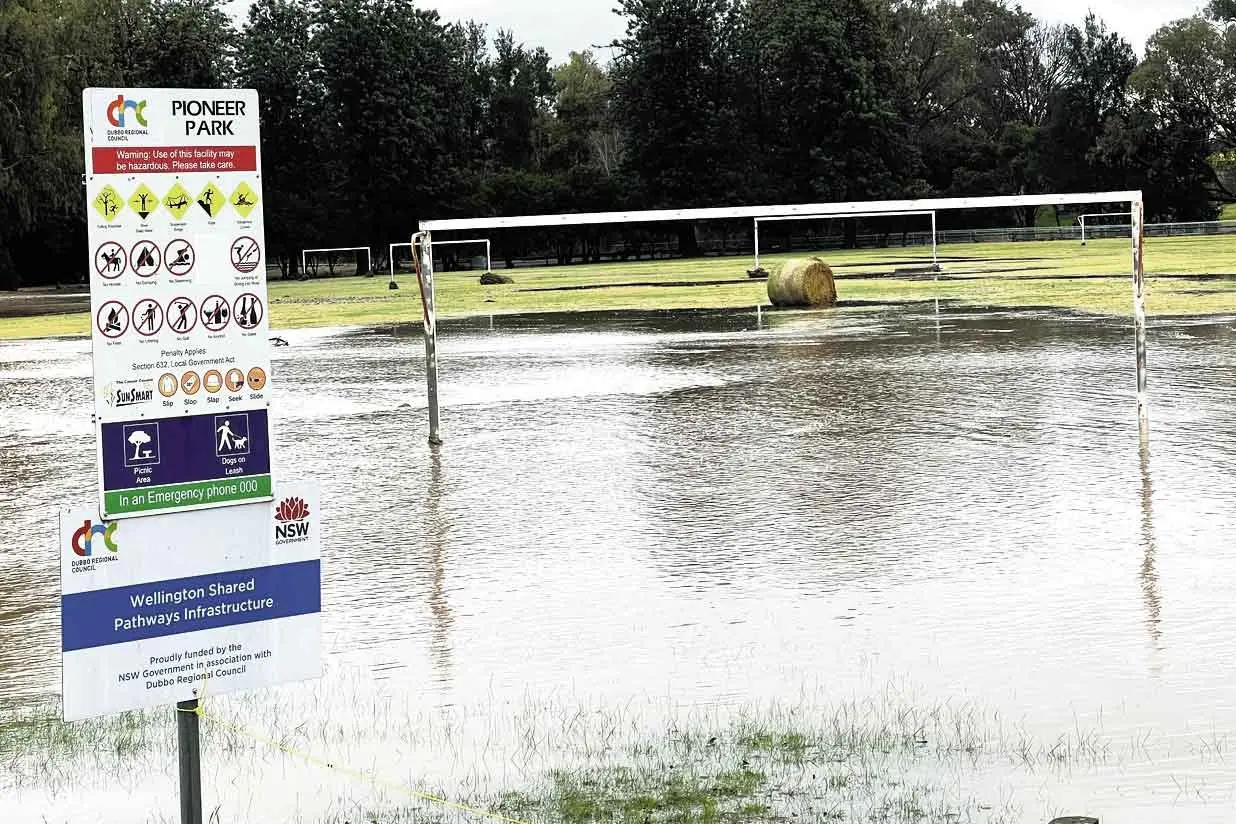
New Wellington flood data map looks to the future
Wellington residents can now get a gander at updated flood mapping data with the Wellington Flood Study on public exhibition.
The study uses the latest technology and additional rainfall and river gauge data to map how the Macquarie and Bell Rivers behave during a range of flood events, council said.
Engagement sessions will be held in Wellington with the consultants and council officers available to answer questions from residents next Tuesday, September 22 from 6–8pm and on Wednesday September 23, from 12–2pm, at Wellington Civic Centre.
Council officers will also be on hand at Wellington Rotary Markets on Saturday, September 26, to provide answers about the flood modelling results, flood risks, and draft recommendations.
The study and interactive mapping tools are also available on the council website.