
PHOTO
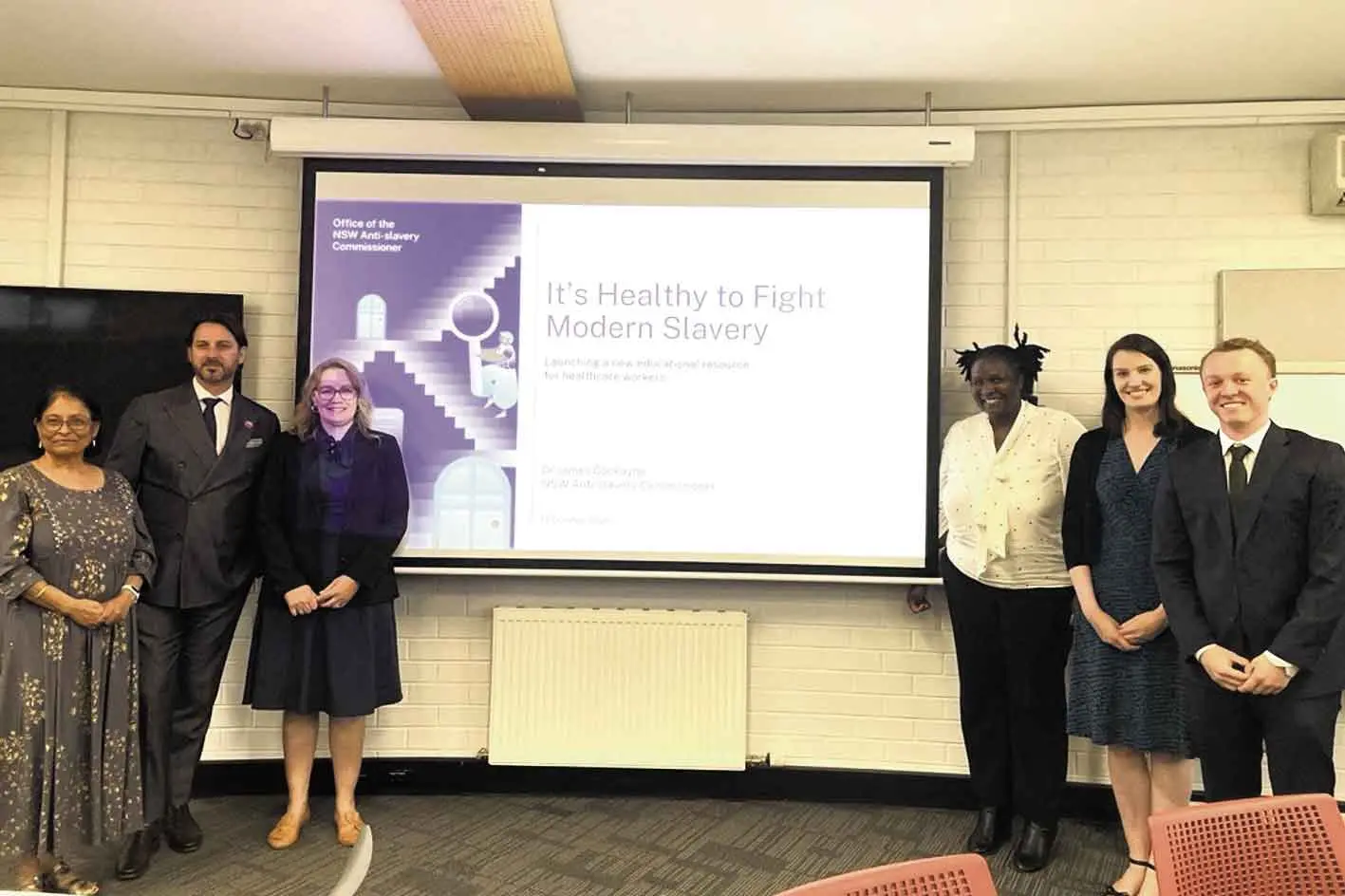
A new resource launched in Dubbo on Tuesday, October 13, aims to help healthcare workers recognise the often-hidden signs of modern slavery and respond safely and appropriately.
NSW Anti-slavery Commissioner Dr James Cockayne launched the resource at Charles Sturt University, bringing together local health professionals, community organisations, educators and other regional stakeholders.
Modern slavery can be difficult to identify and may involve coercion, threats, debt, isolation or control rather than physical restraint. Healthcare settings can be one of the few places where a person experiencing exploitation comes into contact with a trusted professional outside the control of those exploiting them.
Around 68 per cent of people who have experienced human trafficking access healthcare at least once during their period of exploitation, highlighting the important role health workers can play in recognising concerns and helping people access support.
Dr Cockayne said that launching this resource in Dubbo recognises the critical role regional health and community services play.
“These are trusted services with deep connections to their communities, and they can be an important part of identifying exploitation and connecting people with support,” Dr Cockayne said.
The new educational resource was developed by the Office of the NSW Anti-slavery Commissioner through the “It’s Healthy to Fight Modern Slavery” initiative, with input from people with lived experience, healthcare professionals, educators, clinicians, specialist services and other stakeholders.
It is designed for healthcare workers across a range of settings, including hospitals, primary care, community health, mental health, Aboriginal health, refugee health and rural and remote services.
Gargi Ganguly, Vice Chair of the Not-for-Profit Guide Foundation, said geographical isolation, language barriers and limited access to services can increase vulnerability to exploitation in regional NSW.
“In regional communities, where exploitation can remain hidden behind fear, silence and dependence, healthcare professionals are often a vital point of trust and connection,” she said.
“The launch of this resource in Dubbo is an important step towards ensuring that modern slavery is recognised, that vulnerable people are heard and supported, and that where someone lives or where they come from never determines their right to dignity, safety and freedom.”