
PHOTO
The discovery of an ancient bird at the Wellington Caves has palaeontologists in a flap.
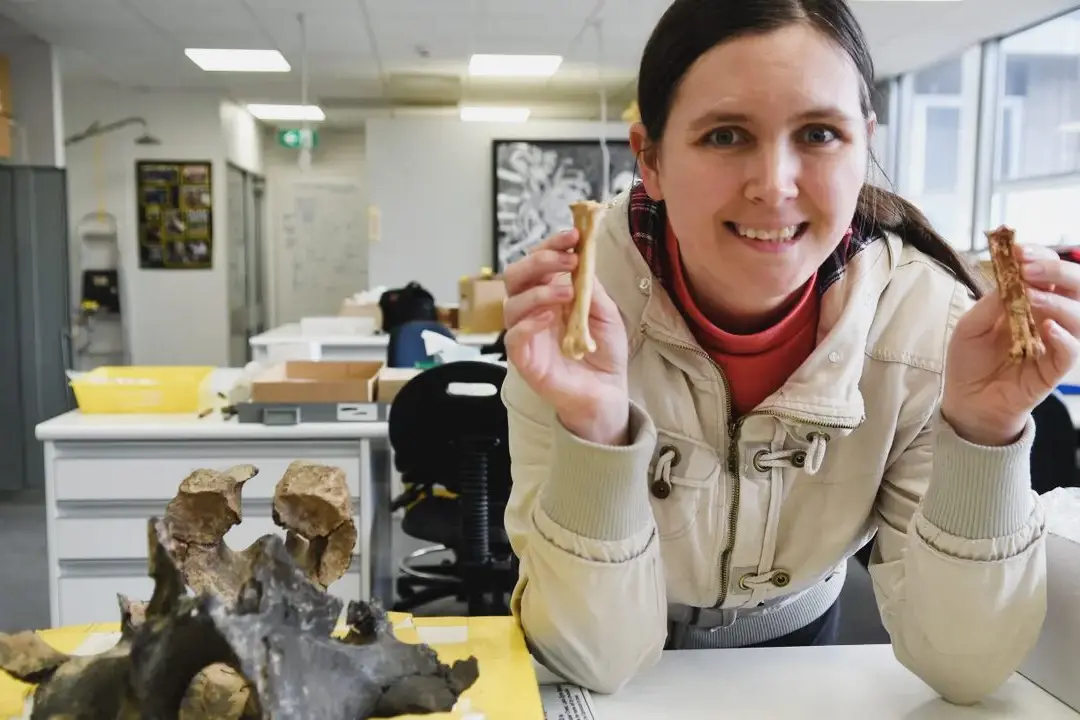
A dig at the Caves by Flinders University and the South Australian Museum has uncovered Australia’s first vulture species, Cryptogyps lacertosus.
The megafauna species had initially been classified as an eagle more than 100 years ago, but lead author Dr Ellen Mather, from the Flinders University palaeontology research lab, said that wasn’t the case.
“We compared the fossil material to birds of prey from around the world, and it became clear right away that this bird was not adapted to being a hunter, and so was not a hawk or an eagle,” Dr Mather said.
“When we placed Cryptogyps in an evolutionary tree, this confirmed our suspicions that the bird was a vulture, and we are very excited to finally publish on this species.”
Cryptogyps lacertosus would have existed alongside Diprotodon.
Live science is part and parcel of life at the Wellington Caves, with several universities visiting throughout the year.
Wellington Caves operations coordinator, Michelle Tonkins, said it was “really exciting” to see fossil evidence from the Caves continuing to shine a light on Australia’s megafauna history.
“The first discovery of Australian megafauna fossils was found at Wellington Caves in 1830 and since then the site has been explored by many palaeontologists and scientists wanting to undercover further secrets,” she said.
“We are so proud to be a part of the amazing work that Flinders University are doing.
“Visitors can see the area where Flinders are still digging and researching during a Cathedral Cave tour.”
Dubbo Regional Council manager of regional experiences, Jamie Angus, told Dubbo Photo News anything that “drew the national eye” to the Caves was worth celebrating.
“Flinders University loves to come here, they do live digs at the caves, and they’re not digging into the rock, they’re actually digging into the mud that has washed into the caves over tens of thousands of years,” he said.
“And we know there are more things to discover – you point in any direction, and you’ll find fossils there.
“We love that there’s potentially a giant something just a few centimetres away.”
Visitors to the Caves can track the entire story of the area – from ocean fossils, to megafauna, the region’s First Nation’s people, and the history of mining – through the award-winning Ancient Landscapes exhibit.
“It’s so interesting and there are very few places in Australia where you can see that,” Mr Angus said.
“The temperature inside the Caves sits between 18 to 20 degrees all year round, and these conditions, along with the geology and the hydrology of the site, have allowed the fossils to be preserved.
“We even have thylacine bones – Tasmanian Tiger bones – here at the Caves, which not many people expect.”
Younger visitors to the Caves can try their hand at digging for fossils.
“We have the Discovery Lab which allows kids to come along, and they get a big tray of dirt, and they can dig in that and find all kinds of small bones, fossils, crystals, you name it,” Mr Angus said.
“We want people to come and have a great experience and, of course, if you bring kids to a museum and they want to touch stuff!
“It’s really hands on, and they love it.”
Mr Angus said the Caves team were hoping to share more news from the Flinders University dig soon.