
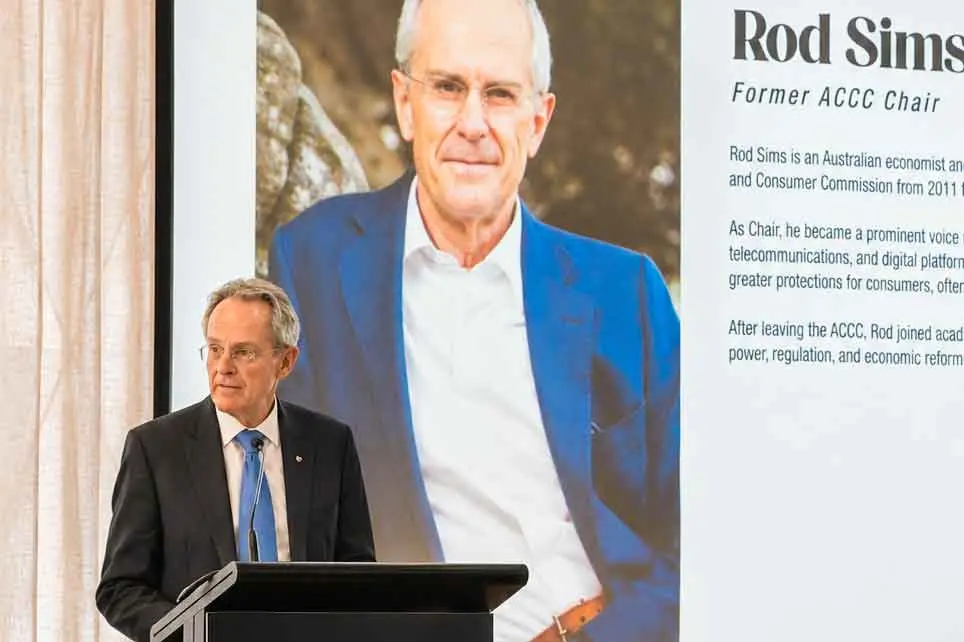
PHOTO
The media’s role is fundamental to our society and our democracy. It is more important than ever at this time of social media effectively encouraging polarisation and resentment.
This is why I am worried about the Government seemingly wanting to remove the benefits of copyright from media content. Let’s look at what we know.
Brent Hecht, Microsoft’s director of applied science, in an internal email, has described AI scraping and training practices in relation to media articles as “the largest theft of labour in human history”. He is correct!
Yet the major tech firms argue that Australia’s copyright laws create a hostile environment for technology growth. Jason Kwon, from OpenAI, has warned that copyright issues will determine whether AI companies invest billions in Australia or not. That is, legalise the theft or we will not invest in Australia.
The AI companies make two arguments.
First, it is said that Australia’s copyright laws are out of line with international norms. Yes, in some minor ways but in these circumstances irrelevant. When it comes to AI taking media work, the impact of copyright law appears to be the same in Australia and the US and overseas generally.
This is why in the US there are over 150 court cases where AI companies are being sued by rights holders for breach of copyright.
AI companies are seeking to weaken or remove copyright protection in Australia in ways they cannot achieve in the USA or elsewhere.
Second, it is said that it is too hard for AI companies to do deals with every rights holder. But there are a finite number of large media companies and collective deals can then be done with smaller players. As an obvious example, Country Press Australia represents 107 different publishers and 237 member newspapers.
AI companies seem unwilling to engage with far fewer suppliers than supermarkets Coles or Woolworths do on a regular basis.
Currently, the AI companies can either do voluntary commercial deals – bilateral and collective – to gain access to content, or rights holders can take court action when their content is taken without consent.
There are over 200 announcements of licensing deals covering over 8000 media companies around the world. So voluntary commercial deals are happening overseas.
It appears that the Government is aiming to remove copyright protection by the following steps.
First, it is said that media companies can opt out of the Government’s scheme and so keep their copyright protections. The AI companies say that if a site uses the Robots.txt standard they have written, their content will not be used for training purposes.
But this standard is voluntary. We are relying on the AI companies regulating themselves. Further, even if the AI companies do voluntarily comply, this requires millions of automated crawlers, of unknown ownership, to follow the standard.
Finally, fewer than 40 per cent of the world’s most visited domains use Robots.txt. How can we expect smaller media companies to have the knowledge and resources to use the Robots.txt standard?
Copyright should not be a technical obstacle course. Alternatively put, it is AI developers who must demonstrate lawful access and use, rather than publishers having to prove that they tried to prevent it.
Second is the option of voluntary agreements between rights holders and AI companies. But why do such deals given the third key step.
The third step being offered in exchange for losing copyright is to benefit from a fund that the AI companies would pay into for the access to the previously copyrighted material.
No control over how your copyrighted material is used, and a completely unclear level of payment over which rights holders have no say. History on this would suggest that the payment will be miserly and the allocation of proceeds opaque and ripe for politicking.
Then there is the concern expressed by many international media companies who have written to Australia’s Prime Minister stating that “...the proposals risk establishing Australia as a location to launder infringement worldwide”. They do not want to see Australia as the copyright “tax haven” of the world.
I think the Government should urge or, indeed, require that the AI companies negotiate with those whose content they clearly need.
If this is too difficult then the Government should follow the maxim “do no harm” and leave AI’s access to content to voluntary commercial negotiation, or the courts, as is happening in the US and other countries.
* Rod Sims is Enterprise Professor at the University of Melbourne. He was Australian Competition & Consumer Commission Chair from 2011-22. Rod also delivered the opening address to the 2026 VCPA annual conference held in Melbourne on Friday, November 13, 2026.
* Dubbo Photo News is a member of Country Press Australia.