
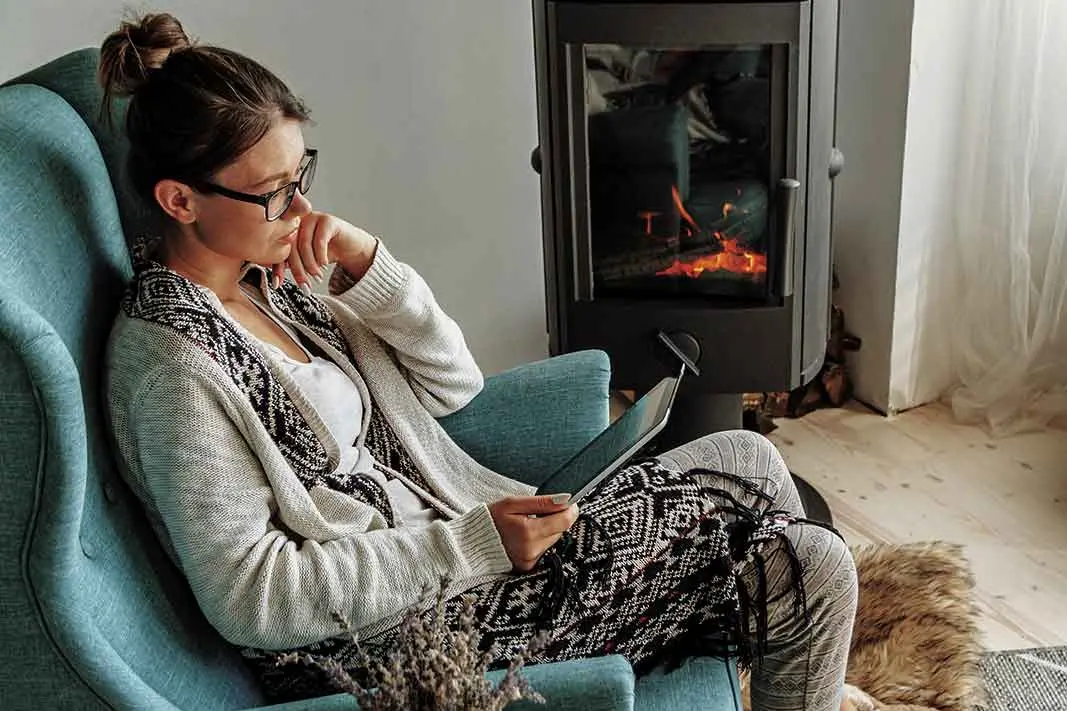
PHOTO
A fireplace can add warmth and atmosphere, but the best choice depends on room size, fuel access, installation costs, local air-quality rules and the maintenance a household is prepared to undertake.
Wood-burning fireplaces and slow-combustion heaters offer a traditional flame and can continue operating during a blackout. However, they require dry, seasoned firewood, ash removal and regular chimney or flue maintenance. The NSW Environment Protection Authority (EPA) advises against open fires and old, inefficient heaters, and recommends burning only dry, seasoned hardwood in a compliant heater to reduce smoke.
Wood smoke is also a health and environmental consideration. The NSW EPA says domestic solid-fuel burning can contribute substantially to fine-particle pollution during winter, particularly in built-up areas. Modern wood heaters must meet Australian emissions and efficiency standards, but correct sizing and operation remain essential.
Gas fireplaces provide instant heat, flame effects and easier temperature control without ash or wood storage. They may suit homes already connected to natural gas or LPG, although costs can rise where new pipework or a flue is needed. Some models also depend on electricity for ignition or fans and may not operate during a blackout.
In NSW, gas installation, alteration and flue work must be completed by a licensed gasfitter. NSW Health warns fuel-burning appliances can produce carbon monoxide, while unflued gas heaters can also release nitrogen dioxide indoors, making ventilation and servicing important.
Electric flame-effect fireplaces are generally the simplest option because many plug into a power point and do not need fuel storage, a chimney or gas connection. They do not produce combustion gases inside the home, but cannot operate during a power failure.
Consumer group Choice says electric fireplace heaters perform much like conventional electric convection heaters: they can be practical for a small room, but are less efficient and usually more expensive to run than reverse-cycle air-conditioning.
Whatever the fuel, Fire and Rescue NSW recommends keeping flammable items at least one metre from fireplaces and heaters, cleaning chimneys and flues regularly, and maintaining working smoke alarms.