
PHOTO
Working from home can save money on commuting, lunches and other office expenses, but spending more time at home can also push up electricity use through heating, cooling, lighting and computer equipment.
The Australian Government’s energy.gov.au says the first step is understanding when and where energy is being used. Comparing electricity consumption with the same period a year earlier can help identify changes, while smart-meter data may provide an even clearer picture of usage throughout the day.
Heating and cooling is one of the biggest opportunities for savings. Energy.gov.au recommends setting heating between 18C and 20C in winter and cooling between 25C and 27C in summer. Each additional degree of heating or cooling can increase energy use by between 5 and 10 per cent. Closing doors to unused rooms and heating or cooling only the home office can also reduce consumption.
Draught-proofing can make a significant difference, too. Sealing gaps around doors and windows can cut heating and cooling costs by up to 25 per cent, while curtains and blinds can help reduce unwanted heat loss or gain.
Home-office equipment offers smaller but worthwhile savings. The government recommends setting monitors to switch off automatically after periods of inactivity, using sleep settings during short breaks and turning chargers off when they are not required. Laptops also generally use less energy than desktop computers.
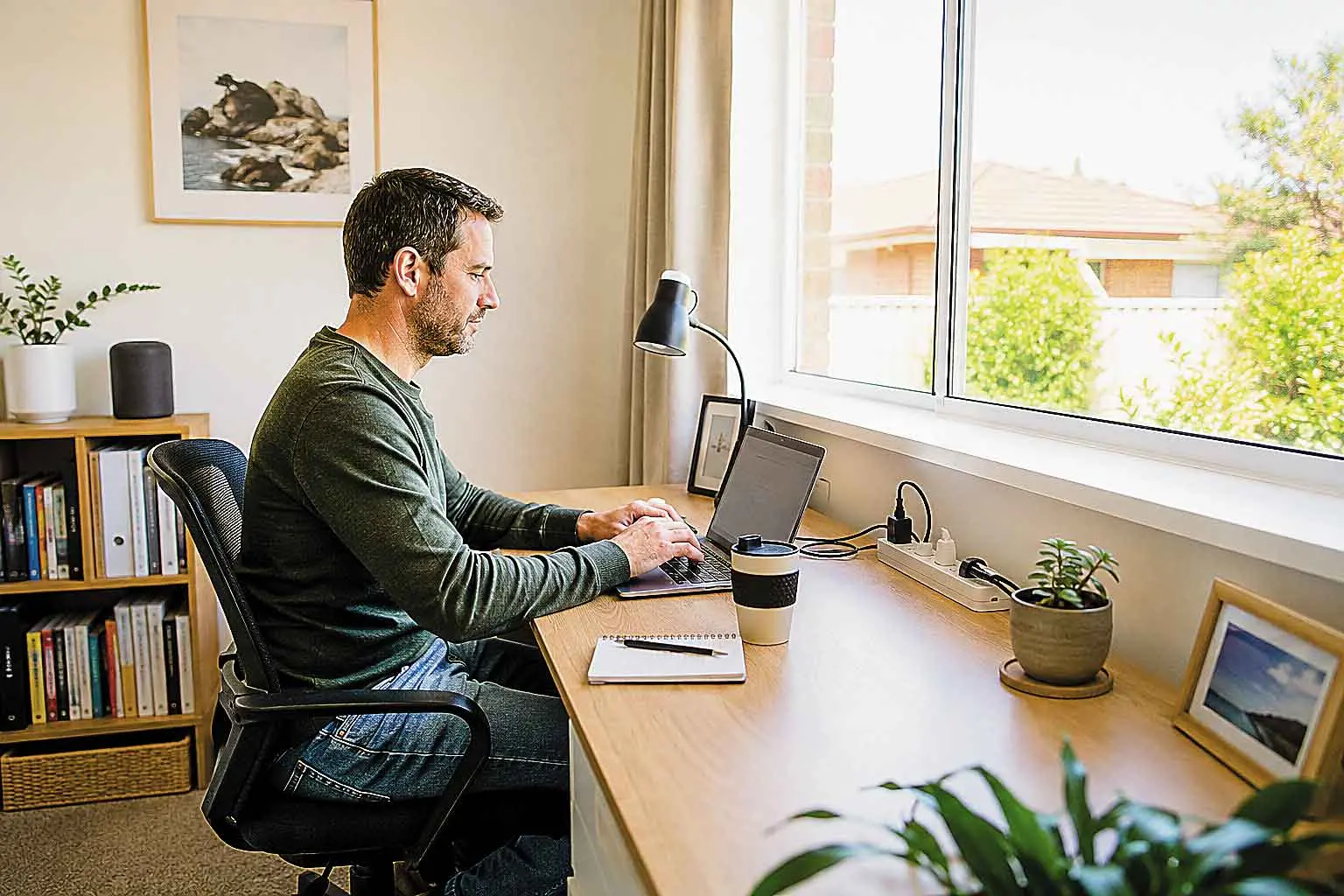
Another recommendation is plugging home-office equipment into a single switched power board, making it easier to turn computers, monitors and peripherals off at the end of the working day – just make sure you don't overload your power point. Standby power across household appliances can account for up to 3 per cent of household energy use, according to energy.gov.au.
Finally, check whether the electricity plan itself remains competitive. The Australian Energy Regulator’s (AER) free Energy Made Easy service compares generally available plans in NSW, Queensland, South Australia, Tasmania and the ACT.
For households with smart meters, the tariff can matter as much as overall consumption. The AER says some plans reward customers for shifting activities such as washing, cooling or electric vehicle charging into cheaper daytime periods – potentially making working from home an advantage if energy-intensive jobs can be scheduled accordingly.