
PHOTO
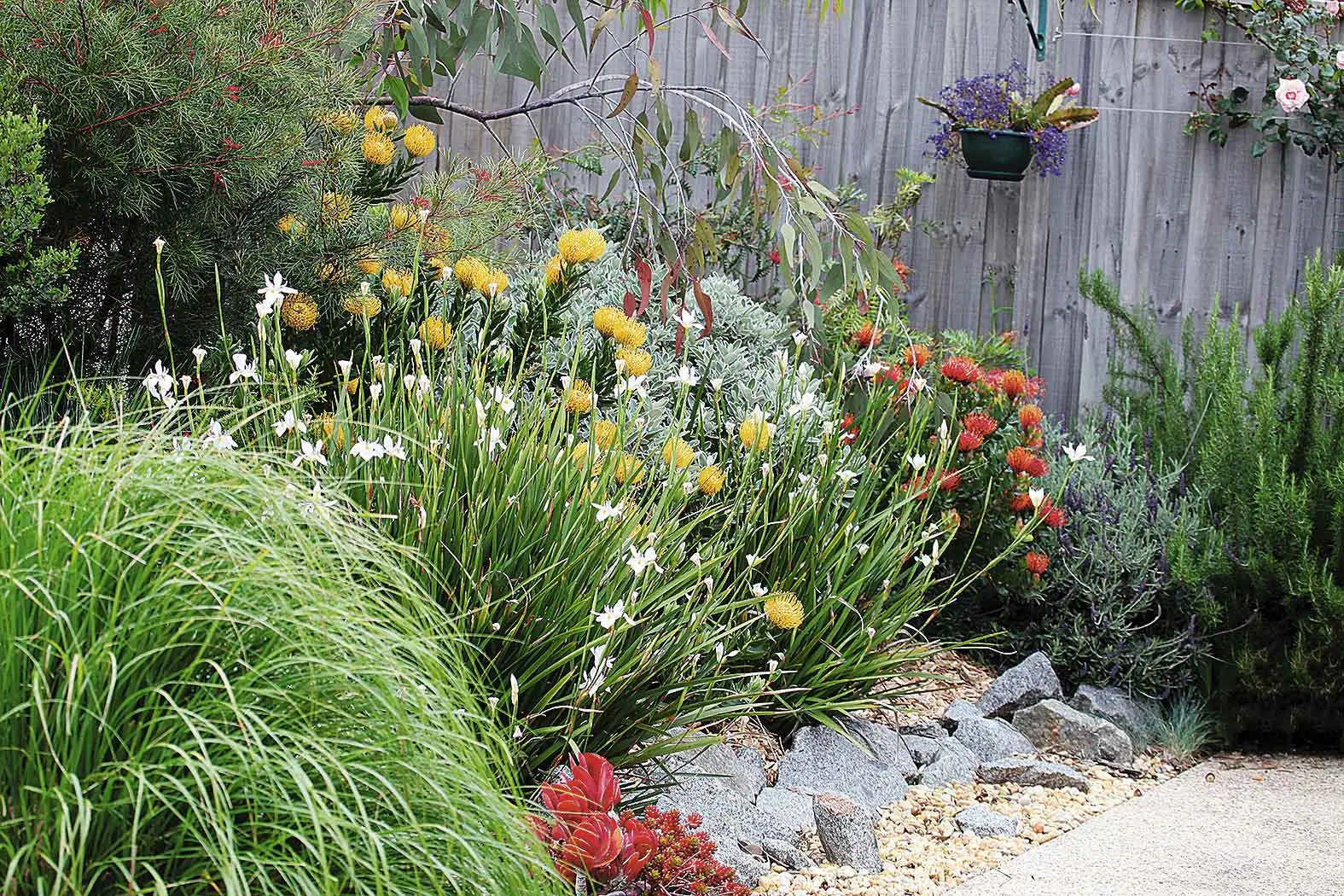
Contrasting colours, textures and shapes can give gardens added visual interest, while thoughtful planting can also create shade, support wildlife and reduce water demand.
The approach can be applied across an outdoor space, from pairing flowers in complementary colours to softening the straight edges of paths with informal planting.
Start with a restrained colour palette. Blue and orange, yellow and purple, or red and green can provide striking combinations, repeated through garden beds, pots and outdoor furnishings.
On ABC’s Gardening Australia, landscape architect John Patrick advises considering flowering times when planning colour combinations, so the intended display comes together. He also explains that cool colours can help small gardens feel more spacious.
Texture offers another way to introduce contrast beyond seasonal blooms. Place decorative shrubs against a stone retaining wall, or combine rustic furniture with soft outdoor cushions.
Gardening Australia also highlights foliage as particularly valuable for lasting texture. Examples include pairing glossy sedum with the soft leaves of lamb’s ears, and contrasting strappy lomandra with wispy Russian sage.
For geometric balance, soften concrete walkways with rounded shrubs or flowing groundcovers. Keep practical needs in mind: the Australian Government’s Your Home guide limiting paving because excessive hard surfaces can contribute to localised heating and reduce water infiltration.
Light and shadow can complete the design. Leafy trees create dappled shade, while sunny openings offer a contrasting atmosphere.
Retain existing vegetation where possible, particularly mature trees, and choose plants suited to local soils and climate to avoid excessive watering and maintenance. A local landscape designer or nursery can help match the desired look with suitable plants.