
PHOTO
8453.0
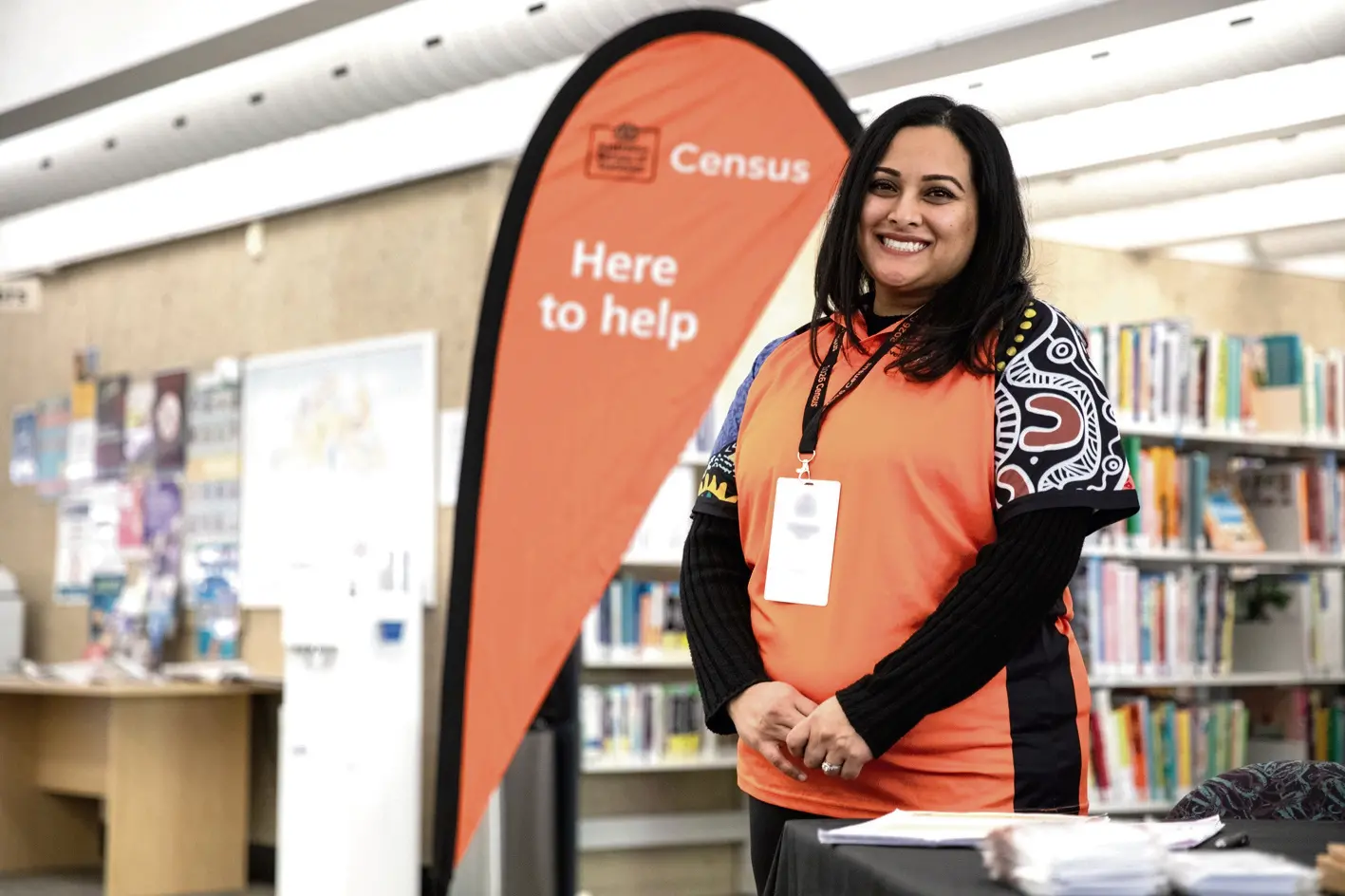
Once every five years, the Australian Bureau of Statistics (ABS) carries out the biggest counting exercise it possibly can: a nationwide Census of Population and Housing.
Unlike surveys, which only reflect a selected sample of people, the Australian Census includes everyone, counting every person and household in the country – including international visitors, visa holders, migrants and refugees.
The last Census was held in August 2021 and the next one is scheduled to take place on Tuesday, August 11.
Households complete the Census form and submit it online or return a paper form by mail.
“The Census asks questions about things such as your age, country of birth, religion, ancestry, language used at home, work and education,” the ABS website states.
The 2026 Census will also include new questions on sexual orientation and gender following extensive public consultation, engagement and testing.
“Only a Census can provide this information for the entire country, including small geographic areas and small population groups.”
•••
Completing the Census
Late last month, households began receiving information about how to complete the Census.
“Most households will get a letter in the mail. This includes your 16-digit Census number and temporary password to complete the Census online. If you prefer to complete using a paper form you can request one,” the ABS website says.
People living in rural or remote communities with poor internet access may receive hard copy forms. Census staff have also been engaging with Aboriginal and multicultural communities, people experiencing homelessness, and others.
•••
Challenges for non-English speakers
Dubbo Photo News reached out to local multicultural groups to find out how they were preparing their community members to participate in the Census.
Raj Kharel, president of the Dubbo Nepalese Community Australia (DNCA), said his group was doing a lot of work locally to encourage participation.
“We have started having conversations with people around it, to friends and community circles, and we realised a lot of people are not aware why the Census is important, and you know it should be talked about,” he said.
Raj said many Nepalese community members do have a good command of English, but the DNCA is available to assist anyone who might need help completing the Census.
Similarly, the Orana Gujarati Samaj NSW is also working with its community members on Census participation.
Secretary Saupriya Solanki said the group is working hard in this space.
“We have a WhatsApp group and a Facebook page and we are putting information on there,” he explained.
“Another challenge we may face is people who are elderly who don't know how to write in English or may struggle to fill in the form. We will be helping them out like a ‘Census Buddy’,” he added.
Information about the Census is available in 26 languages (see link below) and from the Translating and Interpreting Service (TIS National) on 131 450.
There is also a link below to information supporting people with disabilities, including access to Australian Sign Language (Auslan) video guides and closed caption videos.
•••
Importance of participating
Federal Member for Parkes electorate, Jamie Chaffey MP, encourages residents to complete the Census.
“Statistics not only help us understand our communities and population, they help us make decisions about services, facilities and funding,” Mr Chaffey told Dubbo Photo News.
“The Census provides all tiers of government with reliable information and tells us the story of our population.
“I urge people in Dubbo and across the electorate of Parkes to ensure they are ready to fill out the Census on August 11.”
His words are echoed by state MP Dugald Saunders, Member for Dubbo electorate.
“While the Census is federally controlled, from my perspective as a state MP, it’s hugely important to show what regional areas like ours need for the future,” Mr Saunders said.
“It tracks how communities are changing and helps guide some of the funding required for public services.
“It’s also hugely important from an infrastructure planning perspective, as everything from schools and hospitals to roads and local facilities rely on accurate data provided by the Census,” he concluded.
•••
Further information
• info.census.abs.gov.au/help/get-help-near-you
• info.census.abs.gov.au/language-support
• info.census.abs.gov.au/help/information-people-who-need-extra-support-and-people-living-disability