
PHOTO
Weather, school pick-ups, commodity markets, livestock, cash flow, banking, insurance, crops, water supply, health, education, staff and household chores.
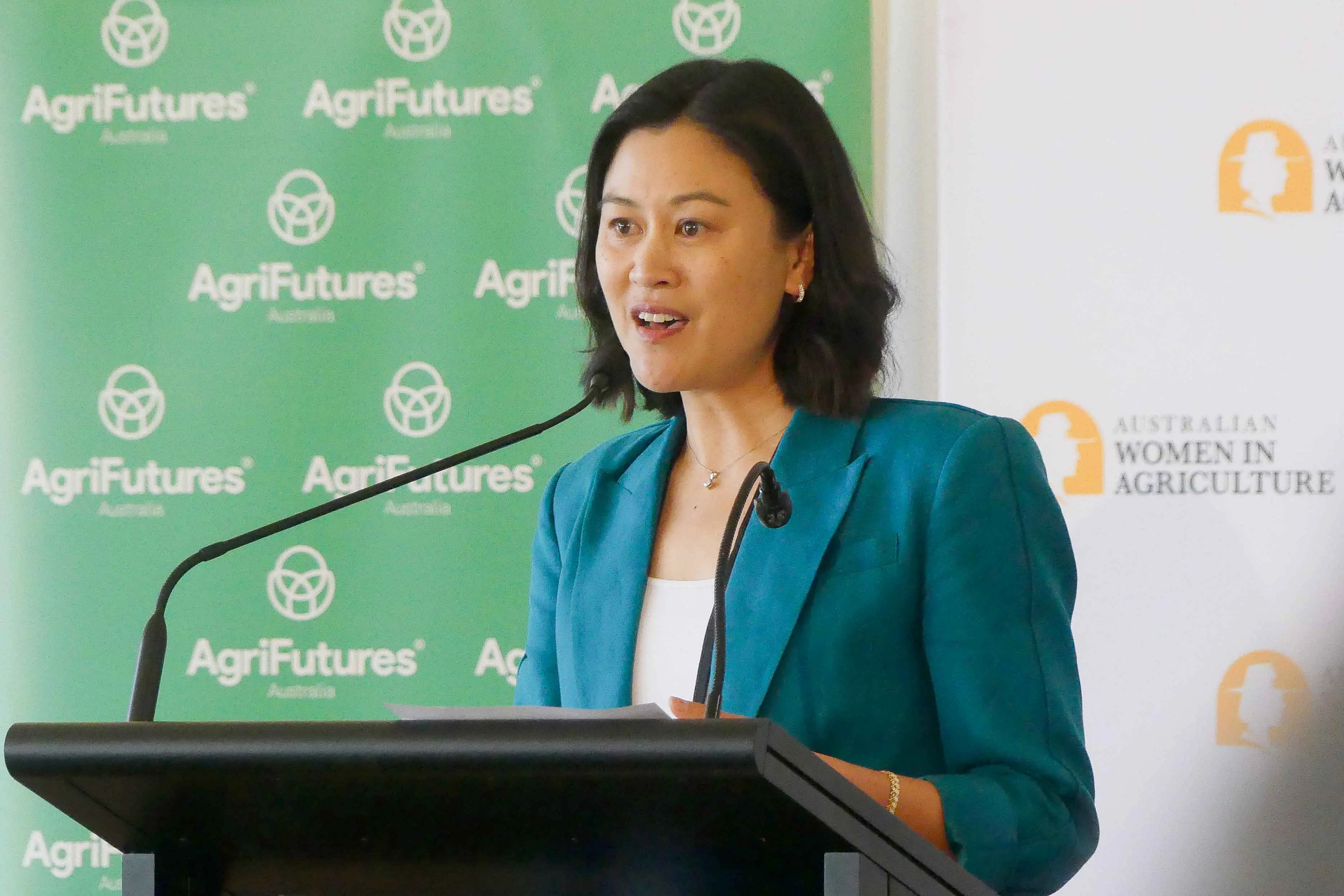
Those are just some of the things women on the land have to consider every morning, often before they've even had breakfast, ag-tech consultant Vi Nguyen says.
AI is set to shoulder much of that mental load, with the technology forecast to expand exponentially within the next decade, she said.
"Autonomous sprayers will spray what is needed and reduce costs and waste," Ms Nguyen told the Australian Women in Agriculture national conference in Orange, NSW, on Tuesday.
"Autonomous cars can pick up your children from school and deliver goods to your home.
"Robotic equipment and robots can automatically pollinate plants... so rather than doing the work, you're overseeing it."
Ms Nguyen has been working with the NSW drought co-ordinator to hear from farmers around the state, using AI to record and collate hundreds of their stories.
Those conversations revealed how new technology like satellite animal monitoring and autonomous tractors are helping producers, said Ms Nguyen, the chief executive of consultancy Ryka Global.
A grain farmer using sensors to monitor soil moisture and nutrients was able to save 20 per cent of her fertiliser in a recent season, she said.
"AI has the power to reshape all aspects of your life and the most exciting part is that we have the opportunity to shape this.
"This is the biggest opportunity: to use it and to teach it (to get) agricultural and regional communities where they need to be."
Hundreds of women from across the nation's agriculture sector were at the conference to network and hear discussions on leadership, climate, technology and Indigenous practices.
Agricultural leader Pip Job, who was a drought co-ordinator in the 2018 disaster and has served on a number of boards, said the best decisions were made by diverse leaders.
"When I show up in a room, I'm conscious of what voices might be missing," Ms Job said.
"How can I be a voice for our First Nations sisters and their communities, and for migrants and for the LGBTQI community who are desperately under-represented in agriculture?
"We've come so far progressing women in agriculture... it's our time to turn around and help lift up all the other minority groups behind us, so they have the opportunity to create influence."