
PHOTO
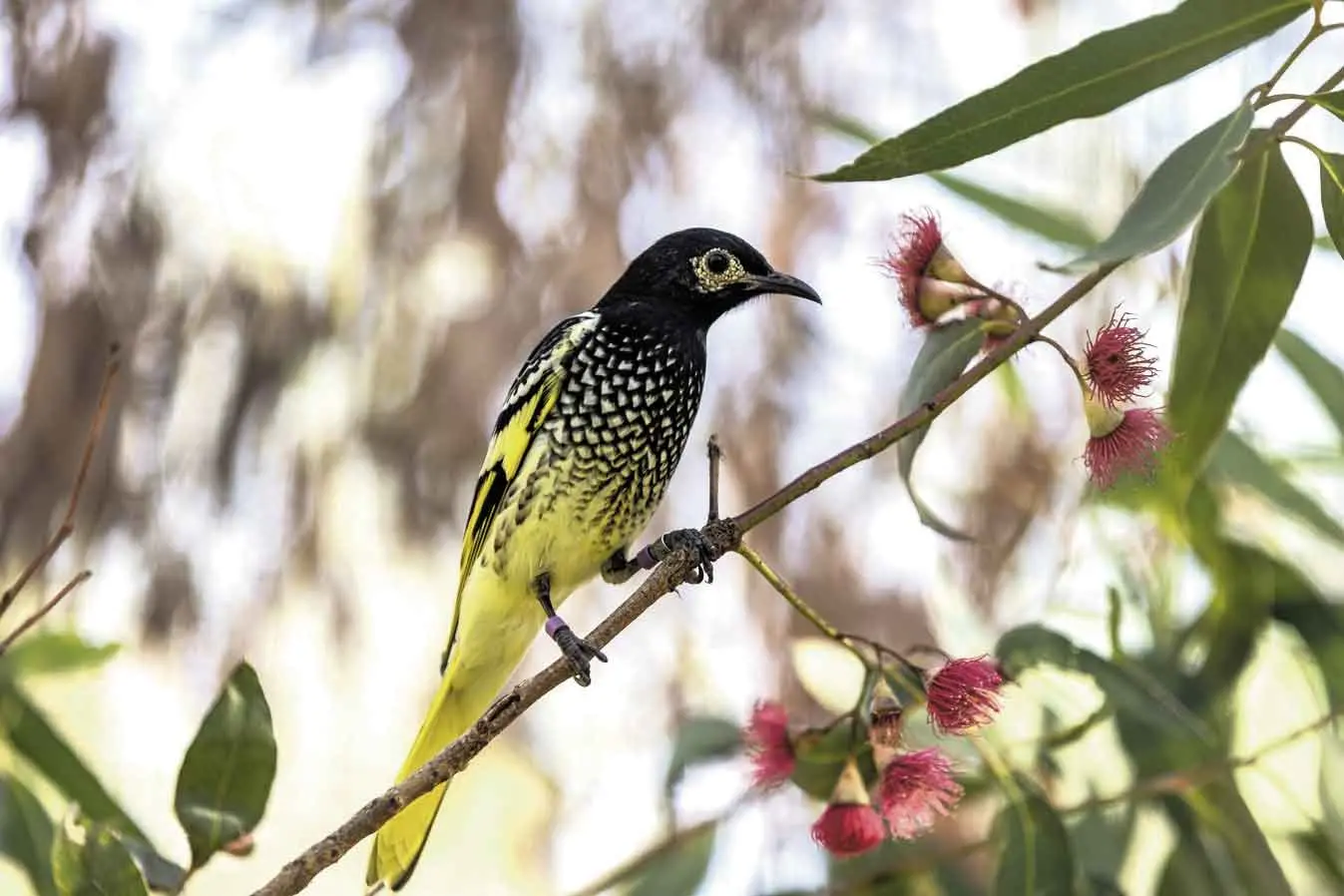
The quest to save critically-endangered Regent Honeyeaters – and restore the birds’ “lost song” – has received a boost with 41 chicks hatching in the conservation breeding program at Taronga Western Plains Zoo in Dubbo.
In what has been the most successful breeding season to date locally, the recently fledged birds will become part of a targeted song tutoring program that is crucial to the species’ survival in the wild, with a particular focus on the males.
“This is one of our largest offspring cohorts that we’ve successfully bred in Dubbo and what’s even more significant is about half those are males who will join our song tutoring program,” Senior Conservation Keeper Kara Stevens said.
“It’s crucial that older song-tutoring males teach these young males how to sing the correct wild song so when they are released into the wild, they can put those singing skills to use and ideally pair with a wild mate.”
The Regent Honeyeater is a flagship species, pollinating and maintaining habitat both sides of the Great Dividing Range, but faces an uncertain future with just a few hundred remaining in the wild.
Taronga has been breeding Regent Honeyeaters for wild release since 1995, with the program expanding to Taronga Western Plains Zoo in 2019 to increase breeding and holding capacity.
Taronga’s dedicated breeding program has released 480 zoo-bred Regent Honeyeaters to the wild, including the most recent program milestone which saw 69 of the critically endangered birds released over Wonnarua Country in the Hunter Valley.
Taronga scientists have also partnered with the Australian National University to restore the birds’ lost song. Using recordings and direct exposure to just two wild-born male tutors, scientists taught young zoo-bred males the species’ traditional wild song, who then went on to tutor the next generation. By releasing these birds back into the wild, researchers hope that the birds can rebuild the song culture in the wild population.
“Every one of those young birds will contribute to the survival of this endemic species,” Ms Stevens concluded.