
PHOTO
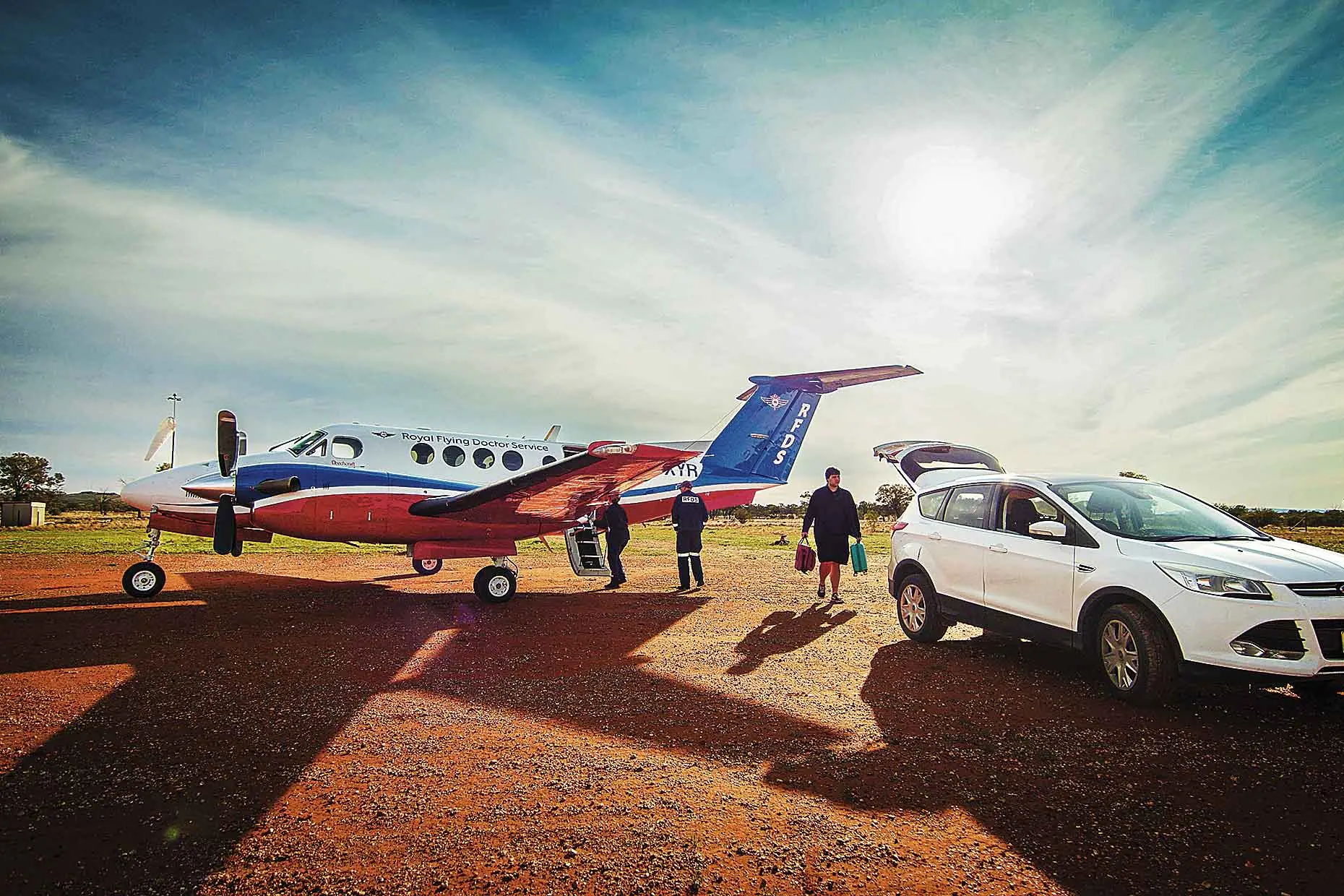
When the Royal Flying Doctor Service (RFDS) needs to land, the difference between life and hours of delay in accessing medical treatment can come down to a single, well-kept airstrip.
Across western NSW, RFDS aircraft rely on around 400 airstrips to reach patients in the bush – many of them privately owned, kept clear, safe and ready by volunteer owners often working alone in tough conditions to maintain a strip most people will never see, let alone land on.
For RFDS pilots, many of those strips present fresh unknowns – conditions that can look fine from the air and tell a different story on the ground. A pilot's judgement only works because of the work an owner has already put in.
Most of us picture an airstrip as a basic strip of cleared ground, an RFDS spokesperson told this masthead. In reality, keeping a bush airstrip flying-ready is a genuine, ongoing undertaking – and what it involves is more surprising than you'd think.
Bitumen airstrips...?
Sealed runways are the “gold standard”, but they're expensive – but not something the RFDS requires. Most of the network is grass, gravel or clay, which means the surface itself becomes something owners have to actively manage.
Long, wet grass is actually worse than bare dirt; it's the single worst surface condition for a landing, the RFDS spokesperson said.
Winter conditions
Far west NSW has famously dry winters, but the daily swing between freezing nights and warm afternoons does something unexpected to the ground, the spokesperson said.
Hard, compacted surfaces start gathering fine dust and loose material that shifts with the wind – and soft patches can hide in plain sight until a plane is already coming down on them. It's why a few hours of grading and clearing can matter more in winter than any other season.
Frosty problems
A frosty strip can look perfectly firm at dawn, then change entirely once the sun hits it. The surface underneath doesn't stay the same all day, which is why conditions get re-checked rather than assumed.
Fog can ground planes
Radiation fog forms fast on clear, still winter nights but visibility can drop significantly within 60 minutes. It's one of the quiet reasons a crew might be delayed even when the forecast looked clear all week. There's no preventing it, only knowing it's coming.
Wandering wildlife
The biggest hazard to landing on bush airtstrips is wandering livestock and wildlife. Sheep, cattle, kangaroos, emus, goats, birds can cause a delayed landing or a flight to be rerouted, the RFDS spokesperson said. A two-minute check before a flight is due can be the difference.
Night landings
Airstrips used after dark are lined with white runway edge lighting alongside the daytime markers, with green lights preferred to signal each runway's end. For portable lighting, EFlares are the go-to – a small detail most people would never think to notice, unless they were the one flying in.
Want to volunteer your airstrip?
Local airstrips are the front door to healthcare for much of the bush.
Property owners can volunteer a portion of their private property as an airstrip, allowing the RFDS to land and depart safely in times of medical need.
Airstrip owners maintain the strips and update the RFDS about their condition, providing access to some of the most isolated communities.
Every hour an owner spends grading, clearing or simply checking a strip is time that keeps that door open – often without anyone outside their property ever knowing it happened.
Anyone interested in becoming an airstrip owner for the RFDS in NSW can find out more by emailing airfields@rfdsse.org.au.