
PHOTO
The pedestrian rail crossing on the western side of the Dandaloo St level crossing in Narromine, damaged in last month’s freight train derailment, finally reopened to the public last Thursday, April 16 – much to the relief of locals impacted by the lengthy closure.
Repairs to the damaged crossing, adjacent to the historic shell of the railway overbridge, were completed by railway asset manager Australian Rail Track Corporation (ARTC).
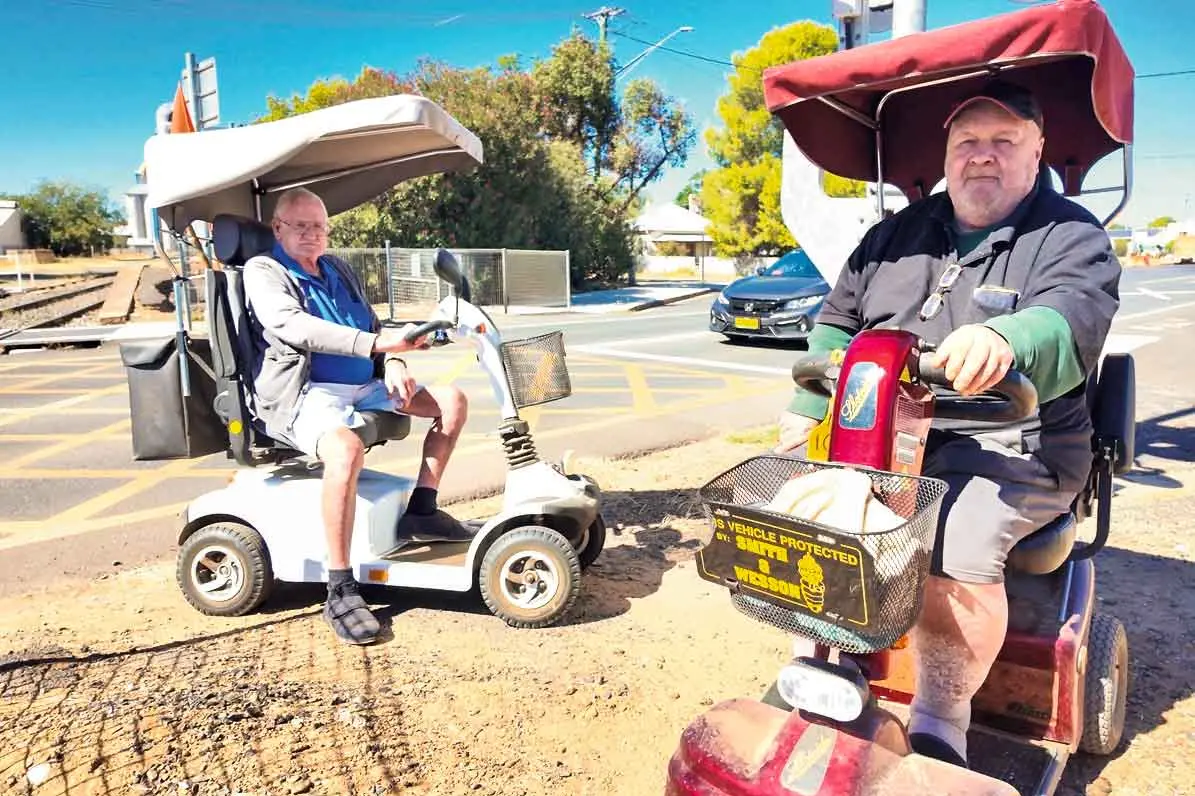
The re-opening of the pedestrian crossing was welcomed by local resident Tom Krensel, who reported the unsafe conditions to ARTC in the days following the derailment after a disturbing incident.
The 74-year-old’s mobility scooter became stuck on Sunday, March 29, in the damaged section of the pedestrian crossing which was – at that time, just after the level crossing was operational – open to the public.
While he wasn’t unseated or injured at the sudden jolt and stop, his shopping toppled from his basket onto the tracks. A passing motorist stopped to help Tom get his scooter out of the damaged space and retrieve his groceries.
Days later, 90-year-old Roger Blackman also found his mobility scooter stuck in the same place, but he was able to free his transport without assistance.
The pedestrian crossing was closed shortly after for repairs to take place.
When Dubbo Photo News visited the site with Tom Krensel on Tuesday, April 14, this journalist observed several people on mobility scooters bypassing the closed crossing by travelling on Dandaloo St.
“It’s two days off three weeks [since the derailment] and the [pedestrian] crossing’s still closed,” Tom said.
“A few of the little old ladies won't come down here because it's just too dangerous,” he added.
While there is another pedestrian crossing on the eastern side of the level crossing, navigating it is difficult for people in mobility scooters because of its design, Tom said.
His comments were supported by Roger Blackman.
“I have trouble getting through over there on that [eastern] side,” Roger said, pointing to the safety fence-like infrastructure which ARTC calls a “rail crossing maze”.
The western crossing has a different design which is much easier for mobility scooters to get through, Roger added, which is why he prefers to use that one when crossing the railway tracks.
Tom demonstrated the difficulties of navigating the eastern side rail crossing maze in his scooter, which required multiple-point turns on both sides of the tracks. He believes minor alterations to the design, such as shortening the barriers a bit, would make it easier for those using mobility scooters.
In a statement, ARTC said the pedestrian rail crossing re-opened on April 16 and further works are planned in the coming weeks.
“Rail crossing mazes are designed to maximise safety by forcing pedestrians to slow down and directly face oncoming trains before they reach the tracks,” the spokesperson said of the navigational issues reported.
“Narromine residents are reminded to always follow all safety advice and obey signage at level crossings as these measures are in place to protect the community,” the statement concluded.