
PHOTO
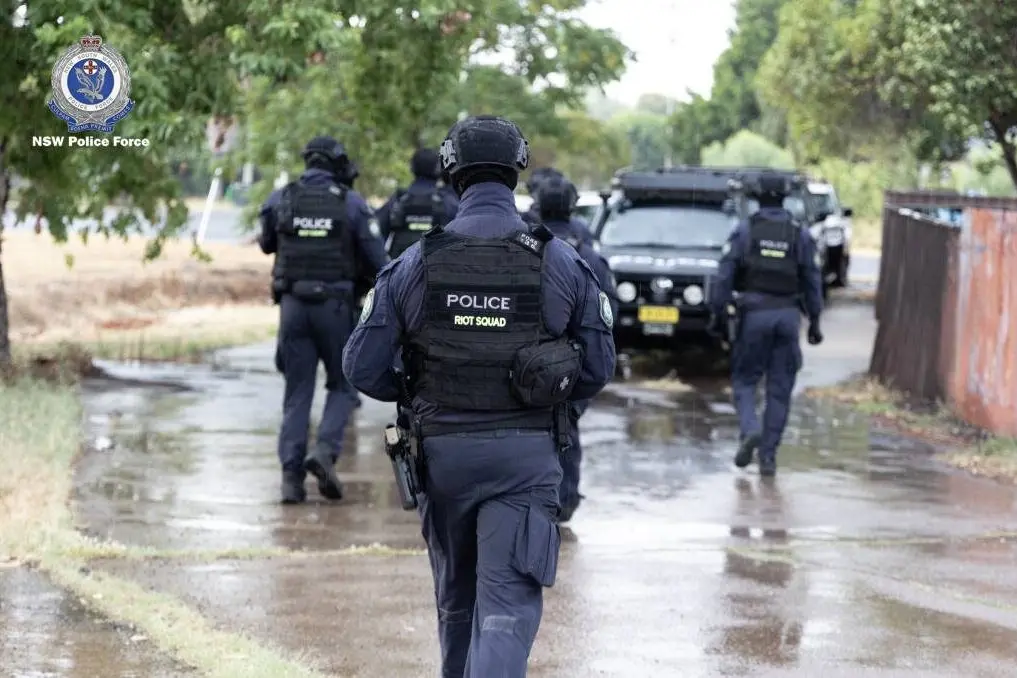
A new rapid response police unit is promising to tackle youth crime in Western NSW as criminal activity spirals in regional and rural communities.
On Wednesday, March 19, NSW Police Deputy Commissioner Paul Pisanos announced a high-level strategy including 60 new dedicated police in rapid response units to tackle juvenile crime across the state.
Operation Soteria aims to address the escalation of violence in offenders aged between 11- to 16-years-old across western and northern areas of the state.
The initial focus will be on the communities of Moree, Tamworth, Dubbo, Orange, Tweed Heads, Coffs Harbour, Kempsey, Taree, and Newcastle, with the initial phase of the operation to run until mid-June.
An extra 20 officers will supplement the unit in the form of “surge operations” each week, to bolster operational numbers to 80.
Polair and roaming response units will also complement the high-visibility operations that will focus on a range of crimes, in particular aggravated break, enter, and steal offences, stealing motor vehicles, and “post-and-boast” offences where kids use social media to gain notoriety for their crimes.
Coordinated response to youth crime
Operation Soteria will be a statewide coordinated response to youth crime and will take overall command and control of criminal investigations into offending across the northern and western policing regions.
It will also oversee Operation Regional Mongoose — established in September 2023 — which has been arresting an average of 13 young offenders every week.
Deputy Commissioner Pisanos also said there will be a strong focus on diverting young offenders away from criminal behaviour.
“The operational arm of this will consist of high-visibility policing, targeting a defined cohort of hundreds of repeat offenders believed to be responsible for 90 per cent of youth crime across regional NSW,” he told a press conference in Dubbo last week.
As part of the prevention arm of Operation Soteria, police authorities will aim to identify and refer young offenders into programs such as Youth Action Meetings, a multi-agency forum designed to help at-risk young people from re-offending.
Other youth programs through the NSW Police Crime Prevention and Youth Command will also be utilised.
“This is about sending a clear message to these young criminals,” he said. “Part of this mission is to lock up the ring leaders and divert others away from a life of crime.”
Under Operation Soteria, investigators will use real-time intelligence to identify “post-and-boast” social media trends, and those on the periphery of offending will be diverted to youth support services.
Since new “post-and-boast” legislation came into effect 12 months ago, 53 individuals have been charged, 27 of whom were under the age of 16.
Youth crime in Far West and Orana: what the data reveals
Earlier this month, the NSW Bureau of Crime Statistics and Research (BOCSAR) released youth crime data in the reporting period of January–December 2024.
In NSW, “Young People” — for the legal definition — are aged between 10–17 years inclusive, with the minimum age of criminal responsibility set at 10 years old.
Young people in the state who offend can therefore be proceeded to court or diverted from the court system to young offender programs.
The Young Offenders Act 1997 also allows young people who meet the eligibility criteria to be dealt with through Youth Justice Conferences, formal cautions, or formal warnings.
The number of young offenders in the Far West and Orana region in the reporting period was 1089 — a 10 per cent increase in the 10 years to December, 2024.
A total of 617 (56 per cent) of these then proceeded to court, with 61 diverted to Youth Justice Conference.
A total of 330 (30 per cent) of these young offenders also received a caution notice from police while 81 (7 per cent) received a warning.
Despite the number of young offenders in the region, cause for concern in itself, we are yet to reach the peak of 2023, which involved just under 2000 young offenders being arrested between January and December of that year.
The top three offences for young offenders in the Far West and Orana region in the reporting period of January to December last year included non-domestic violence-related assault (143 offences), intimidation, stalking and harassment (141 offences), and malicious damage to property (96 offences).
Young offenders need support for successful rehabilitation
While many in the community are pleased with the announcement of another dedicated taskforce to youth crime, this has sounded the alarm bells among social and youth services.
The peak organisation representing young people and youth services in NSW, Youth Action, has urged the State Government to ensure that Operation Soteria is accompanied by a “robust” investment in youth hubs which aim to address the root causes of crime by offering practical, pro-active support to at-risk young people.
Youth hubs are designed to provide young people with a one-stop shop to access support services and programs.
The hubs aim particularly to support young people who have experienced trauma, poverty, or disengagement from education, factors that are known to drive young people into crime.
Youth Action Chief Executive Lauren Stracey said that if the NSW Government was actually committed to preventing this problem, then investment into youth hubs needed to be a priority.
“If you are serious about addressing youth crime, then you need to be serious about solutions that focus on early intervention, trust-building, and community-based support,” Ms Stracey said in a media statement.
“Youth hubs give young people access to support delivered by qualified staff with the right skills to actually engage meaningfully,” she added.
The hubs offer young people opportunities to gain essential life skills and connections to educational and employment pathways.
Youth Action recommends the NSW Government partner with local councils and specialist youth community organisations to establish and expand youth hubs, especially in regional areas.
The organisation says the partnership should include funding commitments that allow for adequate staffing including intensive support workers, activity coordinators and Aboriginal support workers, Ms Stracey said.
“Youth Action is ready to collaborate closely with the NSW Government to co-design these hubs with young people themselves, ensuring they are relevant, safe, accessible, and responsive to local community needs,” she concluded.