
PHOTO
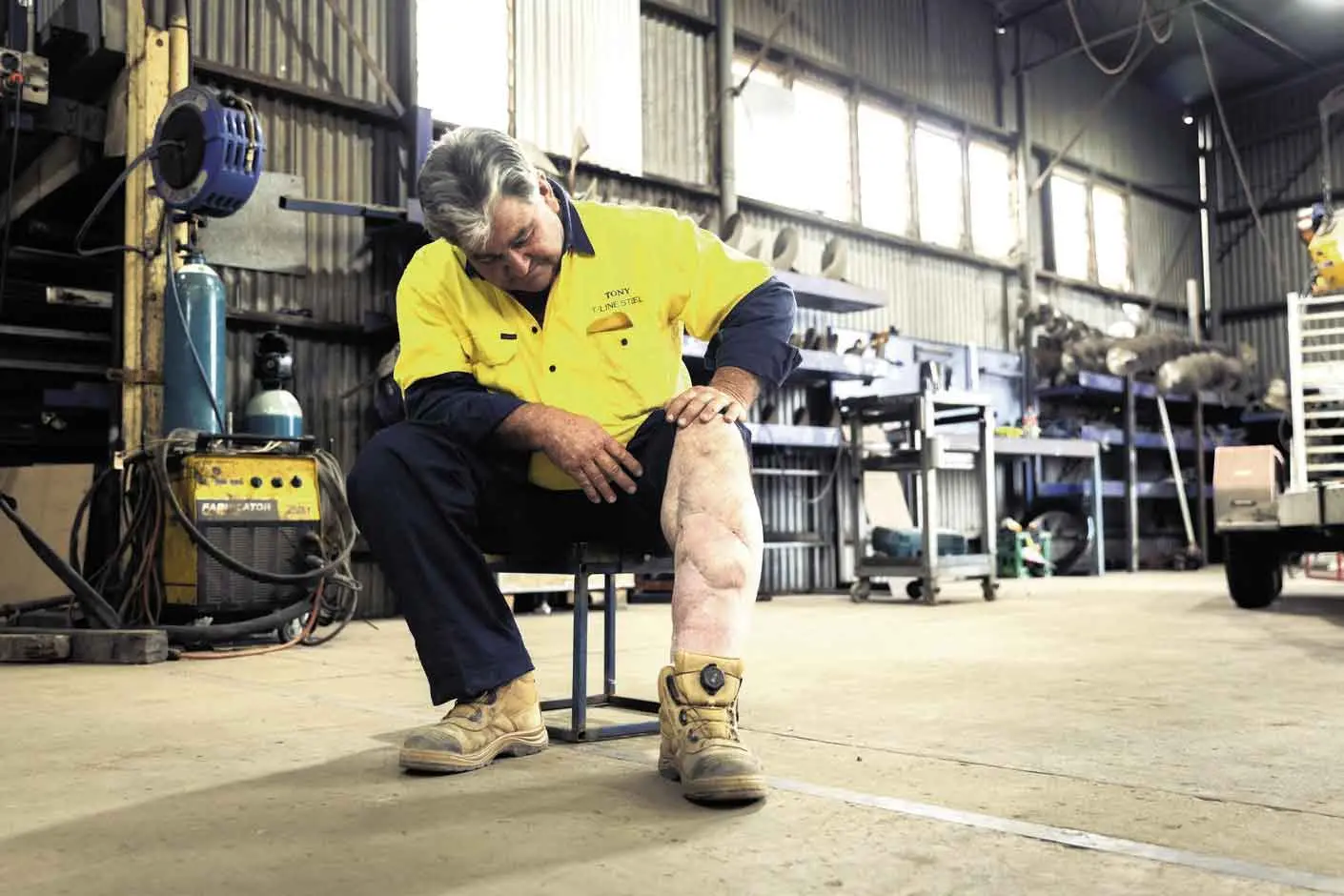
For 67-year-old Tony Butt from Junee, decades on the road in the structural steel industry had taught him one thing: safety comes first. But no amount of caution could have prepared him for the day a routine repair job turned into a fight for his life – and for his legs.
In mid-2023, Tony and two colleagues were driving from Junee to Brewarrina for a job when a blown tyre near Condobolin tore out the truck's wiring, leaving it without lights.
In Nyngan, Tony fixed that – only for another tyre to blow roughly 80 kilometres up the road, this time ripping out the airline that controlled the brakes.
With a local mechanic's advice in hand, the crew pulled over to remove the rear wheels and repair the line. The truck was raised on three jacks and looked stable, but wasn't.
Without warning, the 15-tonne truck came down, crushing Tony's legs and causing catastrophic injuries.
"The pain was excruciating. I didn't think I was going to make it," Tony said.
"I didn't know how we were going to get [the truck] off."
Somehow, Tony stayed conscious and calmly directed his two young workmates to wedge a small jack beneath the axle to lift the truck just enough to free him.
In the race against time that followed, belts became tourniquets, blankets and pillows held off shock, and the nearest ambulance was 160 kilometres away.
Tony called his wife Leanne, believing it might be the last time he'd hear her voice.
"I told her I didn't think I was going to make it. I said I loved her. The worst-case scenario was I wasn't going to make it. The best-case scenario was I was going to lose both my legs," he said.
The the Royal Flying Doctor Service (RFDS) arrived and an RFDS doctor, dispatched to Nyngan, joined the ambulance crews racing to the scene, treating Tony's injuries and working to stabilise his condition. Too unstable to fly immediately, Tony was taken first to Nyngan Hospital before being cleared for an RFDS retrieval flight to Sydney.
At Royal Prince Alfred Hospital, doctors warned Tony he could lose both legs and over the following weeks, he endured seven operations – three of them major procedures. Eight days in intensive care and two months bedridden followed, but both legs were saved.
Three years on from the accident – now recovered and back to enjoying life – Tony hasn't forgotten who got him through it.
"I'd love to meet the doctor who treated me and thank her. She was amazing," he said.
"They're a wonderful service. I can't do enough to help them out."
For Tony, the accident brought home something regional Australians live with every day: that the safety net most Australians take for granted simply isn't there once you're hours from the nearest hospital. The RFDS exists to close that gap – flying doctors, nurses and equipment to the people who need them most, wherever the outback puts them.
Without it, Tony says, his story would have ended very differently.
Further information about the RFDS can be found on its website at www.flyingdoctor.org.au/nswact/.