
PHOTO
A mysterious eco-system of fungi weaves through the soil like spider silk, helping plants and crops grow.
Arbuscular mycorrhizal fungi – partly named after the Greek word for root – deliver essential nutrients and water to plants, a critical connection that's been quietly unfolding underground for billions of years.
"It's the oldest relationship you could have," Western Sydney University ecologist Adam Frew told AAP.
"Before plants even evolved to have roots, they associated with these fungi.
"Most plants still... have these associations with this same group of fungi."
But despite their ancient existence underpinning plant life, water cycles and humanity, understanding of how fungi can be targeted to boost food crops has been limited.
While scientists have long understood fungi's potential in agriculture, strategically applying it to crops has been challenging because different species prosper under a variety of plants, soil types and climates.
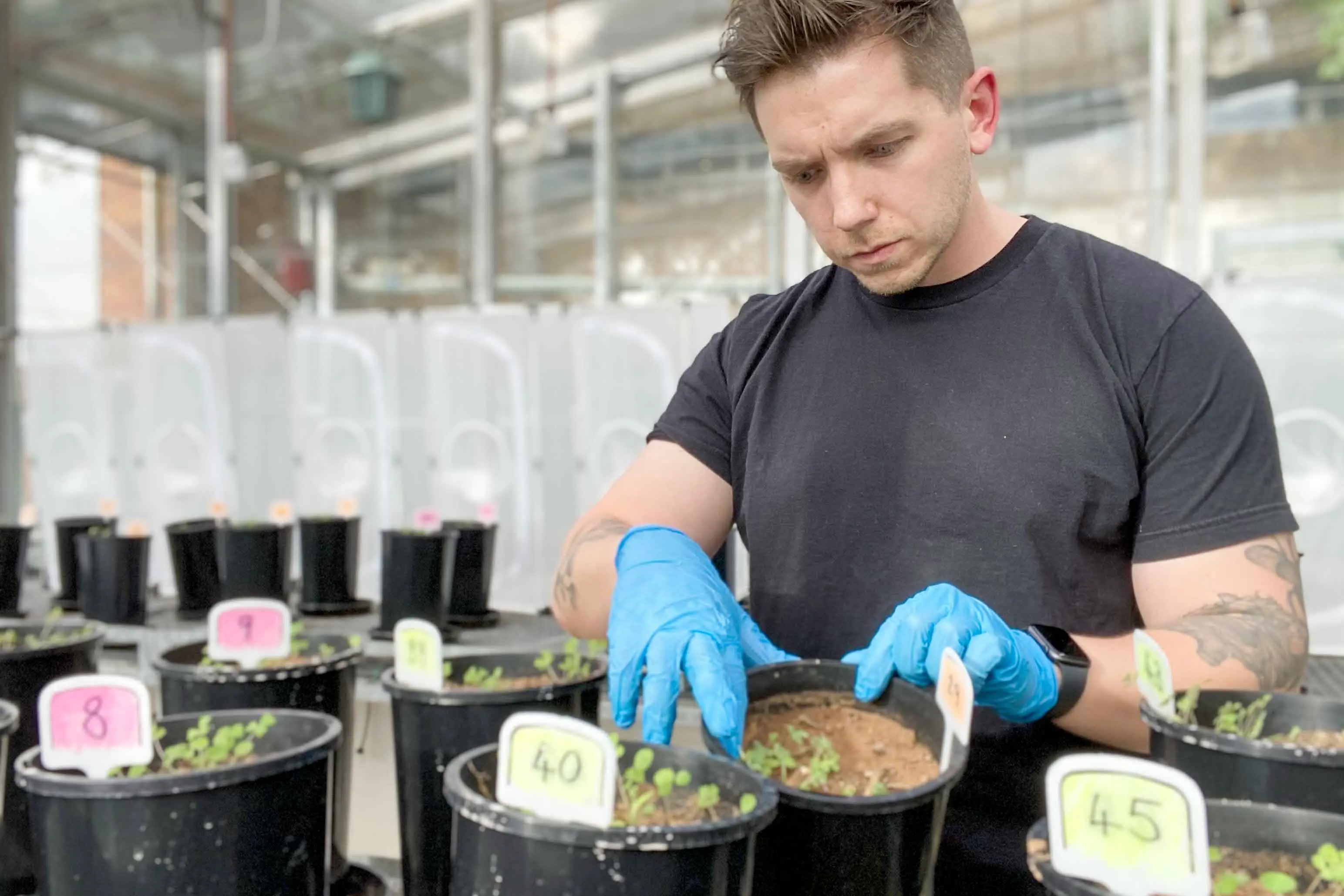
Dr Frew and a team of researchers have created Australia's first highly-detailed database of arbuscular mycorrhizal fungi, taking samples from 610 sites across all major climate zones.
The samples, collected over more than a decade by scientists and farmers, allow researchers to play "matchmaker" between the fungi and different crops.
Fungi can then be applied to seeds, soils or crops to promote plant health and build carbon in the soil.
"If we have enough knowledge to say this species of fungi is suitable for a region, we know we get positive effects, we could build inoculants for that particular species," Dr Frew said.
"Then maybe farmers can apply it to boost the presence of that particular species or make sure farm management practices are supporting those fungi."
It's hoped matching fungi to the right crops and soils could help farmers slash their fertiliser costs and reduce reliance on imported inputs, which cost Australia more than $3 billion in 2025.
Australia is entirely reliant on imported urea fertiliser, with 62 per cent of the supply from coming from the Middle East, according to the agriculture department.
The closure of the Strait of Hormuz, sparked by the Iran war, sent fertiliser prices rocketing up to $1400 a tonne in April and May.
At the same time, Australian agriculture loses billions in productivity every year to poor soils, pests and disease, which only increases reliance on fertilisers and pesticides.
Dr Frew said while harnessing the power of fungi had the potential to lower inputs and improve soil quality, it was not a silver bullet.
"You always need to have some sort of inputs, the soil doesn't infinitely have nutrients in it," he said.
"It's about trying to increase the efficiency."
Dr Frew will present his research at the International Conference on Mycorrhiza in Cairns from July 12.