
PHOTO
It's a train line that could have transformed the Central West and, no, it's not the recently shuttered multi-billion-dollar Inland Rail project.
Local historian Patrick Bourke recently contacted this masthead about the Sandy Hollow-Maryvale Railway project that was abandoned — almost at the time of its completion — three-quarters of a century ago.
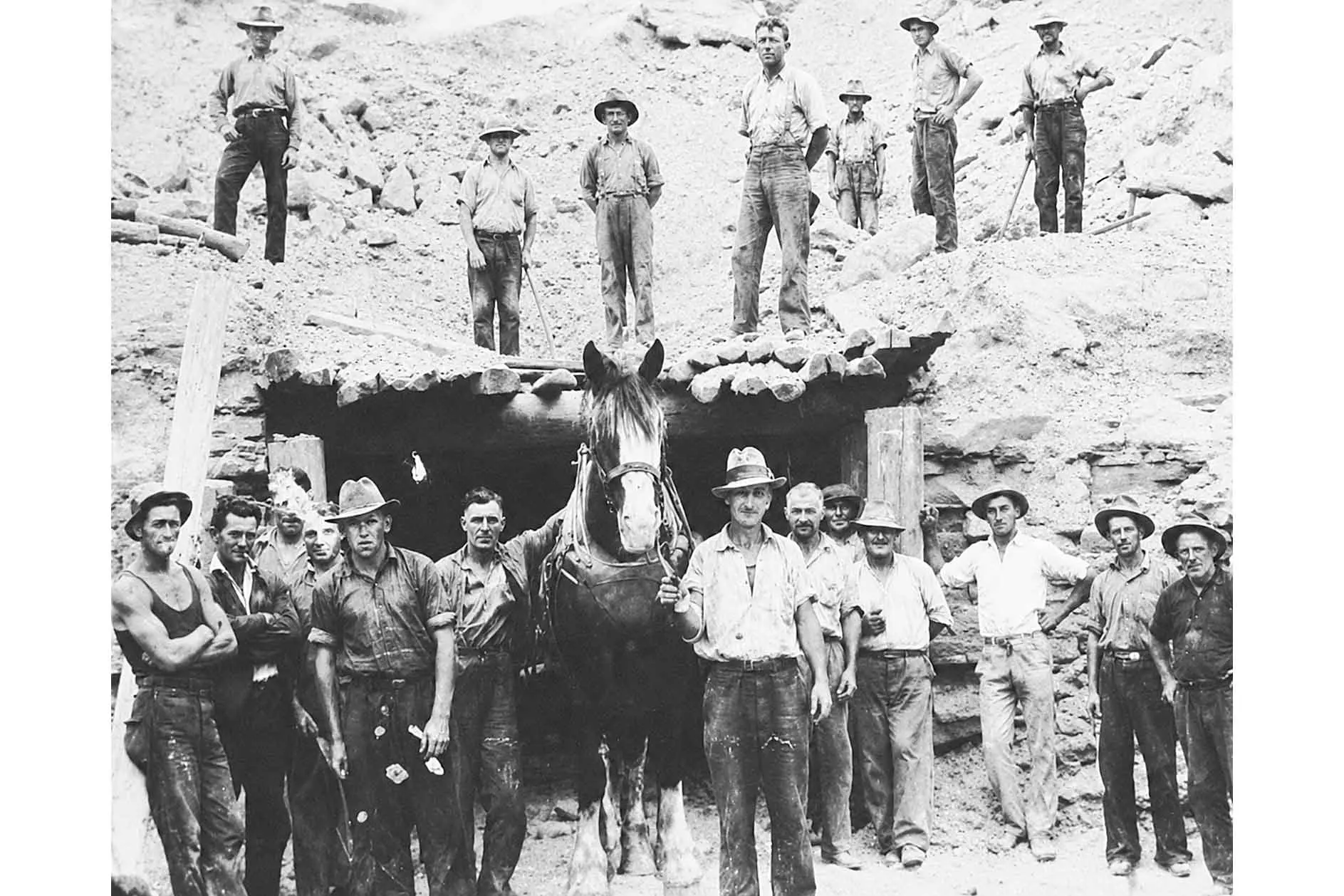
It involved, history shows, years of backbreaking work by unemployed labourers during the Great Depression that drove through some of the harshest terrain in NSW. The line would have provided a direct route from just near Wellington to the bustling port of Newcastle, and the prime agricultural land and coalfields of the Hunter Valley.
"The suspended Inland Railway project reminds me — and probably many other people — of the Sandy Hollow-Maryvale Railway project which was suspended during the 1950s and never finished," Patrick observed.
"Looks like the Inland Railway project will suffer a similar fate," he added by way of a wry comment.
The line would have been an extension of what is now the Sandy Hollow-Gulgong branch track. It was to come out at Maryvale, an area that Patrick has a familial link with.
"Surveyors for the Sandy Hollow-Maryvale Railway were at Bourke's Crossing, near Comobella, during May 1936," Patrick revealed.
"Bourkes Crossing, over the Mitchell Creek, was where my great grandparents, John and Jane Bourke, had their farm from 1877 to 1908," he added.
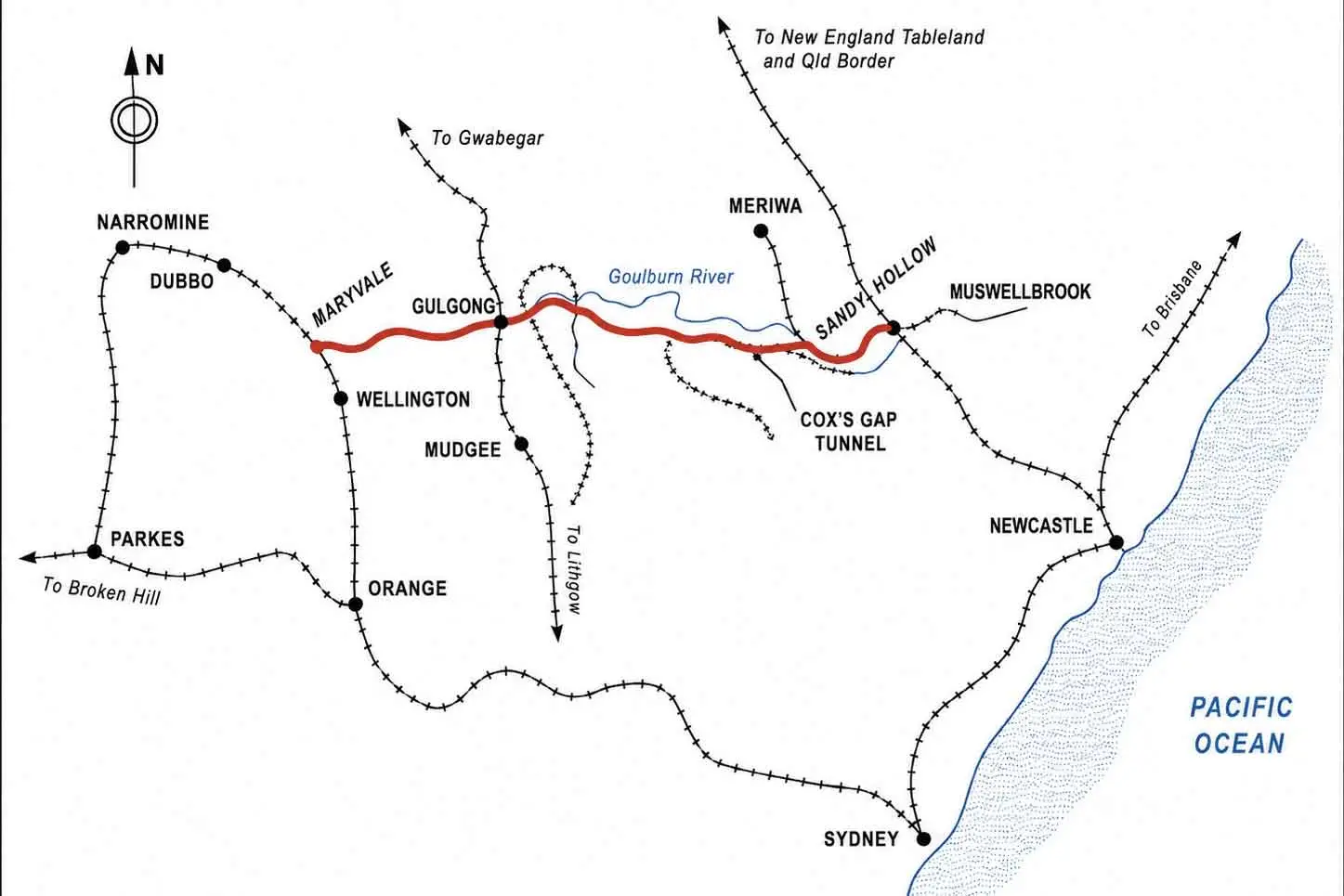
The proposed project that was to run between Sandy Hollow in the Hunter Valley, to Gulgong and then on to Maryvale between Wellington and Dubbo, was originally surveyed in 1860 as a more easily graded crossing of the Great Dividing Range than the Blue Mountains line nearer Sydney.
It was not commenced, however, until 1937 during the height of the Great Depression when it began as an unemployment relief scheme of the NSW Government.
Like the brutal trans-continental railway projects built on blood, sweat and tears across the American wilderness in the 1860s, the project achieved infamy for the lack of modern mechanical equipment in its construction.
The poor men on "susso" (sustenance) who were required to work on such projects received a payment of £1/6d a week — half the basic wage of the lowest-paid worker, and about $130 in today's terms.
To add to their hardship, all work on the line other than a few old trucks carrying concrete for the five tunnels and bridge piers was completed with picks, shovels, hand-drills, sledgehammers, and horse and cart.
Folk singer "Duke" Tritton even wrote a poem, 'The Sandy Hollow Line', which described the hardships of the unemployed workers on the project.
Construction continued through World War II at a desultory pace, held up by money, labour and, especially, steel shortages, only to be abandoned unfinished, approximately 92 per cent complete, a few years later in 1951.
In some good news, part of the unfinished line was revived in the 1980s to form a cross-country connection from the Main North line in the Upper Hunter region to the Gwabegar line in the Central West region.
The line crosses the Great Dividing Range by following the Goulburn River and Bylong Valleys from Sandy Hollow to Bylong, with a tunnel under Cox's Gap.
The section is approximately 125 km in length and, from the Gwabegar line, trains can ultimately reach the Main West line creating a circuitous bypass of Sydney for freight traffic heading between the west and north of NSW.
The line was opened in 1985 as a heavy-haul railway to the major coal mine at Ulan and extended to Gulgong to meet the line to Dunedoo and Dubbo. It is unlikely to ever be extended to Maryvale from Gulgong, a distance of about 72 km.
Other NSW railway projects that were commenced but never completed also include Casino to Bonalbo (61 km), Dombarton to Maldon (35 km), Guyra to Dorrigo (143 km), and Robinvale to Lette (25 km). In most cases, evidence of the back-breaking work —including tunnels, bridges, and embankments — is still present today.