PHOTO
Time Warp...
Often affectionately known as “tin hares” by rail enthusiasts, they were the beloved little run-abouts on country railway lines that provided speed, comfort and security for generations of travellers in the Australian bush.
Rail motors, or “motor-rails” as they were sometimes called, were an intermediate train technology that fell between the age of steam and the modern diesel-electric engine.
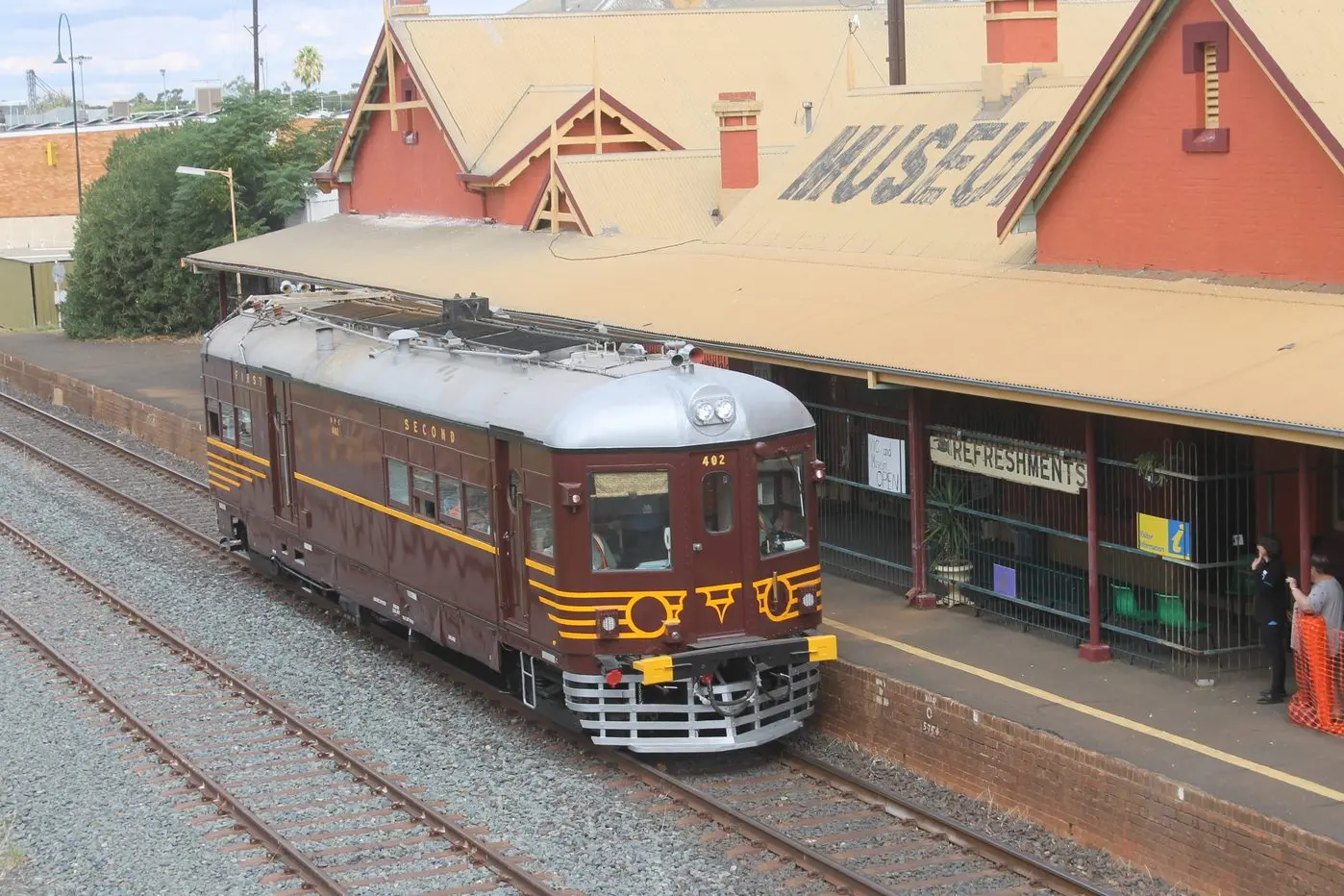
They were effectively individually-powered carriages with an internal combustion diesel engine running on a similar principle to a motor car – with the “Bathurst Bullet” a revived version of this Aussie-made classic.
Railway buffs got a special treat at Nyngan post-COVID when a classic 400-Class Rail Motor pulled in for an overnight stay on its way from Newcastle to Cobar, with 18 members of the Rail Motor Society on board. The 400-Class Rail Motor was built in 1938, and was in service with the NSW Railways until the late 1980s.
Such engines were a commonplace sight at Nyngan Railway Station until its forced closure as a passenger siding in 1990, following the devastating floods of that year.
The NSW The Rail Motor Society seeks to ensure the survival of these classics of Australian ingenuity, Secretary Anthony Dunn explained.
“We have four of them, plus a ‘630’, a 1961 two-carriage version – they were very well appointed and luxurious for the time,” Anthony explained.
“Some of them are 100 years old, they were made of timber and designed and built in Australia,” he added proudly.
They were most commonly operated for runs between country towns connected by smaller rail services, Anthony recalls.
“Almost all of the smaller branch lines had their own rail motor, such as the ‘Silver City Comet’ that ran for many years to Broken Hill,” Anthony said.
“They were pretty much put out of use by the closure of so many branch lines and the introduction of the XPT in the 1980s,” he concluded.