
PHOTO
Should ratepayers vote to pick our own head honcho?
A radical proposal by local government standards, a motion for Dubbo ratepayers to vote on having a directly-elected mayor has been punted to a workshop for further consideration.
The idea, already adopted by some other western NSW Councils including Orange, Broken Hill and Griffith, is the pet project of current deputy mayor, Cr Phillip Toynton, who believes it better reflects the democratic principles of our third tier of government.
Council’s recent decision to hold a workshop on “the advantages and disadvantages of a popularly-elected Mayor and the costs involved in conducting a referendum,” he suggests, could be a delaying tactic.
“They’ve called for it to go to a workshop for more information, when the question is so simple,” Cr Toynton told Dubbo Photo News.
“The question is to let voters directly elect the mayor, that’s all it is,” he also believes.
Referring the idea to a workshop, he added, showed a lack of faith in the ratepayers who should have ultimate say over the proposal.
“I think it’s a good idea, people elect their councillors, why not the mayor? So what if people get it wrong? We shouldn’t be questioning those people who put us in there in the first place,” Cr Toynton argued.
“I think councillors love a safeguard, if they don’t understand a motion, they can punt it to a workshop,” he concluded.
Other councillors spoken to by Dubbo Photo News were, however, not as keen on the proposal.
One said that the current “parliamentary” system – whereby the elected officials choose the mayor – provides greater cohesiveness in the chamber.
“I voted against it, though I’m a big fan of Phil, I believe the way we have it at the moment is superior, I believe it’s a better system,” Cr Lukas Butler told Dubbo Photo News.
“My reason behind it, is that the people working with the mayor are the best judges of who should get the job; they know who is best to lead the council and is able to work with others,” he added.
Directly-elected mayoral votes can instead be based on superficial popularity and advertising budget, rather than genuine leadership.
“If not, it goes to the highest bidder for people on the street, to those who only know what they see in the media,” Cr Butler said.
“The popular mayor would go to the best campaigner, not the best candidate; what we have now is great, and changing it would not be an improvement,” he concluded.
The workshop is a good way for councillors to examine the implications, some not necessarily positive, of a directly-elected mayor, Cr Shibli Chowdhury argued.
“My comment is, I need a bit more detailed information on the way it would impact how we elected Dubbo councillors… I need more information,” Cr Chowdhury explained.
“If we have an elected mayor, for instance, he or she has to work collaboratively with the other councillors; are we sure that can happen?” he asked.
With five of the current 11 councillors either Shooters or Labor Party-aligned, creation of presidential-style popular vote for mayor could also destroy the traditional non-partisan nature of local government in the region, he fears.
“At the moment, we have grassroots leadership working for the community, I don’t want to see politicians in there with party affiliations,” the independent Cr Chowdhury said.
“I simply don’t want to see party politics in local government,” he concluded.
Another supporting the workshop decision of the July council meeting was Wellington representative, Richard Ivey.
“Council is going to have a workshop that will educate councillors on the pros and cons of the proposal,” Cr Ivey said,
“But in the end, the only thing that has to happen is that Council has to decide whether to move to a popularly-elected mayor,” he added.
The proposal, however, has a range of potential shortcomings even at first glance, he believes.
“I think it’s a silly idea, it has a touch of the personality cult about it; there’s 120 councils in NSW and 90 still have the mayor elected by the councillors,” Cr Ivey pointed-out.
“I like the current system, and it’s the same one we have in state and federal parliament… the workshop will run its course and I’m hoping that it won’t get up,” he concluded.
Experience of the direct-elect mayor model at Orange in the Central Tablelands, shows that the system works okay with a strong, experienced leader like the first directly-elected mayor, Reg Kidd, but not so good when a colourless placeholder becomes head honcho!
•••
Solar cemeteries idea still alive…
The striking proposal for Council to look at solar panel-powered shade covers in our cemetery – put forward by avowed greenie, Cr Mathew Dickerson – is still alive, despite a seeming lack of enthusiasm by his chamber colleagues.
A successful motion at the July meeting declared that: “Council recognises the open space areas of Council’s cemeteries and requests a report into the feasibility of installing solar shade structures at suitable cemetery sites”. However, the idea was largely "rubbished" on Dubbo social media pages as the community debated the issue, not fully apprised of what was proposed.
•••
Sixty good years…
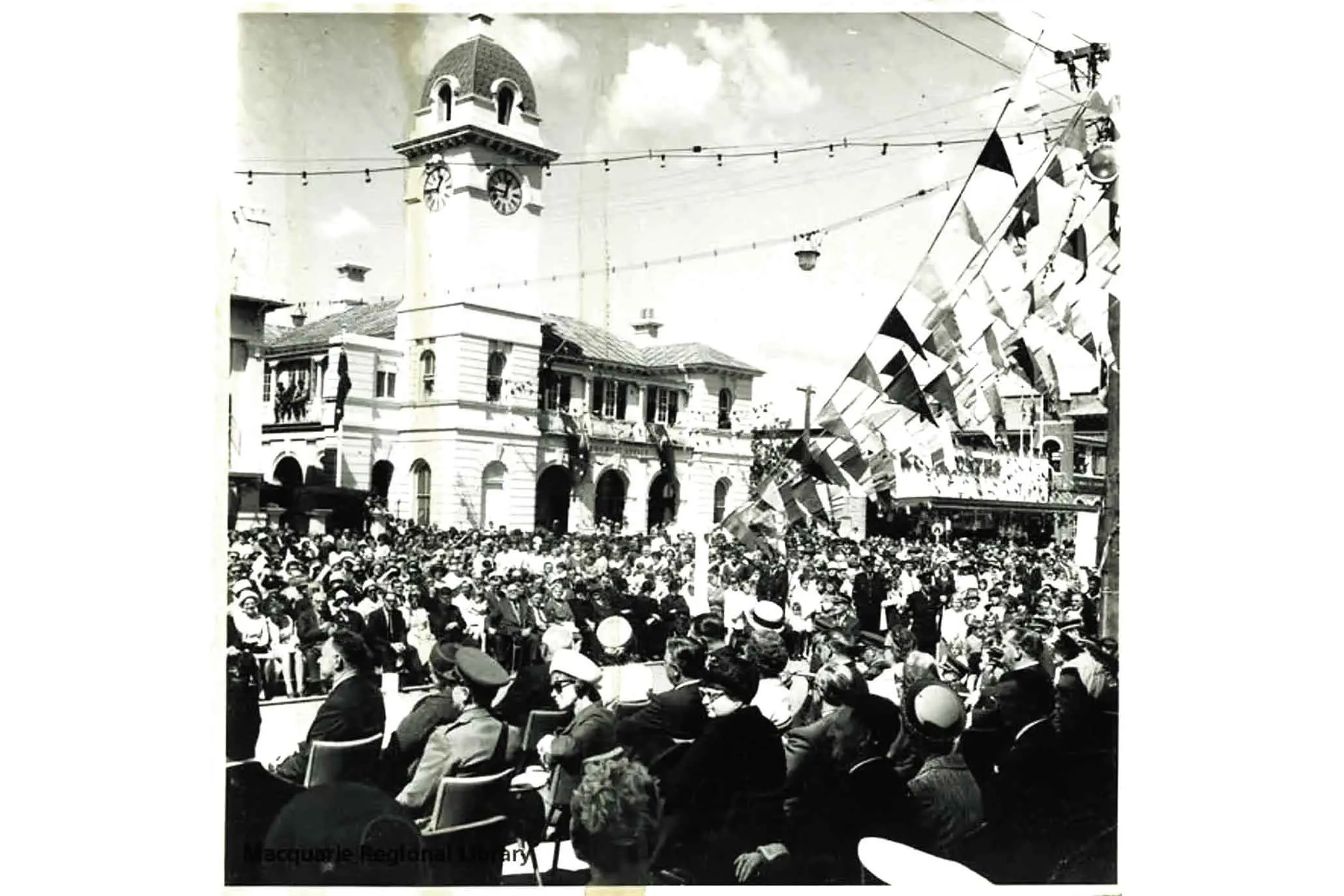
Time flies in local government, with Council looking to mark the 60th anniversary of the proclamation of Dubbo as a city, with some small recognition.
Spending a grand total of $5000 from the Governance budget on investigating the September 1966 milestone, seems a tad underwhelming but, as they say in local government, times ARE tough!
•••
Taking care of business…
Talking of tough times, Council recently voted to look at more support for our hard-hit local traders.
Councillors at the July meeting voted to: “investigate opportunities to strengthen support for business in the LGA,” the motion stated.
“The development of coordinated, whole-of-program approach to business support will be explored and Council will advocate to relevant funding bodies for support.
“A report outlining current and future business support opportunities will be brought back to Council at a later date,” the motion concluded.