
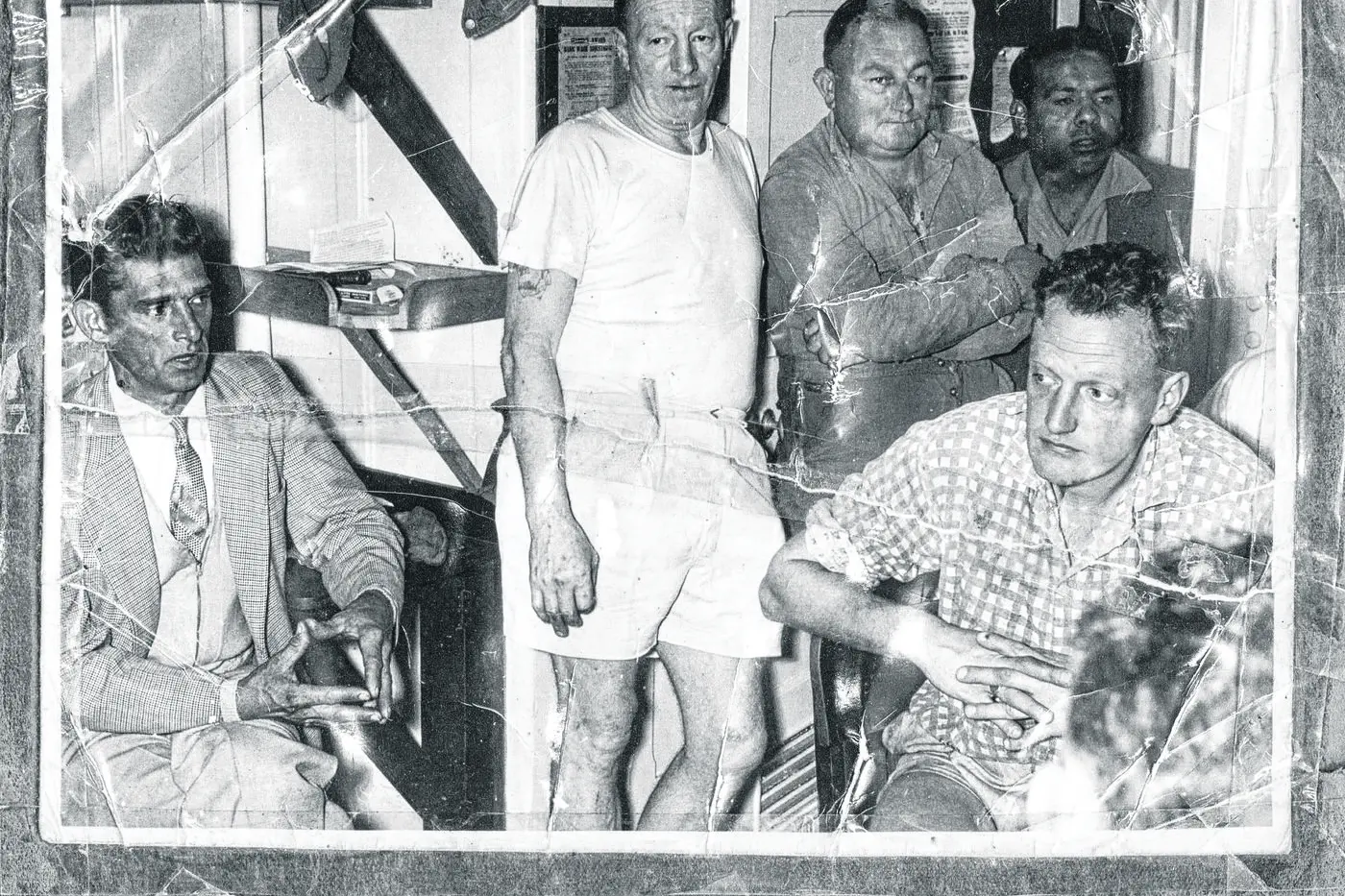
PHOTO
By Paddy Gibson, Wendy Bowles and John Nolan.
Last week we left Uncle Ray’s story in 1955, after the Dubbo floods.
Back in Sydney, Ray joined the Builders’ Labourers Federation (BLF) with BLF organiser Jack Mundey. Ray worked on projects such as the Cahill Expressway and the State Office Block. He often described the anti-racist culture in the union that welcomed migrants from many backgrounds and Kooris like himself.
“That was the brotherhood,” he said. “It didn’t matter who you were, we were united as working-class people.”
Ray attended a major public meeting that packed out Sydney Town Hall in 1957 to launch the famous campaign for a Referendum, where Black and white worked together for 10 years.
Back in Dubbo for a spell in 1959, Ray was pulled out of the Western Star Hotel by “old Chalker”, a police sergeant, and charged and fined under the Aborigines Protection Act for drinking a beer.
In early 1960, Ray attended his first conference of the new Federal Council for the Advancement of Aborigines, (later FCAATSI). He volunteered for a role traveling out to missions and reserves across NSW, helping communities raise their voices for change.
In the following years he travelled huge distances across the state, working to expose the extreme poverty, segregation, exploitation and police brutality to which his people were subjected.
Ray often made these trips with his partner Helen Hambly, a white supporter, and Dick Hunter, an Aboriginal man from Broome, both members of the Aboriginal-Australian Fellowship and Communist Party. When not on the road, Ray continued work as a Builders Labourer.
In Coonamble in 1960, Ray, Dick and Helen made their first real breakthrough, defeating racist Council members who tried to deny Aboriginal people access to land in town for housing. This was just one of many struggles to improve housing.
For instance at Moree, Ray led an organising drive, resulting in “new accommodation at Thompson's Row, down in the middle camp. And then at the mission. Coming out of all this, Stanley Village was built”.
At Purfleet Mission on the mid-North Coast, residents started a rent strike against the Welfare Board in 1960. Ray explained that “babies were dying from diphtheria”, due to the flooding of pit toilets and shocking conditions.
In response, the Welfare Board took court action to evict strike leader Horry Saunders and his family. Ray travelled to Purfleet and said to Horry, “the best thing you can do is come to Sydney with me, we will get the weight of the Trade Unions behind us.”
Ray and Horry spoke to thousands of unionised workers across the building, maritime, mining and power industries, collecting money and moving resolutions of support for Horry and for the abolition of the Board.
Fred Patterson, a communist barrister, represented Horry in the NSW Supreme Court and won the case.
“We showed they could be beaten and they were on their way to being abolished,” said Ray, “... and that the strength of working people can help us Aborigines crack through the curse of the colour bar.”