
PHOTO
Dedicated train buff Cr Phillip Tonyton thinks the silver lining in the long-term closure of Victoria Pass could see the return of the golden age of rail to the regions…
One of the lines he wants to re-opened, he argues, would not only boost public transport in the bush, but also lead to a long-term tourism boom for the Orana.
Dubbo’s deputy mayor recently convinced council to pass a motion seeking restoration of the shuttered Wallerawang to Gwabegar rail line.
The motion entails mayor Josh Black writing to “relevant ministers to seek funding for the reopening… as an alternative means of transport while a section of the Great Western Highway is closed.
“Further support for the reopening of the line will also be sought from the Alliance of Western Councils and the Country Mayors Association NSW,” the motion added.
Cr Toynton admits that the motion is just a tentative small step in what he believes could see revival of rail to its place as one of the main transport systems in western NSW. This was the exalted position it enjoyed up until the mid-20th century, when the “cult of the car” saw it reduced to mainly transporting only bulk grain and coal, pensioners and the poor.
The line – starting just west of Lithgow and passing through Mudgee, Dunedoo, and Baradine – also included a cross-country connection at Merrygoen, which linked it straight to Troy Junction near Dubbo.
“The first thing we’re going to do is write to the relevant ministers asking for a study in re-opening the track,” Cr Toynton said
“The line ended way up in in the Pilliga region of the north-west, but there was a branch line that came right into our district. It would be perfect for our region,” he added.
The transport corridor, he explained, ran adjacent to wilderness areas and national parks and through some of the state's most dramatic natural landscapes. This idyllic journey would also contrast with the choked, narrow, and dangerous Darling Causeway bypass between Bells and Mt Victoria, already sight of a number of serious accidents since the shutting of The Convict Bridge at Mitchell’s Causeway.
“The benefit would not only be the ability to remove more cars off the road and offer an alternative way to the west,” Cr Toynton said.
“It would also give us a chance for tourists to come back to the region, something that has been badly affected by the Victoria Pass closure.”
With new rail and light rail lines being built to the value of billions of dollars in major cities like Sydney to help reduce our global emissions, why shouldn’t country areas also enjoy these facilitates, he argues.
“Absolutely, the age of rail is definitely returning, and we should be a part of that as well.
“People want to save the environment, to reduce our carbon footprint, well, this is the perfect way,” Cr Toynton believes.
Improved local public transport with a fleet of modern, air-conditioned NSW TrainLink coaches traversing most of western NSW, makes restoring the line even more attractive, he explained.
“People can now be transported via the train, to a centralised area, and then take other transport to go where they want to,” Cr Toynton said.
“Or they can take tourism tours of areas before heading back to Sydney, they won’t need their cars at all!” he concluded.
The 430-kilometre country branch railway line was completed more than 100 years ago, but gradually saw reduced services until the last sections from Rylstone to Gulgong, as well as the final stretch north of Binnaway/Coonabarabran to Gwabegar, were decommissioned more than two decades ago.
In some bright news, though, Transport for NSW is currently restoring the historic Wallerawang junction station, with plans to reopen it for passenger rail services by the end of 2026. Additionally, government feasibility studies are also looking at reinstating the Kandos-to-Gulgong link to support heavy western freight infrastructure.
As Cr Toynton boldly predicted, it is just possible that the golden age of rail, could again be returning to the bush!
•••
Why no walker, cyclist access to new Dubbo bridge?
Talking of alternative transport, the mayor is to write to relevant ministers requesting pedestrian and cyclist access across the Macquarie River on or near the new Dubbo Bridge. With the 600-metre, $263.2 million high-level structure focussing "purely" on vehicular traffic and flood-evacuation capacity for the Newell Highway, didn't anyone think of the walkers and cyclists?
•••
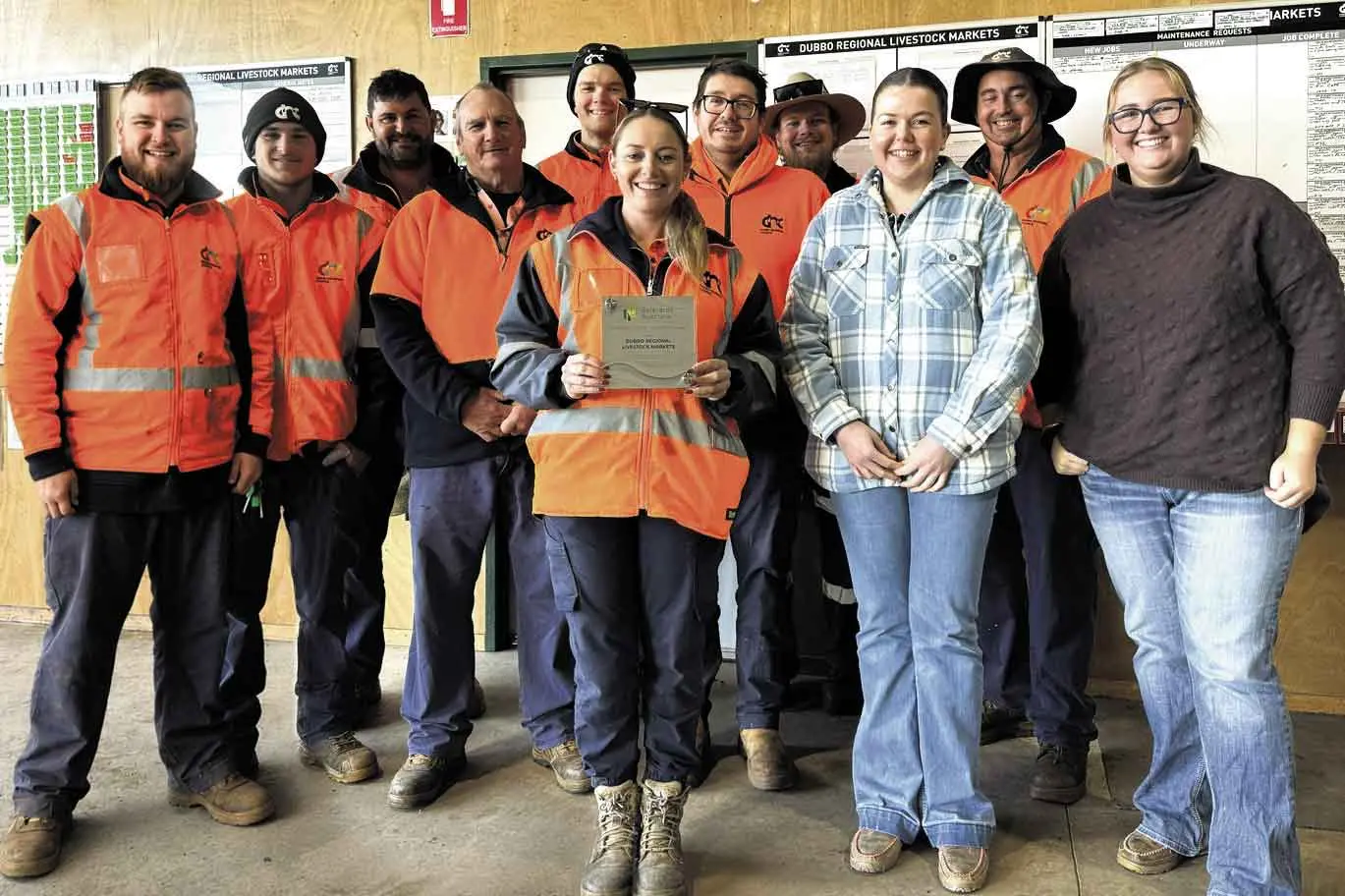
Livestock crew win award
“Do what you do do well, boy, do what you do do well,” was the refrain from a well-known country music song from the middle of last century, and that’s certainly been the motto of the hard working crew at Dubbo Regional Livestock Markets (DRLM) over recent times.
The local team was awarded the 2026 Excellence & Innovation Award at this year’s AgriNous National Saleyards Conference held in Rockhampton, Queensland in early August.
The award "celebrates the people and facilities driving positive change across Australia’s saleyards," their commendation stated.
It was awarded to the DRLM for its standout operational performance, commitment to innovation and continuous improvement, and for facilitating positive outcomes for livestock, people, industry stakeholders, and the Dubbo Region community, mayor Josh Black said.
“This award recognises the countless hours of behind-the-scenes work our team at the DRLM carries out every day and the vision that council has of making the facility Australia’s premier stock selling centre,” Cr Black said.
The award highlighted the progress the saleyards are making and the exciting future ahead, head honcho Harry Brennan enthused.
“To be recognised at the national conference was a huge honour, and I’m particularly proud of our team who always strive for success in what can be a very demanding environment.
“What we have achieved in the last couple of years is just the beginning; we have many upgrades planned for the DRLM in the near future, and I can’t wait to see these come to fruition and position us as the best in the business,” Mr Brennan said.
•••
Chaffey calls out feds for local government funding “crisis”
This column has often catalogued councillor complaints about the long-standing structural decline in real funding for our third tier of government by the Commonwealth and states.
Local federal member and Shadow Assistant Minister for Local Government, Jamie Chaffey, is also beating the same drum.
The Fed’s own Local Government National Report on performance for the 2023-24 financial year, he claimed, lays bare a “funding crisis” facing Australia’s 538 councils that revealed an “absolute failure to reverse the decline in critical Commonwealth support for local government”.
Mr Chaffey said the report shows the struggle councils face in managing a $690 billion asset base on a dwindling budget.
“Financial Assistance Grants are indexed only to CPI and population growth, without taking into account rapidly rising council costs,” Mr Chaffey said.
“For small councils, it’s a David versus Goliath battle,” he concluded.