
PHOTO
When it comes to discovering and cataloguing the amazing marsupial megafauna that died centuries ago in the Wellington Caves network, we’ve only just scratched the surface.
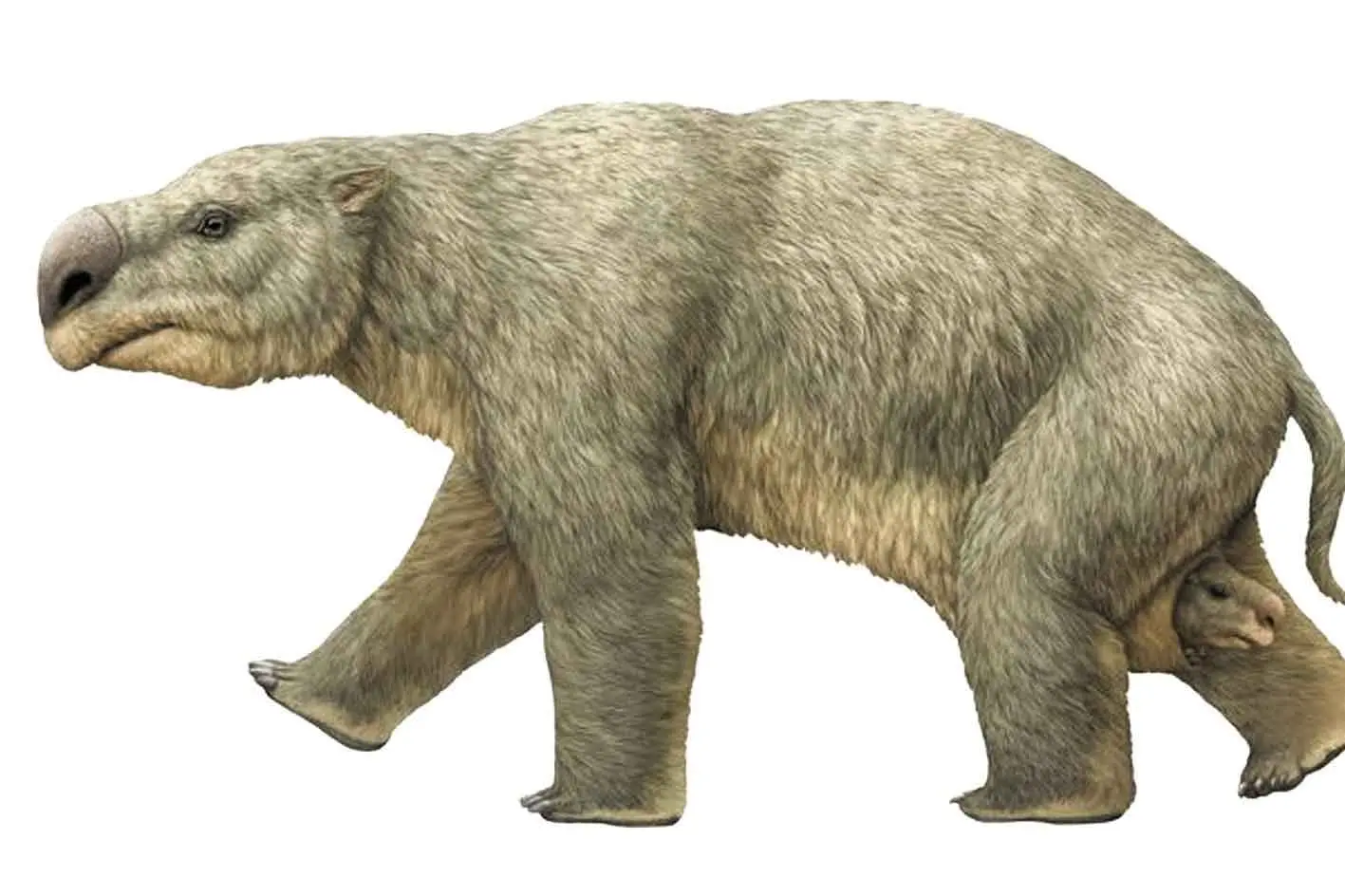
Huge wombat-like herbivores weighing up to three tonnes such as the Diprotodon, giant kangaroos and wallaby species, the fearsome marsupial lion, and the Thylacine (the “Tasmanian Tiger”), have all been found in previous archaeological digs at the site.
That’s why the recent announcement of a $1.2 million federal research grant to a South Australian academic is so exciting for evolutionists and biologists across Australia. Funding to expand megafauna fossil research in the caves has gone to Flinders University Professor, Gavin Prideaux, Dubbo mayor Josh Black said.
“Having Flinders University here, using the Wellington Caves as a place to learn and discover, shows just what is possible when we open our doors and share what we have,” Cr Black enthused.
“This is one of Australia’s most important megafauna fossil sites and it belongs to our community. When council facilities like this are used to teach and inspire the next generation, that’s something we can all be proud of,” he added.
The site itself serves as a vital field study area where university students are able to gain hands-on experience unearthing fossils and studying ancient environments, Prof Prideaux explained.
“The Wellington Caves are a popular tourist attraction, and also a unique archive of faunal evolution and ecosystem change in eastern Australia,” he revealed.
“The area gives amazing insights into the ecological impacts of major climatic changes and megafaunal extinctions which provide us with important knowledge to guide and shape biodiversity management,” he added.
The team were last on the ground over the April 2026 school holidays. During this time, they excavated a 2m x 2m pit in the Cathedral Cave, with tours passing right by them, giving visitors the opportunity to see science in action.
In 2023, Flinders University published a scientific paper describing a large extinct armoured skink from fossils excavated here at Wellington Caves. Affectionately known as “Megachonk”, this was the largest skink ever known.
With other leading Australian palaeontologists, and partnerships with council, the Australian Museum, and Project Zone Pty Ltd, the project will analyse the site’s rich and diverse mammal fauna and vegetation, both at the famous fossil site, in the lab and via museum records.
It will encourage involvement from citizen scientists in the community, and education and training opportunities including for First Nations people. Flinders Palaeontology has been conducting field trips to the Dubbo region for the past decade and has close ties with the community and tourism operators in the region.