
PHOTO
The recent grand final win by the Roosters over the plucky Knights in the NRL decider recalled to local historian, Patrick Bourke, a famous milestone from a previous champion rugby league team in which a local Dubbo lad played a central role.
“Many people are probably unaware that Ian Walsh, an Australian Hall of Fame rugby league inductee, was a student at Dubbo Public School and Dubbo High School,” Patrick said.
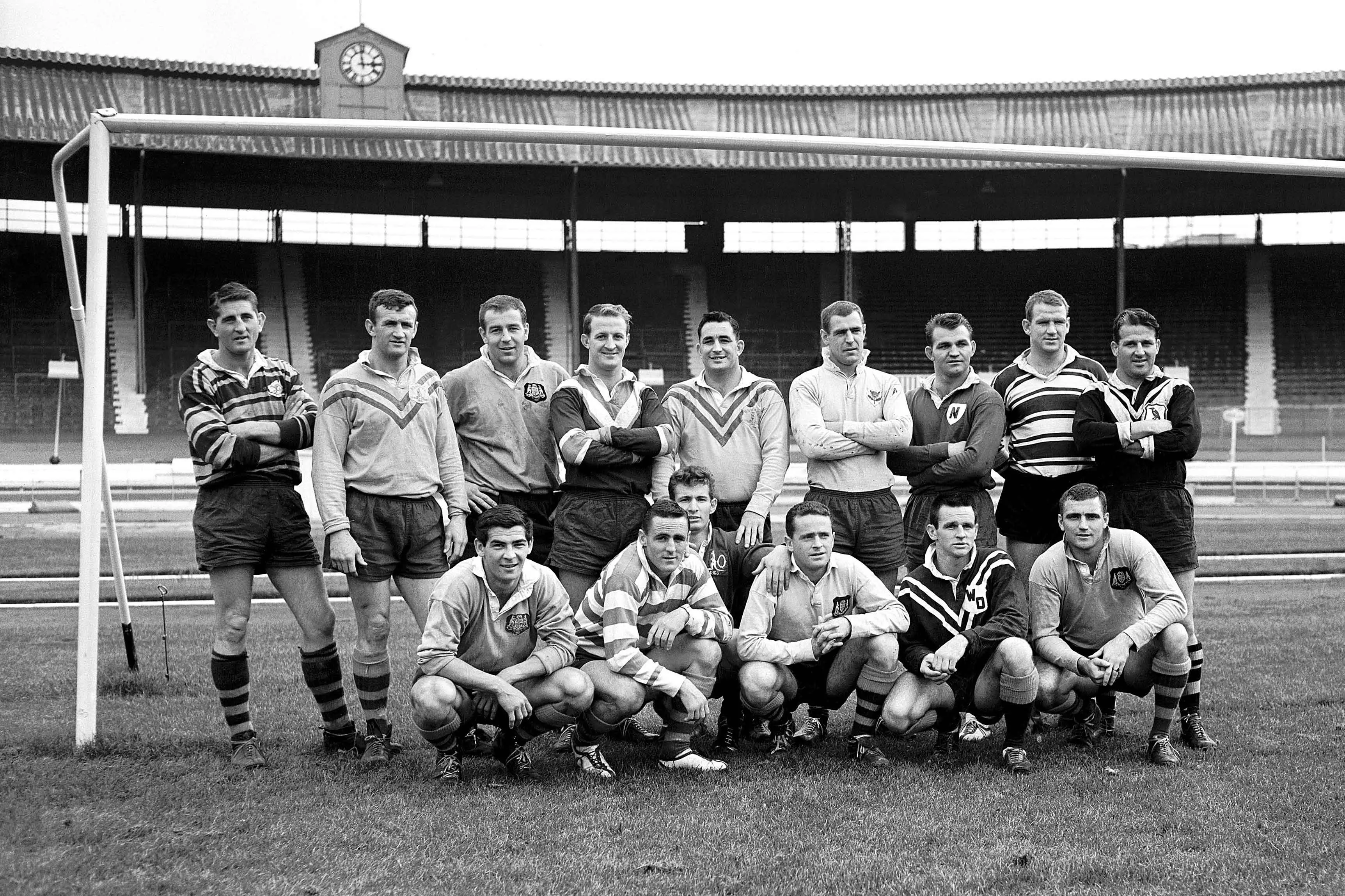
“Sixty years ago, Ian was the captain-coach of the St George rugby league team when they won their 11th successive premierships; he was a part of five of these 11 St George winning premierships,” he added.
Born at Bogan Gate near Parkes, the legendary Australian rugby league player and St George Dragons captain, lived in Dubbo with his mother's family while his father was serving overseas with the defence forces, attending both Dubbo Public School and Dubbo High School during his youth.
Because of his ties to the school and his highly-successful sporting career after leaving, Walsh was named in Dubbo High/Dubbo College's rugby league "Team of the Century" during their centenary celebrations.
However, unlike the youth development programs, academy contracts, and teenage signings of the current era, Walsh's football career covered more than a decade of bush footy before St George signed him in 1962.
His country playing career included stints at Condobolin in 1951, Parkes for 1952–1953, Forbes for 1954–1955, and Eugowra for 1956–1961.
In the days when overseas league teams battled country representative sides, he also played against the legendary French touring teams of 1951 and 1955 – which famously defeated the Australians in both series – and the Great Britain teams of 1954 and 1958.
In 1959 – while still playing bush footy, no less – he became an Australian player, touring with the Kangaroos and playing all three Ashes Tests.
At Saints, Walsh became an integral part of five winning premiership campaigns up unto the end of 1966, also playing 25 Tests for his country and proved a magnificent stand-in for injured skipper Arthur Summons on the Kangaroo tour of 1963–64.
In 1966, he was captain-coach of the Saints team that won the club's 11th successive premiership and led his country to Ashes victory.
The following year, his farewell season, Walsh was Saints' skipper at the time of a piece of league history that had to arrive one day, when St George finally did not win a premiership.
He served as the captain-coach of the Dragons during that match which ended 12–11 in favour of Canterbury, officially concluded St George's historic run of 11 consecutive premierships. It also marked the final game of Walsh's playing career before he retired from the field.
The National Rugby League Hall of Fame entry for Walsh leaves little doubt as to both his merits as a footballer and qualities as a leader.
“Throughout his career and beyond, Walsh was a fine and forthright man, an ornament to the game he played,” the entry stated.
“His courage was legendary. In successive years, 1963 and 1964, he suffered badly broken arms yet fought his way back.
“As a hooker, he was a renowned ball-winner in the tough scrums of the time, a rugged defender of the ruck, the shrewdest of generals with his clever reading of the game, and a perfect dummy half with his handling and passing skills.
“He coached Parramatta with some success in 1971 and 1972, and for many years was a hard-hitting columnist with the Daily Telegraph,” the entry concluded.
His other credits include, being Australian captain for 10 Tests; the NSWRL Player of the Year for 1964; the grand final Man of the Match in 1962; the NSW Country Team of the Century in 2008; and being named in the NRL Team of the 1960s in 2006.
In February 2008, Walsh was named in the list of Australia's 100 Greatest Players (1908–2007); he died in 2013, just after his 80th birthday.