
PHOTO
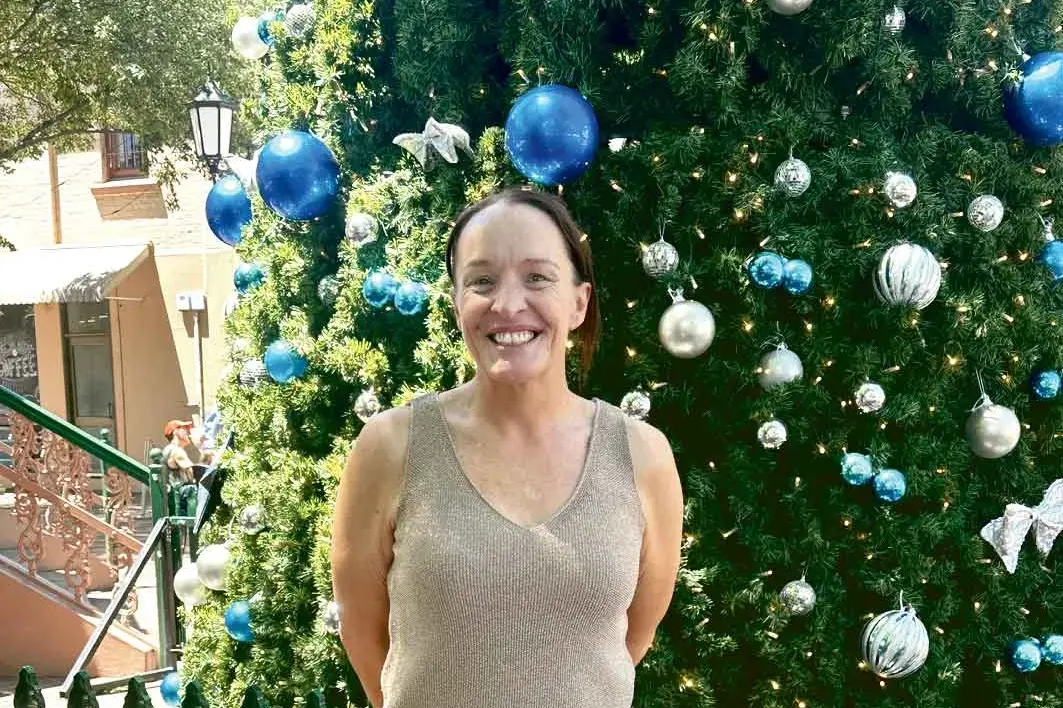
Dubbo mum Katherine McAlister is physically exhausted from fighting for a fair go in the National Disability Insurance Scheme (NDIS) for her terminally ill son with complex needs.
However, she still has the strength to hold aloft the flag of defiance against that same system which reportedly intends to defer decision-making on NDIS participant plans to artificial intelligence (AI), which she says will have a huge impact on people with disability and complex cases like her son Harley, 26, who has incurable – and ultimately terminal – Juvenile Huntington’s Disease.
The 46-year-old mum of three has launched an e-petition on the federal parliamentary website aiming to put the matter before the country’s elected decision-makers – and seeks community support to make it happen.
NDIS implementing AI
Dubbo Photo News sat down with Katherine on December 23 to talk about Petition EN8854 Harley’s Law: National Safeguards for Terminal, Degenerative and High-Complexity Disabilities.
Katherine’s son Harley was diagnosed at 11 with Juvenile Huntington’s Disease. Over time, the incurable condition affects the interconnected network of nerve tissues in the brain and spinal cord, impacting movement, cognition and behaviour.
As it progresses, muscles and movement are impacted and things like swallowing, communicating, walking and moving become difficult. Eventually, the condition causes death. The disease is hereditary, and sadly also took the lives of Harley’s father and grandfather.
“NDIS are talking about an AI tool that's actually going to create plans for people like my son,” Katherine explained.
“Now, the problem with that is if you're going to cut funds, there are no protections in there for human oversight. An AI bot gets to make a decision, and the appeal process goes. It doesn't make sense to me.
“I believe, to my core, that it at least needs human oversight to check those funding cuts for every human in Australia on that scheme.”
A week before Christmas, on December 17, the NDIA formally announced the NDIS planning process “will begin changing to make it fairer, more consistent and easier for participants. This new approach is called new framework planning.”
Earlier in this month, The Guardian reported seeing an internal briefing for NDIA staff which suggested computers would generate NDIS plans with staff unable to amend them and appeal rights also impacted.
The December 17 press release does not mention AI, but states: “Plans will always be approved by real people who are trained NDIS staff.” It does not elaborate. Dubbo Photo News did not have time to submit an enquiry to the agency seeking clarification prior to the Christmas closedown.
Robodebt 2.0?
Katherine says NDIS participants have already endured enough over the years with endless cuts to participants’ plan budgets and delays in receiving approved and appropriate supports – decisions made by humans employed by the system, who have no medical training and are not qualified to formally assess participants.
The proposed new AI decision-making system, she says, “creates safety concerns, discrimination risks and repeats the failures seen in Robodebt, where automation without transparency was ruled unlawful.”
“There are no enforceable timelines, no protections against unsafe automation and no independent body to intervene when delays or errors put lives at risk,” her petition reason states.
Not only is Katherine caring for Harley, who has very complex needs and requires significant personal care, but she is also managing several of her own health conditions.
Like many carers who feel abandoned by the system, an exhausted Katherine still intends to fight for her son and others who will be impacted by the new system.
She says leaving the decision-making to an AI bot is fraught with danger.
“I don't believe anyone's dying with dignity should be monetarised. Period!” Katherine said.
“Healthcare should not be monetarised.
“You can tell that bot that you want to look at cheaper funding models, you know, bare minimum care standards. You put those pathways in. It's the same software they used for Robodebt. Did we not see what that did to us?” she said.
NDIS funding issues
Katherine says part of the problems with the NDIS stem from the lack of funding in healthcare at federal and state levels, as well as how the scheme itself is being managed.
“The people they are punishing right now are the participants in the scheme,” she said.
“We can talk for days about where the funding is being mismanaged.
“Stop using our most vulnerable demographic and trying to make them sustainable when you know full well [the federal government has] commercialised that,” she added.
“The NDIS has been a business dream, a corporation's dream.”
“It's created profit margins that shouldn't be there, and now you want to AI it because it's blown out of proportion, and cut funds and take away tribunal abilities with no safeguards?”
Katherine’s experience navigating the NDIS with human decision-making has been frequently traumatic. She wonders what it will be like if AI takes over.
“This time last year, I was in my bathroom crying on the floor for an hour because a planner didn't read [Harley’s] reports and cut funds by 75 per cent,” Katherine admitted.
“He needs two care workers during his awake hours, his risk of choking is so dramatic.
“I dare anyone else to go through a choke situation and not think that two staff would be appropriate to help someone through that, which happens daily. Do we go to hospital for aspirations? They're normal occurrences in our day to day.
“But then you have the NDIS plan people saying, oh no, he's suitable to go to supported, independent living, one-to-three ratio. I beg your pardon?”
Political support
Out of the trauma of these experiences, Katherine's defiance has risen. Active on TikTok, Katherine has taken to – in her words – “trolling” politicians to bring to light the issues with the NDIS system – activism that will ramp up if the AI decision-making eventuates.
She has found an ally in the Federal Member for Parkes, Jamie Chaffey, who has promised to take the petition forward if it generates enough support from the community.
“I have met with Katherine McAlister and will absolutely present her petition to Parliament if it reaches the required support,” Mr Chaffey said in a statement to Dubbo Photo News.
“I am supportive of changes to the NDIS if they are focussed on removing opportunities for those who are clearly misusing the system. Those rorting this very important system are costing Australians hundreds of millions of dollars, and it comes at the expense of the most vulnerable in our communities,” he added.
“I am not in support of a lazy Labor Albanese Government making ill-advised changes without consultation with the communities they impact on – including changes to travel allocations that make it impossible for health professionals to visit clients in their homes.
“Neither am I in support of the absurd proposal to have client plans generated by a computer program, with no allowance for common sense to intervene.
“The changes will also mean the administrative review tribunal will no longer be able to bring about a result when they agree that decisions about a participant’s funding are unfair,” Mr Chaffey said.
The Parkes MP, who has a massive 400,000 square-kilometre electorate covering 20 local government areas and the huge swathe of unincorporated land on the South Australian/Queensland border, says the federal government is making decisions with terrible consequences for regional Australians in its bid to save money.
“The federal minister has not provided clear answers or explanations – or guarantees – that clients will not be even further negatively impacted by these changes to the NDIS,” he said.
“Ms McAlister is right to be concerned, and I fully support her endeavours. I have committed to seeking a meeting with her and the Federal Minister to address these concerns.”
Next steps
Dubbo Photo News understands the department will commence public consultation in early 2026 to hear the community’s views on the NDIS new framework planning rules.
If you would like to view Katherine McAlister’s e-petition online, search “Petition EN8854” and it will take you directly to the federal parliament website where it appears. She hopes to gain at least 10,000 signatures for Mr Chaffey to take the matter forward.