
PHOTO
“One cannot think of the town of Wellington without associating with it that great British general, ‘The Iron Duke’,” writes ‘Esparto’ in a 1934 issue of Wellington Times, under the intriguing headline, ‘The Army of Napoleon Surrounds Wellington’.
“But, it is not everyone who knows that the hosts of the great Napoleon were not long in following, and now literally surround us on all sides,” the anonymous writer continues.
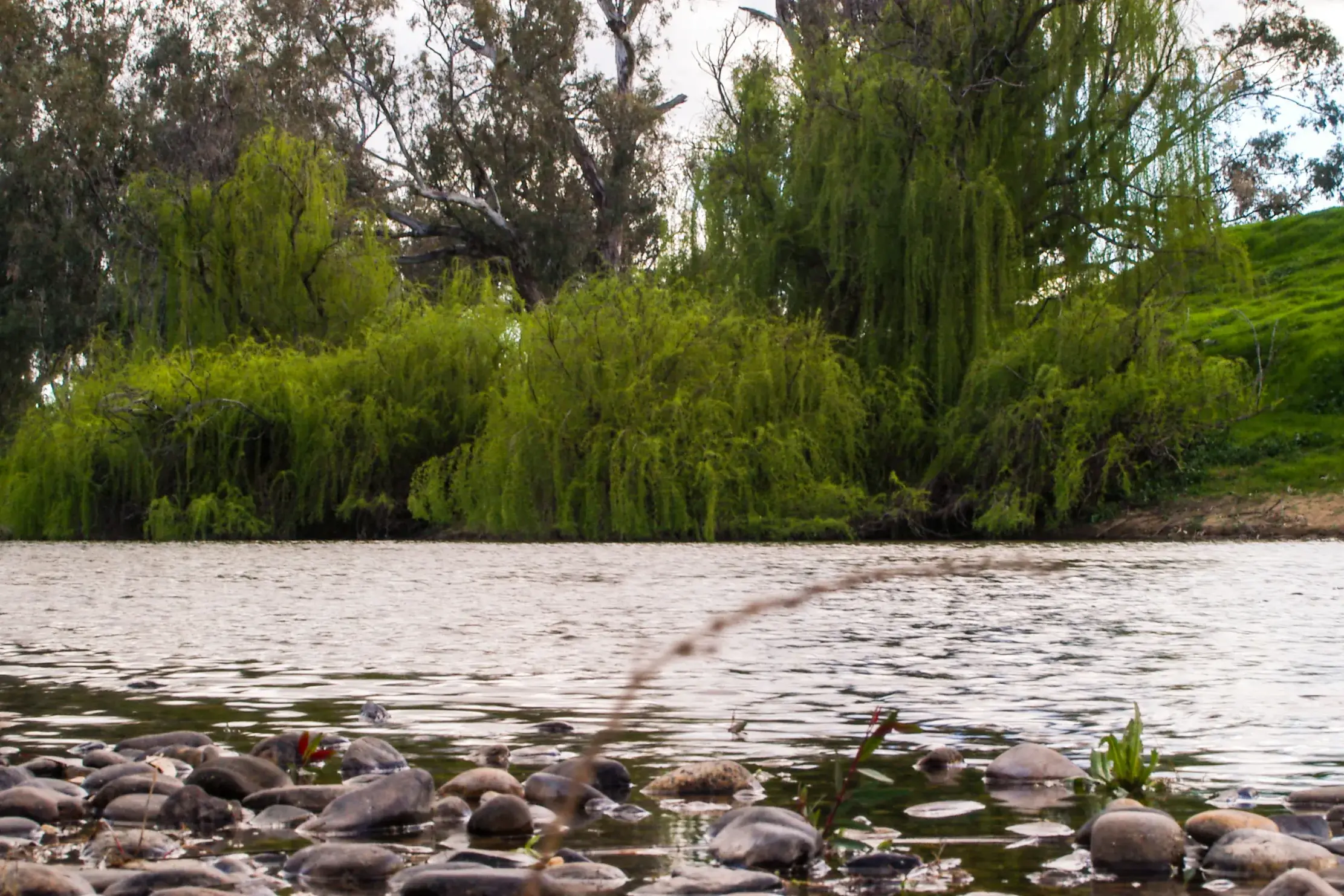
“The beautiful willows all around is the encamped army referred to. It is an army of peace and beauty. Their original cuttings came from two willows at St Helena, under which Napoleon so loved to rest.”
The idea that cuttings from willows surrounding the grave of the deposed French Emperor Napoleon Bonaparte, imprisoned after defeat at the hands of the “Iron Duke” on the remote South Atlantic island of St Helena, almost 2000km east of Namibia, found their way to the inland rivers of NSW seems fantastical, but as often turns out when looking into the past, the truth is far stranger.
Napoleon Bonaparte, the remarkable military mind who’d risen to power in France and marched his army all over Europe, died of stomach cancer on May 5, 1821, on the island of St Helena, where the British had held him captive for the previous five years.
He was indeed buried under a small grove of weeping willows, which supposedly had been his dying wish if he could not be buried in France.
Napoleon’s fame was such that his grave soon became a site of pilgrimage for countless curious travellers stopping at the island on the sea route between Europe and Asia.
And, as a souvenir of their visit, many began to take with them a cutting of the willows standing vigil at the gravesite.
“It was a really roaring trade,” says Dr Ekatarina Heath, a historian with a focus on garden studies and Russian history.
Along with Melbourne-based historian Dr Emma Gleadhill, Dr Heath has recently been investigating the remarkable history surrounding "Napoleonic Willows” in Australia.
She said they had initially considered looking at the spread of these willows globally, but quickly realised the scope of the investigation would be too great.
“We constantly have records of people bringing them into Australia, New Zealand – all over the world, actually. So it's the same pattern everywhere, if you look into America, if you look into the UK, everyone's bringing Napoleonic willows,” Dr Heath said.
So many visitors to St Helena were taking cuttings that the Governor had to take steps to ensure the trees' survival, and even planted new cuttings nearby.
In 1875, fifty-four years after Napoleon’s death, there was still a thriving tourist trade in cuttings of these willows.
Just when the first of these cuttings took root in Australia and who brought them is difficult to determine, as you find tales of Napoleonic willows all over Australia.
Charles Fraser, the colonial botanist of NSW, is said to have planted one in Sydney’s Botanic Gardens in 1830.
Thomas Raine, a merchant sea captain who settled in Bathurst in the 1830s at his estate “Rainham”, is also credited with introducing Napoleonic willows to the district. Raine was also the one to establish Boree Station to the west of Orange, from which Major Thomas Mitchell embarked on his 1835 exploration of the interior.
Sixteen years after Napoleon’s death, the editor of the Sydney Monitor claimed that “most of the weeping willows in this Colony come from the willow planted over Napoleon’s grave,” and Dr Heath said it could well be true.
“I think we can safely say that a lot of them, but I can't say that most of them were anything like that. That needs to be verified,” Dr Heath said, admitting that they are in the early days of researching this project.
Regardless, she said, the fact that people in Australia claimed this connection to the deceased Napoleon and continued to retell this origin story for decades is interesting in itself.
“It's interesting, you know, what narratives people created around the plants. What were their purposes for planting Napoleonic willows and spreading them? What stories they wove around them, and how they connected to local memory and the way they celebrated various historical events,” Dr Heath said.
“It's a really fun project, we keep finding all this really fun stuff about willows, so many interesting aspects... So we are hoping to turn it into some bigger publication, something really fun, because it has all the global history, but also so many interesting local stories about how they were connected to Australia.”
One of the most surprising of these discoveries is to do with the claim that Napoleon was fond of these weeping willows under which he was eventually buried.
According to Dr Thomas Shortt, the chief medical officer on St Helena, the trees Napoleon so admired were known locally as ‘Botany Bay willows’ and were actually none other than an Acacia longifolia, the Australian Wattle!
Napoleon’s former wife, Josephine, was well known for her love of Australian flora and fauna, and even had emus and kangaroos in the garden of her French estate. While Napoleon had annulled their marriage in 1810 and later remarried, his final words were said to have been "France, l'armée, tête d'armée, Joséphine...
“We looked into St Helena's botany books from that period and contemporary records and they all say it's Acacia. So that was really fun and interesting, that he wanted to be buried under an Acacia, not the Willows,” Dr Heath said, who argues that the festive yellow flower of the Australian wattle did not fit with European cultural preferences at the time, while weeping willows had long been seen as a symbol of mourning.
The final irony of this two-way trade of plants is that just as willows have problematic weeds across Australia’s rivers, so too are ‘Botany Bay Willows’, the Australian Wattle, now considered an invasive weed on St Helena.
Dr Ekaterina Heath and Dr Emma Gleadhill are the authors of a paper, ‘Roots of the Myth: Napoleon’s Willows, Memory and Empire’, which was published in ‘History’, the Magazine of the Royal Australian Historical Society, in December 2025.