
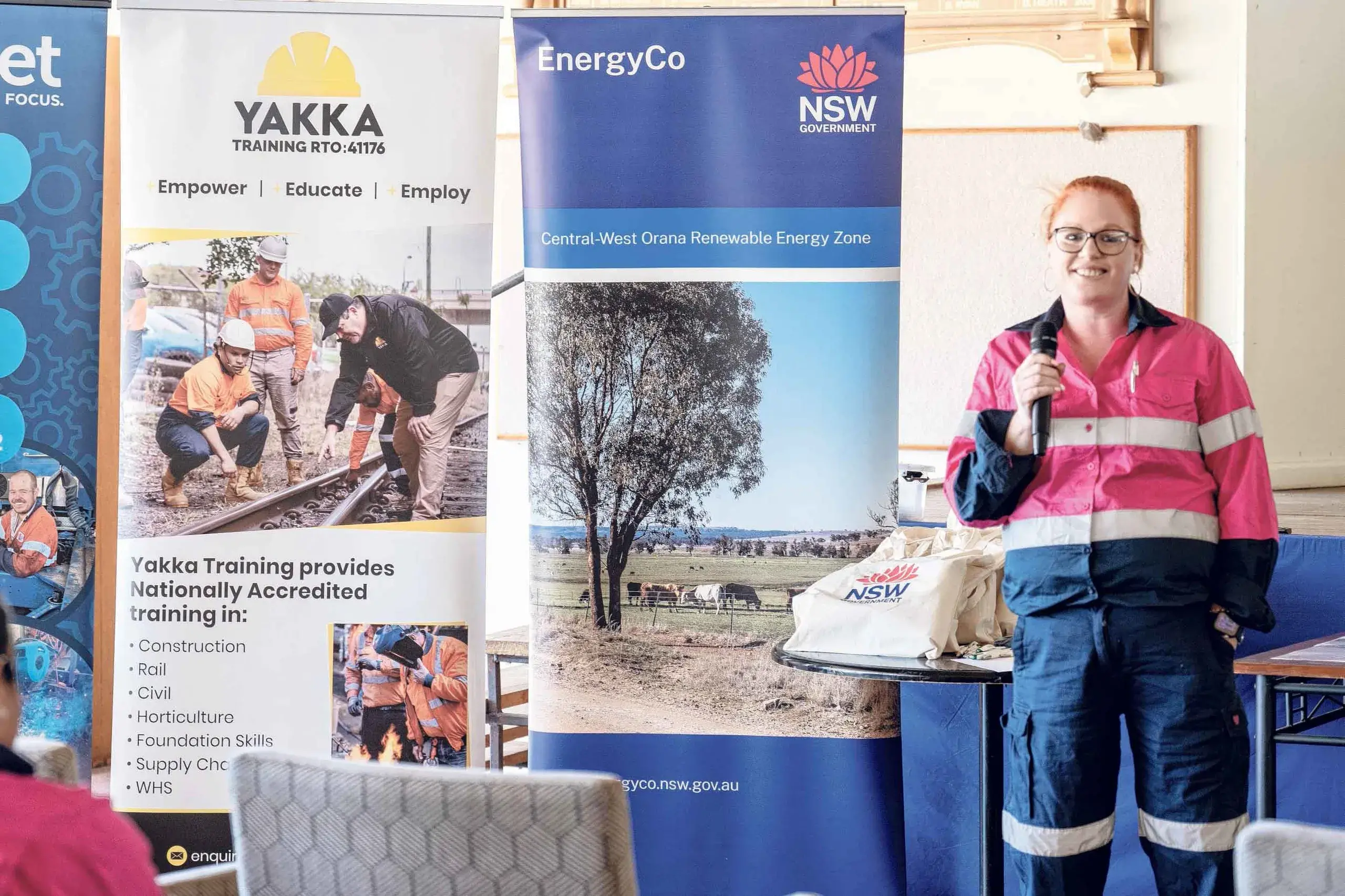
PHOTO
Nationally-accredited free training will be available for local residents interested in career pathways arising from the state’s energy transformation.
The Renewables Taster Program expands on two courses delivered last year that have helped nine participants to secure employment in traffic control, civil or labouring roles.
One of them is Dubbo local Liza Everleigh, who secured a role with western NSW Aboriginal-owned traffic management and haulage company Work Control Operations.
“I went home feeling like I’m on top of the world. The course brought my confidence way up and I have since started work as a traffic controller," Liza said.
The upcoming two-week courses, running in Mudgee and Dunedoo from May, are backed by the NSW Government’s $2.9 million Renewable Energy Skills Legacy Program.
Delivered in partnership with VERTO and SKIVL, the programs provide essential industry skills including safety practices (White Card training), traffic control, risk management and machinery operations, alongside practical work-readiness workshops covering resumes, cover letters and interview skills.
Like Liza, participants will have the opportunity to connect with employment representatives from renewable energy industry projects and civil works providers in the Central West-Orana Renewable Energy Zone (CWO-REZ).
Courses are open exclusively to CWO-REZ residents aged over 18 who are not enrolled in school, TAFE, or university. Women, Aboriginal and Torres Strait Islander peoples, and people from culturally and linguistically diverse communities are strongly encouraged to enrol.
EnergyCo Chief Executive Hannah McCaughey applauded the NSW Government’s investment in practical job-based training for regional residents.
“This program means local people can build the skills they need for construction and clean energy jobs right across the Central West Orana region,” she said.
Department of Education spokesperson Amanda Lawrence concurred.
“Programs like this provide practical training and strong pathways into employment, helping to ensure the state’s energy transformation leaves a positive legacy for local communities,” she concluded.