
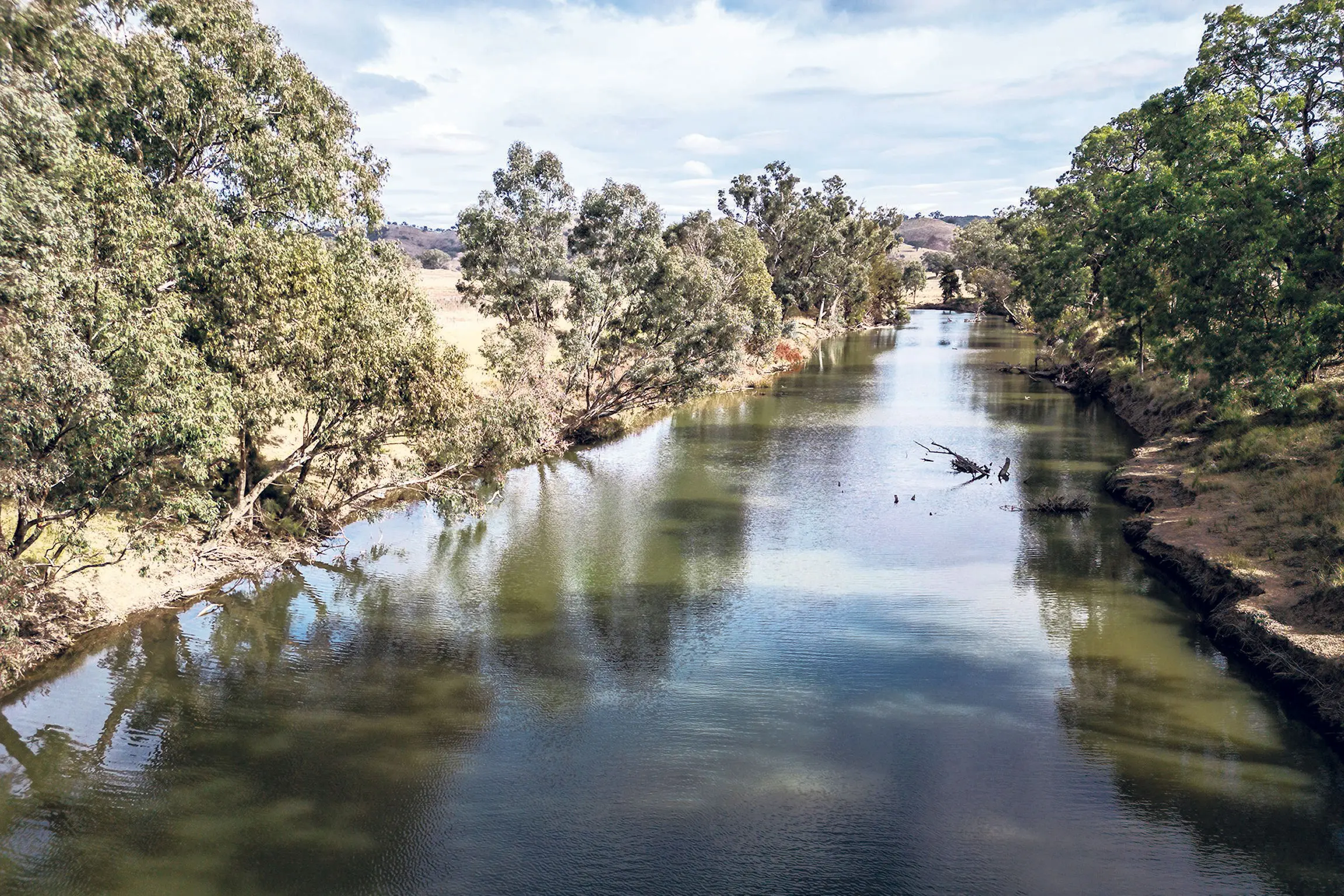
PHOTO
Recent proposals to keep an extra 20 per cent of Burrendong Dam’s overflow capacity in storage for downstream towns during the next big dry could either help save the Macquarie River or increase the likelihood of flooding, depending on who you speak to.
Contrary to claims that the plan would lead to increased flooding of downstream waterways and towns along the Macquarie River, proponent, Warren Mayor, Greg Whiteley said that it would ensure the waterway’s survival.
Cr Whiteley was responding to criticism of the plan — that he took to the NSW Country Mayor’s Conference in Sydney last month — from the environmental group, Healthy Rivers Dubbo.
The plan, the group said in a recent media release, would: “pose unacceptable risks to communities and the environment” downstream of the river.
Yet Cr Whiteley said that the idea to retain an extra 18 per cent of the capacity in the Wellington district dam, currently set-aside for flood mitigation, would only marginally impact water flows at the facility.
“The capacity is 167 per cent, of which 67 per cent of that is for environmental flows and flood mitigation, we’re only asking to hold back 18 per cent of that, to provide water for our towns for three, not two years, in the next drought,” Cr Whiteley told Dubbo Photo News.
“In the last flood, a total of 5000 gigalitres (billion litres) went past Narromine down the river, we’re only talking about keeping back 200 gigalitres of that, about four per cent,” he added.
Refuting suggestions from the environment group, that keeping back nearly 20 per cent of the flood mitigation capacity of Burrendong would deleteriously impact towns and riverine habitats, he said it could actually help save the river.
“If you’re looking at the environment, in 2018, the river flow north of Warren was stopped, and this caused irreparable damage to the fish and the environment,” Cr Whiteley said.
“We were trying to save the fish in the river, and we also have a critical human need for this water… I rebut their arguments,” he concluded.
Healthy Rivers Dubbo, however, called for “immediate reconsideration” of the plan, warning that the move would endanger towns, birdlife, and riverine habitats including for downstream creeks and the Macquarie Marshes, while not providing additional water security.
“Using flood-mitigation storage for permanent water supply is dangerous, short-sighted, and would be environmentally-devastating,” Healthy Rivers Dubbo Convenor, Mel Gray, said.
“This proposal puts towns at greater flood risk, while delivering no real improvement to long-term water security,” she added.
Raising the full supply level would mean flood water would be released earlier and at higher volumes during flooding events, she believes.
This, she argued, would “significantly reduce” the buffer intended to protect towns such as Dubbo, Wellington, Narromine, and communities along the Macquarie River.
She said that several key dangers of the initiative, include: earlier and larger flood releases increasing the chance of downstream flooding; Burrendong losing the ability to absorb and delay natural flows; less time for emergency responses to protect communities; and greater risk of concurrent flood peaks from the Talbragar, Bell, and Little Rivers.
“Burrendong Dam’s flood-mitigation zone exists for a reason,” Ms Gray said.
“Disasters in Lismore, Eugowra, and the Lockyer Valley show us the danger of not taking flood risk seriously.”
“Severe environmental consequences” could also result from any changed regime, she claimed, saying that creeks around Warren and the Macquarie Marshes depend on big, episodic flood pulses for their survival.
These floods, she said, recharge wetlands, sustain reedbeds and marsh vegetation, and trigger essential ecological booms of insects, frogs, fish, and waterbirds.
“Already, the marshes have shrunk from over a million hectares of inundation in a flood, to about two hundred and thirty thousand hectares,” Ms Gray said.
“So much has already been lost, and there’s simply no more water to give; we cannot trade away their survival,” she concluded.