
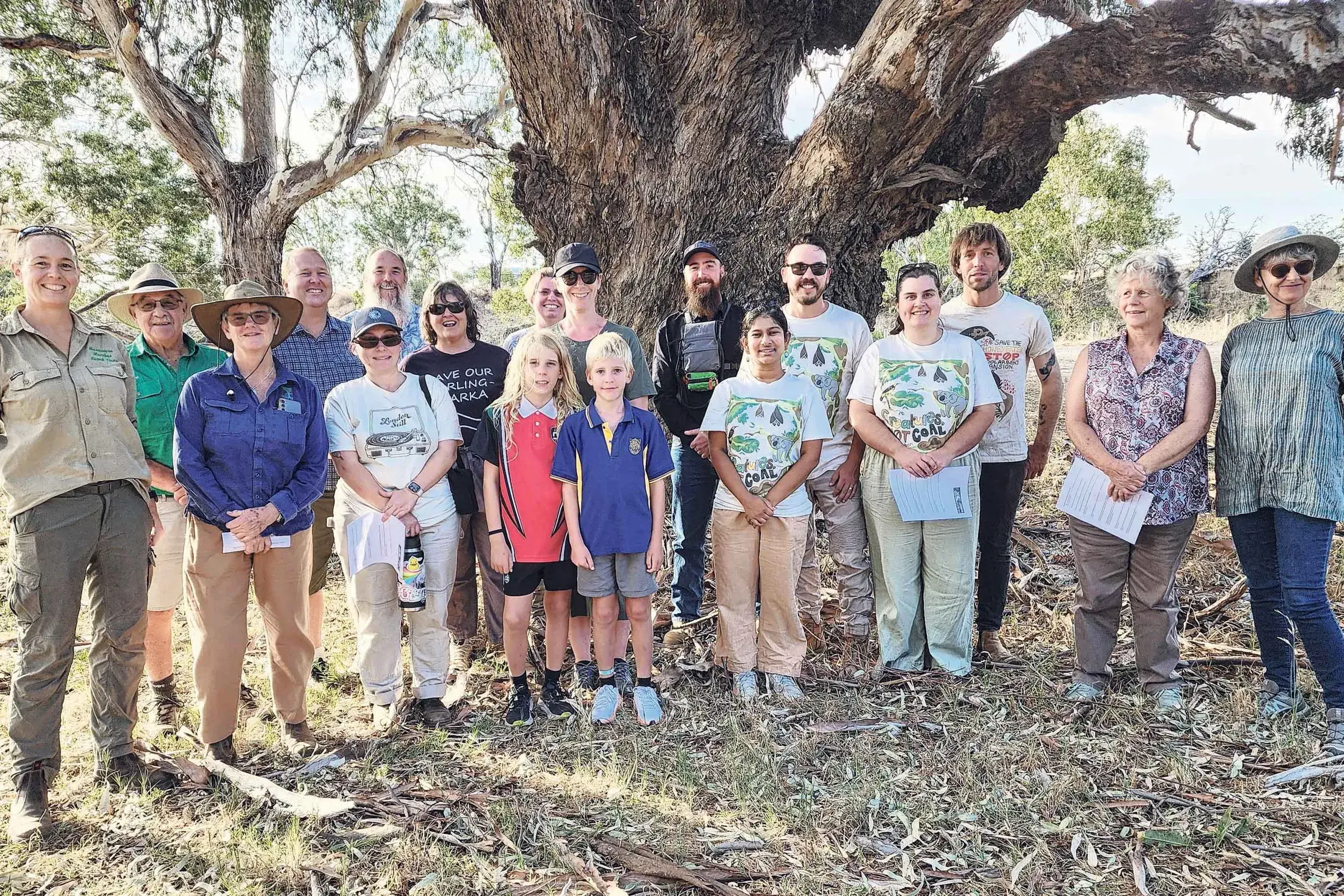
PHOTO
British colonists, raised under traditional European farming practices, typically viewed Australian wetlands as having little inherent ecological value – neither river nor land – and usually filled them in or dug them out to make channels, ponds, and rivers.
Healthy Rivers Dubbo, however, recently sought to dispel this misconception and to raise awareness of retaining remnant wetlands in the Macquarie system with a 'Nature Challenge' at the Devil's Hole Reserve on World Wetlands Day, Monday, February 2.
The evening tour aimed to educate locals on the critical importance of local wetlands and the unique wildlife they support with a guided walk through the reserve, one of Dubbo’s “lost wetlands”, convenor of the event Mel Grey explained.
“This was our third event, with the theme ‘Lost Wetlands of Dubbo’ with one of the main places this has happened, the area in Victoria Park behind the Council Chambers,” Ms Grey said. “Essentially, all the wetlands in this region are lost, and that means way less life in the ecosystem,” she lamented.
This loss, she argued, has resulted in dire impacts of the riverine habitat of not just the region, but western NSW as a whole.
“Wetlands are the most biodiverse-rich ecosystems on earth; they’re a powerhouse of life with an abundance of food for people for fishing. They are also a critical breeding grounds for native fish and birds and plant species,” she revealed.
The Monday event drew about two dozen attendees with expert speakers explaining what we had, what we lost, and what to do about it.
“It was about the community coming together to understand wetlands we lost and to learn about the animals and plants they supported; to learn about the way that water is managed in the Macquarie/Wambuul.
“We had about 20–30 people including speakers from the Nature Conservation Council, Healthy Rivers Dubbo, and Dubbo Rivercare; we want to understand the landscape and understand we’ll never get them back; it was also to emphasise that we must protect the few that we do have.”
On this issue, western NSW’s greatest surviving wetland plays a key role, with recent news in that regard.
“The internationally-listed Macquarie Marshes were last month named as an ‘endangered ecological community’ by Federal Environment Minister Murray Watt.
“This just shows how close to losing them we could be, all along the river, there used to be wetlands now, they’re mostly gone.”
She said a bit of a challenge was also set for attendees on their knowledge of current riverine conditions.
“We did a funny little ‘spot the lie in water management’ that explains how ludicrous our water management system is. How close to disaster, we come every 10 years with managing the water in the system.”
The fate of the major wetland in central Dubbo, she believes, is an informative and revealing narrative, of what happened to so many of similar locations in western NSW.
“The area in Victoria Park, there was a watercourse and gathering place for local peoples; then, the watercourse was filled in and is now an artificial pond,” Ms Grey said.
“There are plenty of other places, where the same thing happened,” she concluded.