
PHOTO
It’s been a four-year saga that finally has clarity: Brisbane will get a new stadium when it hosts the 2032 Summer Olympic and Paralympic Games.
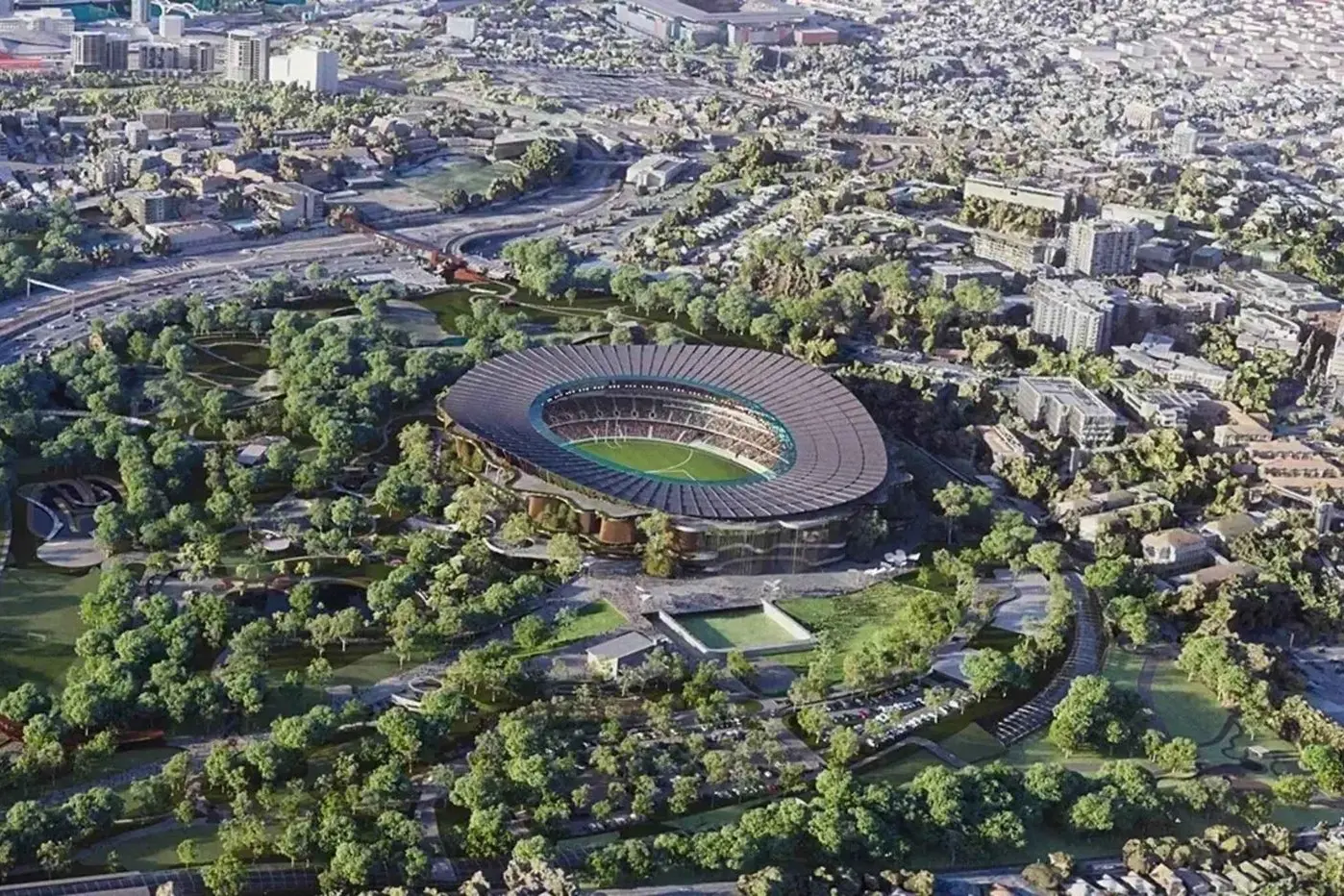
This is a tale of broken promises, constantly-changing plans, and -- in the interests of balance -- a pragmatic decision to build a new 63,000-seat stadium at Victoria Park in Brisbane’s inner-north, within 5km of the city CBD.
Queensland Premier David Crisafulli broke a promise he made to the state, before the 2024 election, not to build a new stadium. .
However, as ABC reported, Mr Crisafulli believed a new stadium at Victoria Park was a “clear” choice.
And Mr Crisafulli felt he broke his pre-election pledge for the right reasons: “The games must be held at a new stadium at Victoria Park,” Mr Crisafulli told the ABC. “Any other choice would have meant placing the government’s interests ahead of the interests of Queensland. We’ve had enough of that in the last few years and I wasn’t prepared to do that.”
The International Olympic Committee (IOC) could not have forecast how critical it was to officially announce Brisbane as the host city way back in July, 2021, 11 years before the games.
If the IOC had waited until now to announce Brisbane as the host, it’s doubtful the games would have been ready in time after the first four years of lead-up time have been wasted.
A venue that wasn’t going to be ready by 2032 due to that four-year delay, according to Mr Crisafulli, was The Gabba, an iconic ground of Australian sport that has hosted the 2020 AFL grand final and first hosted Test cricket back in 1931.
The Gabba was originally mooted to be the major host venue of the 2032 Olympics with a refurbishment planned.
However, plans got delayed and Mr Crisafulli said there was “no longer time” to upgrade the Gabba, adding the new Victoria Park plan would deliver “for 2032 and beyond”.
Now it is set to host cricket, if that sport proceeds at the Brisbane Olympics, and be knocked down after the games.
“It became a choice between spending billions on temporary facilities and temporary stands that delivered no legacy (and did not) secure the future of AFL and cricket at a new home,” Mr Crisafulli told Fox Sports.
“It became a choice between delivering a games with an eye to the future or rewinding the clock for decades. In the end, the choice was clear. The games must be held at a new stadium at Victoria Park.”
After the 2032 Olympics and Paralympics, Victoria Park is set to be new home of the Brisbane Lions (AFL), Brisbane Heat (Big Bash League cricket), and Test cricket.
A legacy is planned for after the games, much like the Sydney 2000 Olympics which benefitted from Stadium Australia (now Accor Stadium) being reconverted into an 82,000 seat facility for multiple sports, Qudos Bank Arena (capacity 18,000 for basketball and 21,000 for concerts) is now a premium basketball and entertainment venue, and the Sydney Showground’s Engie Stadium (capacity 23,500) the home of Big Bash League cricket’s Sydney Thunder and the Greater Western Sydney Giants in the AFL.
Brisbane city will also benefit from a new national aquatic centre at Spring Hill with a capacity of 25,000 people that will become the home of Australian water sports, while the RNA Showgrounds will host the athletes village and an upgraded 20,000-seat arena will host key events and a new 3000-seat show court area and 12 match courts will be built at the Queensland Tennis Centre.
Regionally, Rockhampton (rowing), Townsville (football and sailing), the Whitsundays (sailing), Gold Coast (hockey, triathlon, basketball), Maryborough (archery), Toowoomba (equestrian), Cairns (football and basketball), Mackay (cricket if included in games), and the Sunshine Coast (mountain biking and possibly football), are all set to be part of the games.
The only loser of this drawn-out saga seems to be The Gabba.
After the 2032 Olympics and Paralympics, it is set to be demolished and redeveloped into an entertainment and housing hub.
This will put an end to 137 years of being an iconic sports facility in Brisbane.
Australia’s national Test cricket side has played 67 Tests at The Gabba, winning 42, drawing 14, and losing 10, according to ESPN Cricinfo.
Famously dubbed the “Gabbattoir”, until recent seasons it traditionally it held the first test of any international test cricket series. Visiting sides often lost that crucial first clash on a wicket that often had plenty of grass and offered batters and bowlers equal opportunity.
The Gabba was also the venue of one of only two tied Tests ever in international cricket: when the Australia played the West Indies from December 9-14, 1960.
West Indies scored 453 before the Australian team amassed 505 for a 52-run lead on the first innings. The West Indies then posted 282, leaving Australia 233 in 69 overs for victory.
Australia was in all sorts of trouble at 6-92, before a 134-run partnership between all-rounder Alan Davidson (80) and captain Richie Benaud (52) bought the host back into the contest.
However, chasing victory, they lost their last four wickets for six runs, with Ian Meckiff run out chasing the solitary run that would have sealed victory.
The Gabba is a shortened term, with the ground’s name based on the suburb name it is located in, Wolloongabba.
The land on which the ground sits was first set aside for use as a cricket ground in 1895, and then shared first-class matches with the Brisbane Exhibition Ground, before hosting its first Test match in 1931 and becoming the preferred venue of Queensland and Australian cricket.
While The Gabba has been branded as “not fit-for-purpose” in recent times, with the key issue being the inability of an ambulance vehicle to access the playing surface if required, it is important to note from an historical context that the recent developments between 1993 and 2005 made The Gabba an all-seat stadium and far better venue than it previously was.
As recently as 1993, the ground only had a capacity of around 20,000 people (including hills) and -- between 1972 and 1993 -- had a dog track around it as well.
The rise of Australian Rules football in Queensland prompted to government to increase the playing surface size to host the Brisbane Bears (now Brisbane Lions), meaning the end of greyhound racing.
Almost 40 years after that 1993 call to end the dogs, The Gabba will sadly end its time as a major sports venue in 2032.