
PHOTO
On Wednesday, February 18, 140 members of Dubbo's University of the Third Age (U3A), attended a seminar on artificial intelligence (AI).
Dubbo's Upper House representative, Stephen Lawrence MLC, spoke at the morning session about the parliamentary committee inquiry into AI, of which he was a member.
Mr Lawrence told the audience that adopting AI technology will have a substantial economic and labour force impact for NSW. He stated that whilst AI presents many opportunities, we’ll also see challenges and the need for governments to address these is immense.
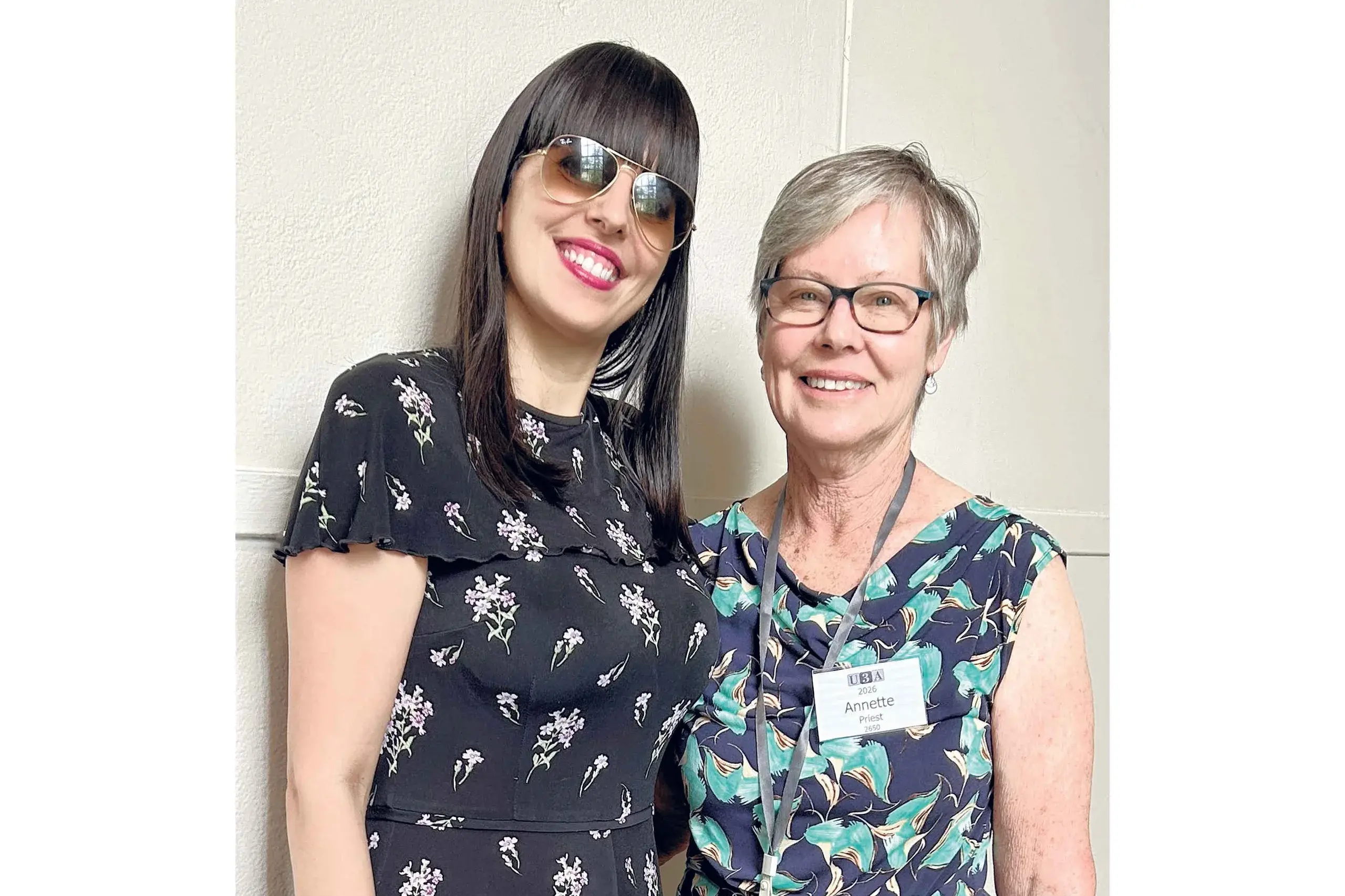
Dr Barbara Barbosa Neves, an award-winning sociologist of technology and ageing, based at the Sydney Centre for Healthy Societies, was the keynote speaker and presented two excellent sessions.
Dr Neves holds a prestigious Sydney Horizon Fellowship in AI social science and is an internationally recognised expert on loneliness, social isolation, and digital inequalities in later life. Dr Neves has also secured more than $6 million dollars in competitive funding from scientific and industry bodies in Australia, the European Union, and Canada and has recently returned from a speaking tour across five continents.
Dr Neves spoke about ageism and AI, and how the AI industry is increasingly becoming part of later life. Her extensive research has led her to the conclusion that older people are often excluded from the decisions and datasets that influence how these technologies are developed and used. In her talk, Dr Neves explored how AI can reinforce ageist assumptions about older people, even when presented as a solution to challenges in later life.
Based on research with AI developers, care staff, residents and advocates, Dr Neves demonstrated how many technologies are built on assumptions that older people are passive or in need of constant supervision. These assumptions in practice end up limiting independence, increasing surveillance, and ignoring what older people actually want and need.
Dr Neves' talk critiqued the view that ageing is a problem in need of fixing, a belief that strongly shapes how current AI is created and implemented. She explained that AI can support wellbeing, but only when older people are meaningfully involved in its design and use.
Dr Neves invited Dubbo U3A members to take part in her research by completing a "futuring" survey to assist with planning for AI in Australia in overseas. As she explained, AI research rarely takes into account the views of older people living in regional centres.