
PHOTO
With all the excitement, competition and social fun of the 100th anniversary of the Astley Cup in its current tri-school format, local historian Patrick Bourke looks back at one of the young lads who reported on the trophy decades ago, just as war clouds began building again in Europe.
Below are excerpts of an eloquent and informative article written by Dubbo High student Jack Richardson about their visit to Orange with the 1934 School Astley Team. This article was originally published in the 'Dubbo Liberal and Macquarie Advocate' on July 10, 1934.
"Well, we won! Perhaps it would be safer to say that our girls won, and the boys just stuck around to encourage them, for it is certain that our girls pulled most of the weight.
"The weather was not very kind to us, and the sports ground was more like a duck pond. The tennis courts like a duck pond. The tennis court’s games were held in the Imperial Dance Palais, a real indoor court.
"Were the games fast? Oh, my, just try playing tennis on a polished floor sometime.
"That football game, um – far too one-sided. Yes, Orangeites had it all their own way most of the time... when the game was over the teams looked a picture – a muddy picture.
"The social side of the visit was a huge success... the weather was cold and wet, but the good fellowship of the Orange people made up for it. Their hearts are as warm as the Dubbo climate in mid-summer,” Richardson concluded.
What happened to young reporter Jack Richardson – whose full name was Sydney John Richardson – after he left Dubbo High?
We know from his RAAF service records file that he enlisted as a cadet on July 21, 1937, aged just 19 years and 8 months.
At that time, he was working as a dental mechanic at his father’s practice in Dubbo. On June 24, 1938, he was commissioned as a RAAF pilot and, during World War II, was based in Australia and flew operations over the Torres Strait and New Guinea. He was then seconded to Qantas in February, 1944, and placed on the RAAF Reserve.
When he was with Qantas during the war, he later said, he flew unarmed charted Qantas planes for the American 322 Troop Carrier Wing.
He said that he flew these unarmed aircraft in the Pacific War area as far north as Manila in the Philippines, with the American 322 Troop Carrier Wing operating in the South-western and Western Pacific areas until the end of the war. Besides carrying passengers and cargo, it carried wounded personnel.
After the war, Richardson continued flying for Qantas and, in February, 1949, the 'Dubbo Liberal and Macquarie Advocate' reported that Captain Jack Richardson was the pilot of the Qantas Douglas plane which brought the Rolls Royce engine to Dubbo for the disabled Lancaster bomber.
At the time he was a senior captain with Qantas, with the 'Sydney Sun' newspaper also reporting in May, 1951, that he piloted a Qantas DC3 freighter on a mercy flight from Lae, New Guinea, to Hollandia in Dutch New Guinea to pick up a priest, Father Phillip Thomas, who was dangerously ill.
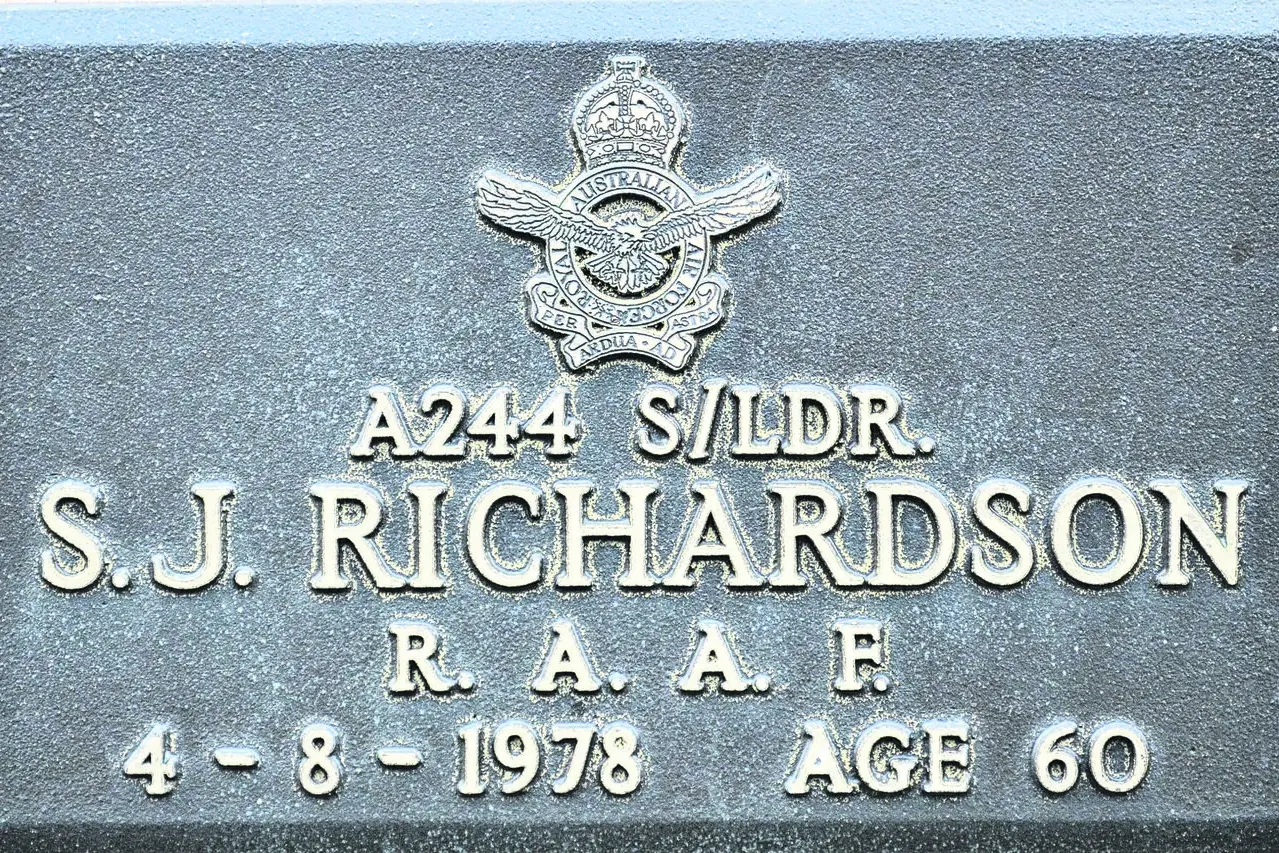
Jack Richardson died on August 4, 1978, aged only 60 years, with a commemorative plaque in the NSW Garden of Remembrance in Sydney. His name is also on Dubbo High School Ex-Students’ Second World War Service Honour Board.
Richardson’s full article is at: http://nla.gov.au/nla.news-article131586391