
PHOTO
On December 30, 2025, during its official end of year closedown period, Narromine Shire Council instituted "level two moderate water restrictions" for the Narromine township for a period of two weeks – an act the council says was taken to help stabilise water demand across the local network and would be reviewed at the end of that timeframe.
The restrictions followed multiple posts about water usage appearing on the council's social media throughout December 2025, where the council urged residents to be water-wise due to the increased consumption across what has been a very warm spring and summer with little rain.
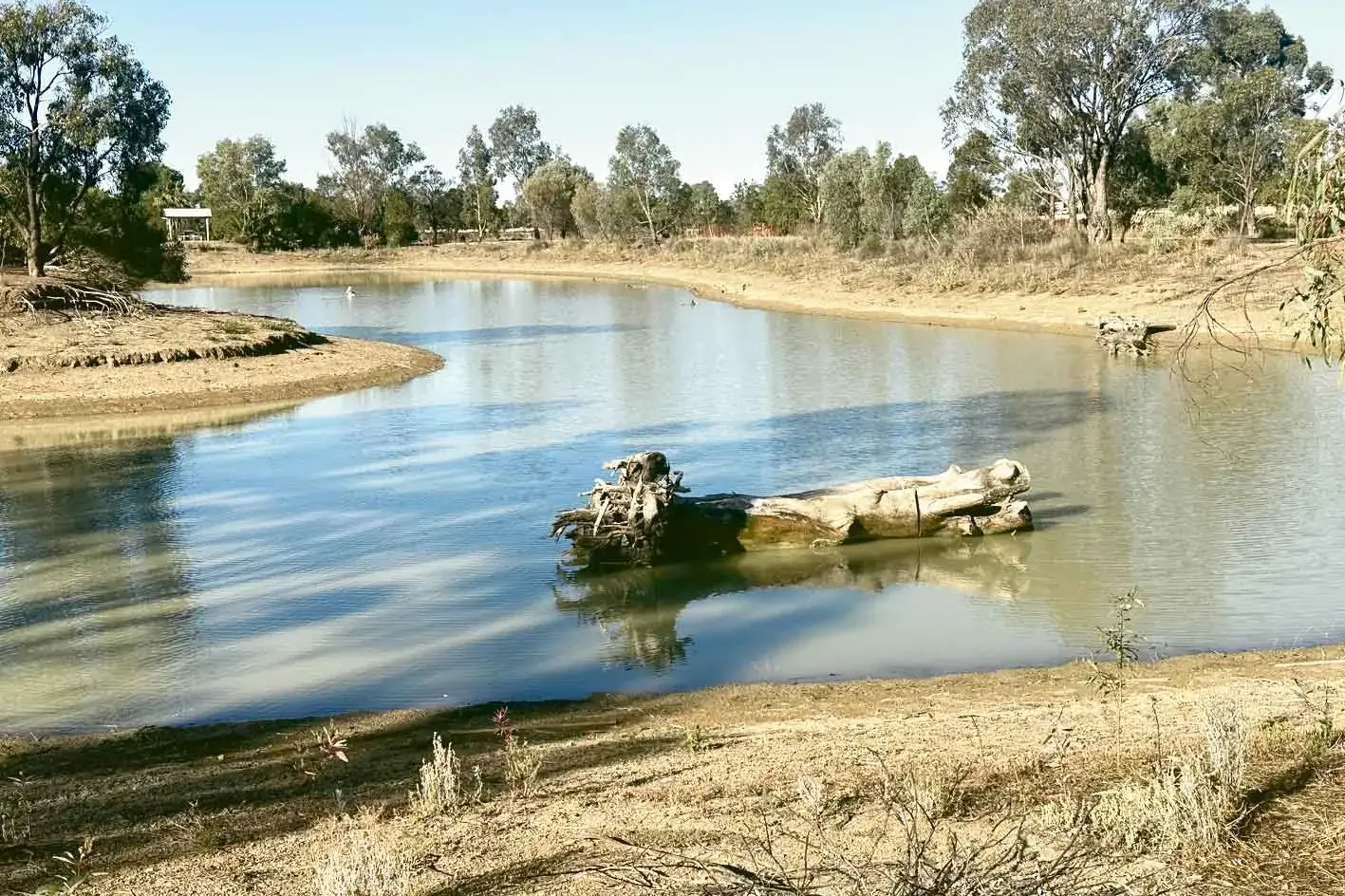
Narromine's showpiece wetlands on the town's southern outskirts were certainly showing evidence of the dry conditions at new year, bone dry in some parts while water levels in the remaining cowals were at very low levels.
•••
Water use skyrockets
In implementing the water restrictions, Narromine Shire Council said the recent hot weather had resulted in water usage increasing to more than four times the typical winter demand.
"While there is plenty of groundwater available, Narromine’s Water Treatment Plant is unable to treat water at the current rate of consumption," the council indicated in a statement issued on December 30.
"These temporary restrictions are intended to support consistent supply, protect infrastructure and ensure water remains available for essential household and consumer needs."
Multiple times last month, the council outlined on social media the challenges it faced with water usage in Narromine.
"Council is only able to supply up to 3.5 megalitres per day to the reservoirs. On very hot days, Narromine residents are using over four megalitres," one post stated.
"That's more water than we can produce – and this is only sustainable for 2-3 days before supply issues begin.
"Small changes to the way residents use water on hot days can make a big difference."
Residents were asked to help reduce demand by not watering on hot days, avoid filling pools, and postponing high water use activities like outdoor sprinkler sessions, pressure-washing driveways, running multiple loads of washing and topping up large water features.
With level two moderate water restrictions in place, residents were asked to be particularly mindful of outdoor water use and limit watering gardens and lawns only on every second day.
"Odd-numbered properties: Monday, Wednesday, Friday. Even-numbered properties: Tuesday, Thursday, Saturday. No garden watering should occur on Sundays," Melanie Slimming, Director Infrastructure and Engineering Services, said in the statement on December 30.
“We know residents rely on their gardens, especially during summer. These restrictions are not about a lack of water - they’re about giving the treatment plant enough time to keep up with current demand," she added.
"By working together, we can ease pressure on the system while maintaining reliable supply for everyone.”
•••
Work to fix water issues
Water has been a subject of importance at the council recently, with NSW Department of Climate Change, Energy, the Environment and Water (DCCEEW) announcing on December 11 last year that final design work was underway to deliver Narromine's first permanent water treatment plant that would significantly boost local water quality.
Almost $600,000 has been invested by the NSW Government via the Safe and Secure Water program to complete a concept design for the new infrastructure that will deliver clean and clear drinking water. A further $165,000 from Narromine Shire Council will support the project, the concept design for which is expected to be completed in June 2026, Kirsty Fenton from DCCEEW announced.
The existing water treatment plant was built as temporary solution in 2020 to treat high levels of iron and manganese from deep bores that were drilled in 2012 to help boost town water supply in the face of climate extremes. It ended two years of water restrictions, but the infrastructure is unable to effectively treat deep bore water to a high standard and does not have the capacity to support economic and population growth.
Previously, the town relied on shallow bores connected to the Macquarie River which produced good quality water that did not require treatment. However, they were not large enough to provide water supply during a drought, which is why the council installed deeper bores.
A new robust water treatment plant would ensure the town has the infrastructure it needs to produce higher quality drinking water with improved taste and clarity that can meet Australian Drinking Water Guidelines now and into the future.
Narromine Shire Mayor Cr Ewen Jones said the project is an important one for the local community.
“We’re grateful for the NSW Government’s support in helping us design this critical piece of infrastructure,” Mayor Jones concluded.
•••
Have your say
Narromine Shire Council placed its Draft Integrated Water Cycle Management (IWCM) Plan on public exhibition on December 23 following a resolution at the final council meeting for the year on December 10.
Shire residents have until the end of this month to comment on the IWCM Strategy (30-year water and sewer strategy) which council has developed in accordance with NSW Department of Planning and Environment requirements.
"The strategy is informed by technical assessments, financial modelling, community and stakeholder input, and review of council’s existing Issues Paper," a statement on the public exhibition notice indicated.
"Key challenges and constraints identified in that Issues Paper, most notably the under-sized Narromine Water Treatment Plant, have guided the strategic direction and the prioritisation of capital works within the long-term planning framework."