
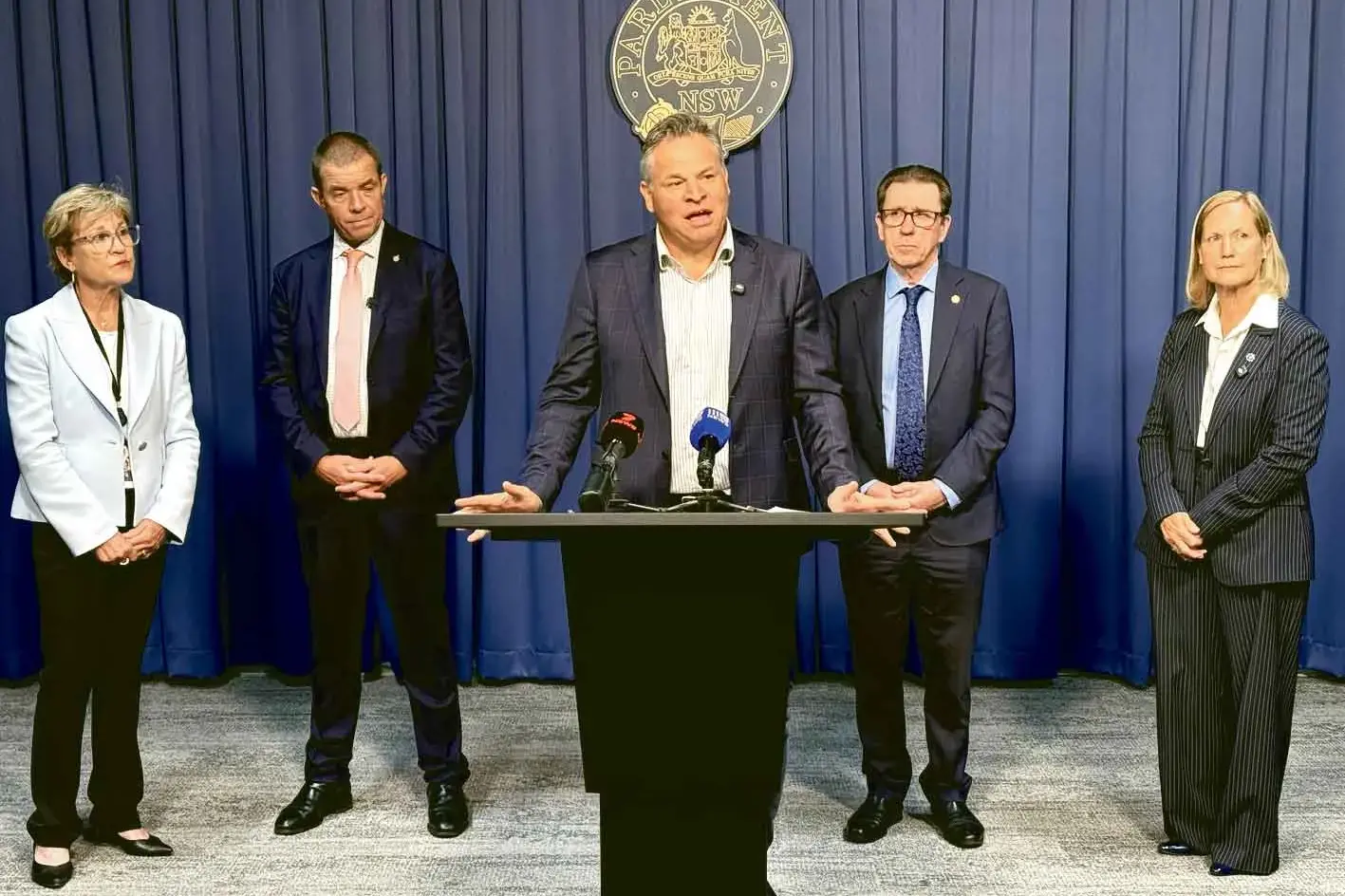
PHOTO
On Christmas Eve 2025, in direct response to the Bondi terror attack ten days earlier, the NSW Government passed the Terrorism and Other Legislation Amendment Bill 2025, designed to tighten gun laws, crack down on hateful symbols, restrict public assemblies following a terrorist attack, and give police more tools to protect the community.
Premier Chris Minns acknowledged the new laws may not be popular.
"These are very significant changes that not everyone will agree with, but our state has changed following the horrific antisemitic attack on Bondi Beach and our laws must change too," he said.
“These laws get the balance right by providing police with the tools they need to calm a combustible situation in our state and keep people safe, while restricting access to dangerous weapons on our streets to reduce the risk of this happening again," he concluded.
Several independent MPs from regional NSW, including Barwon MP Roy Butler, whose electorate encompasses almost half of the state, opposed the new laws, saying the issues were complex and there was no need to rush them through parliament in the wake of the tragedy.
Mr Butler, who also attempted to amend the hastily-passed laws which will be accompanied by a comprehensive audit of existing firearms licences, as well as a gun buyback scheme in partnership with the Federal Government, said they don't address the circumstances behind the Bondi attack and unfairly penalise regional residents.
•••
The new laws
The Bill ensures that NSW has the toughest gun laws in the country, capping firearms ownership so that an individual can have no more than four firearms, with exemptions for primary producers who can have up to 10. It limits straight-pull/pump action and button/lever release firearms to primary producers, reduces magazine capacity for category A and B firearms, and prohibits firearms using belt-fed magazines.
Gun club membership will also be mandatory for all firearms licence holders, and people will no longer be able to seek to overturn a licence decision through the NSW Civil and Administrative Tribunal. Other significant gun reforms include requiring all gun clubs to use the GunSafe online platform, and mandating safe storage inspections before issuing permits.
The NSW legislation also makes it an offence to display publicly – and without reasonable excuse – a prohibited terrorist organisation’s symbols such as ISIS, Hamas or Hezbollah flags. Maximum penalties include two years' jail or a $22,000 fine for individuals, or a $110,000 fine for organisations. A "reasonable excuse" includes for an academic purpose or another purpose in the public interest.
The Bill also allows police and or the police minister to restrict authorised assemblies in specific areas for 14 days following a terrorism declaration, extended for up to three months, to deter potentially divisive, inflammatory public assemblies in the immediate aftermath of an attack that could impact community safety and cohesion.
Once a declaration is made, no public assemblies can be authorised in designated areas – including by a court – and police will be able to move people on if their behaviour or presence obstructs traffic or causes fear, harassment or intimidation. It will not stop quiet reflection, prayer or peaceful gatherings, which are not likely to cause fear or safety concerns.
The legislation also gives police greater powers to require someone suspected of committing an offence during a public assembly to remove their face covering. Previously, this requirement only applied to someone suspected of committing an indictable offence.
The Attorney-General has also asked the Legislative Assembly Committee on Law and Safety to conduct an inquiry into hateful statements and recommend what laws should be introduced to tackle abhorrent conduct, with a view to introducing them when parliament returns in the new year. These measures build on previous legislation to combat hate, including new offences for inciting racial hatred, displaying Nazi symbols at Jewish places, and additional protections for people attending places of worship.
•••
Regional voices ignored
Barwon MP Roy Butler attempted to amend the laws to remove the cap on firearms for sporting shooters and to grandfather existing license holders so they can keep the firearms they already legally own. He also asked for the Bill to be split so the new protest laws could go through, but the firearms restrictions could be referred to a parliamentary committee for further consideration.
Mr Butler was joined by fellow regional Independent MPs Phil Donato, Helen Dalton, Dr Joe McGirr, and Judy Hannan in opposing the laws. He said there’s no reason for urgency.
“The firearms licensing changes are complex and will take many months to implement, so whether this legislation is passed now or in 2026 after the appropriate consideration won’t affect the actual start date of the changes,” Mr Butler said.
"The firearms industry hasn’t been consulted at all, and regional voices are being ignored, which means these new laws have plenty of unintended consequences.
"These include a greater risk of exposing criminal intelligence, weakening government control of license hearings and imposing a greater burden on over-worked police.
“Perhaps worst of all – these laws do nothing to address the drivers of the Bondi terror attack, which include rising antisemitism, licensing failures, and poor intelligence sharing.
“Instead, these laws demonise law-abiding firearm owners,” Mr Butler concluded.
Orange MP Phil Donato concurs.
“Criminals, gang members and terrorists do not surrender illegal firearms,” he said.
“This legislation does nothing to change that reality. It simply punishes people who already follow the law.”
Community backlash has been swift and significant. A Sporting Shooters Association of Australia e-petition opposing the legislation has already attracted 90,000
signatures in record time, briefly overwhelming the NSW Parliament website.